

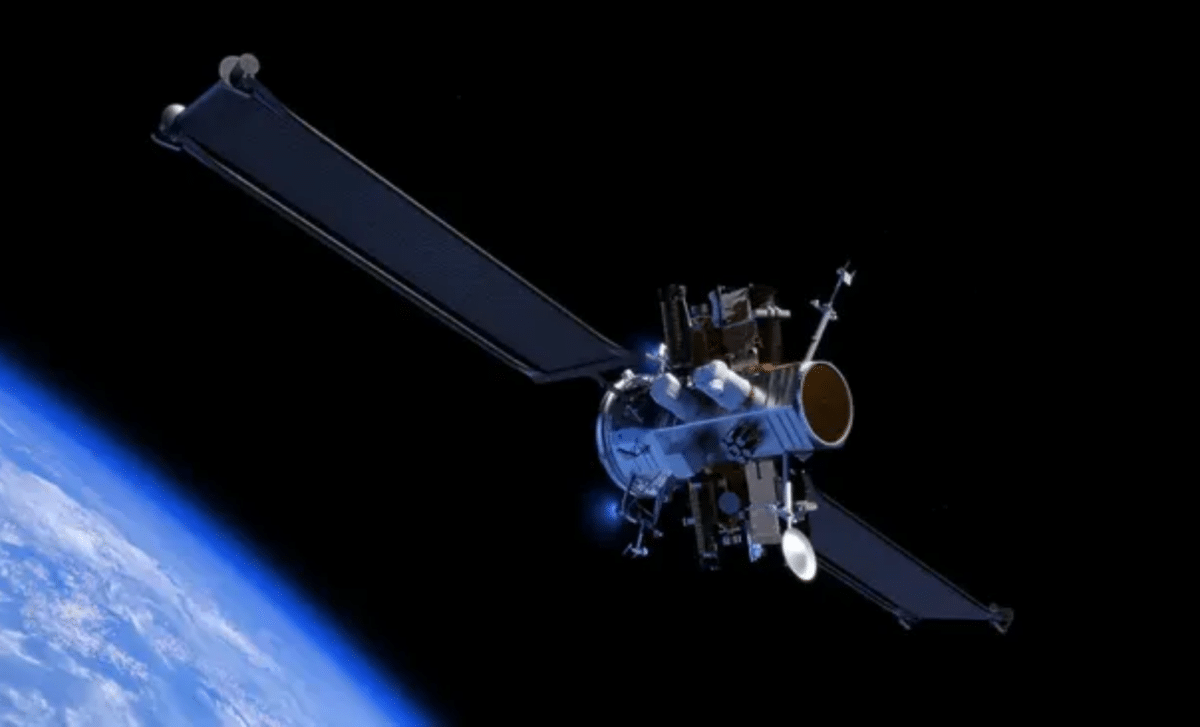
Blue Origin, Jeff Bezos’s private space company, revealed plans to play a pivotal role in Earth’s defense against dangerous asteroids. The mission, named NEO Hunter, is a collaboration with NASA and Caltech, focusing on innovative asteroid defense technologies. This initiative brings space defense to the forefront of scientific exploration, blending commercial expertise with space agency collaboration. In an era where asteroid impacts are no longer seen as mere science fiction, Blue Origin’s efforts could reshape how we protect our planet from cosmic threats.
Innovative Technologies to Combat Asteroids
At the heart of the NEO Hunter mission is the use of multiple advanced technologies aimed at defending Earth from potentially catastrophic asteroid collisions. The spacecraft will initially deploy small satellites, known as cubesats, which will rendezvous with asteroids to gather critical data about their composition, mass, and velocity. By understanding the physical properties of these space rocks, scientists can select the most effective method for altering their trajectory.
A standout feature of the mission is the ion beam technology, which will be used to direct a focused stream of charged particles at an asteroid. This method is similar to the ion propulsion used in spacecraft like NASA’s DART mission, which successfully impacted the asteroid Dimorphos in 2022. By carefully altering the asteroid’s course with this energy-based beam, NEO Hunter could prevent catastrophic impacts without needing to rely on destructive methods.
Blue Origin emphasizes that this represents a breakthrough for commercial space companies.
“This is another example of how commercial platforms like Blue Ring can conduct low-cost, high-priority science, exploration, and planetary defense missions,” the company stated in a recent post.
The integration of private-sector technology with NASA’s expertise reflects a growing trend of collaboration between the public and private sectors in space exploration.
The Backup Plan: High-Velocity Collision
While the ion beam method offers a non-destructive solution, NEO Hunter is prepared to employ a backup strategy in case the asteroid is too large or too fast to alter with the ion beam. This technique, known as “Robust Kinetic Disruption,” involves sending the spacecraft on a direct collision course with the asteroid. The spacecraft will impact the asteroid at speeds up to 22,600 mph (36,370 kph), delivering a force strong enough to alter the asteroid’s trajectory significantly.
In addition to the spacecraft’s kinetic impact, NEO Hunter will release a small satellite, named Slamcam, to document the impact in real-time. The information gathered will help scientists understand the effectiveness of the impact and guide future asteroid defense strategies. This approach is similar to NASA’s Double Asteroid Redirection Test (DART) mission, which successfully shifted the orbit of Dimorphos.
A Step Forward in Planetary Defense
The development of Blue Origin’s NEO Hunter mission highlights the increasing importance of planetary defense as a global priority. While asteroid impacts may seem like rare events, they have the potential to cause massive destruction. Events such as the meteorite that recently crashed through a roof in Germany and near-miss asteroids that have passed between the Earth and the Moon have brought the potential risk to the public’s attention.
Astronomers have long been tracking and cataloging near-Earth objects (NEOs) that could pose a threat in the future. While no major asteroid threats have been identified in the immediate future, efforts like NEO Hunter are preparing humanity to act if and when the time comes. As asteroid defense technologies continue to improve, we move one step closer to ensuring the safety of our planet against these ancient cosmic threats.
The Future of Asteroid Defense: A Global Effort
While Blue Origin’s mission is a significant step forward, planetary defense is a global endeavor. Many space agencies and private companies are working on similar initiatives to protect Earth from asteroid collisions. NASA, for example, has its own planetary defense programs, such as the Planetary Defense Coordination Office, which monitors asteroid threats and develops response strategies.
The collaboration between Blue Origin and NASA on the NEO Hunter mission is an example of how combining resources and expertise can lead to innovative solutions for global challenges. The mission also emphasizes the growing role of commercial space companies in advancing space exploration and defense technologies. As Blue Origin continues to develop its Blue Ring spacecraft for other applications, including Mars telecommunications, the company’s planetary defense work marks a significant chapter in the future of space technology.
First Appeared on
Source link





Leave feedback about this