

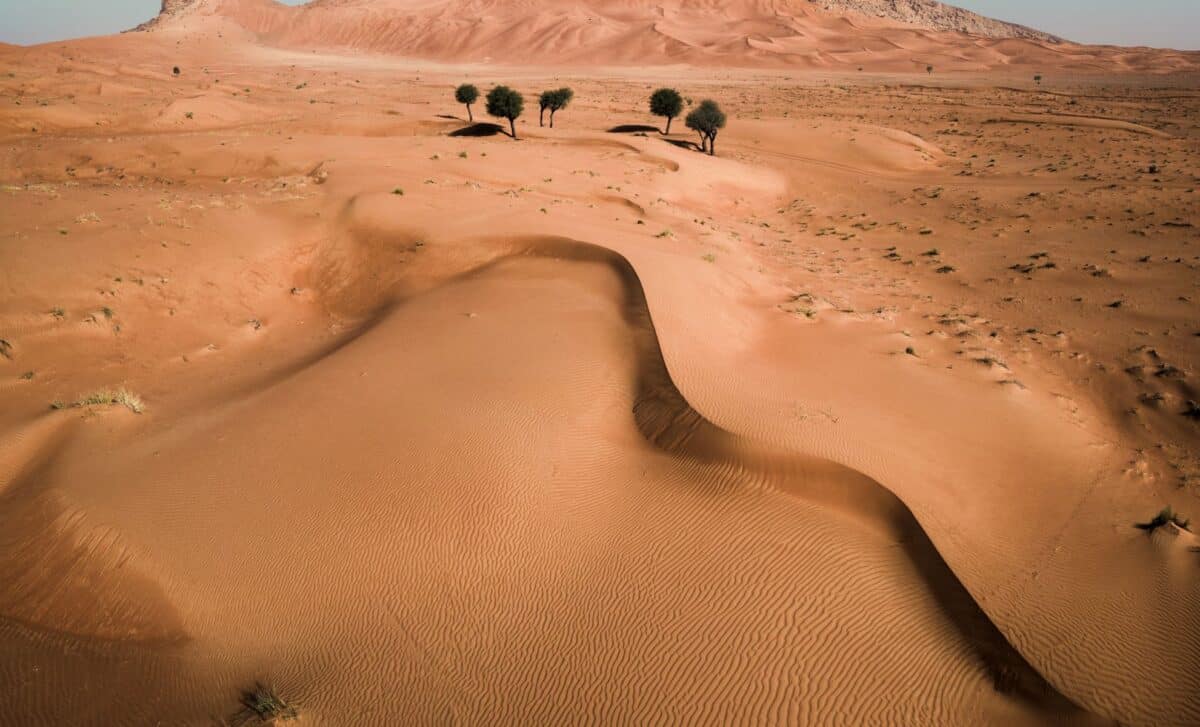
A tiny fossil discovered in Mongolia’s Gobi Desert has revealed a new species of early mammal that lived around 90 million years ago. The find is already refining what scientists know about the earliest relatives of placental mammals.
The specimen was recovered in 2019 from the Bayanshiree Formation, a site that has yielded very few mammalian fossils compared to other formations in the region. Its rarity alone makes the discovery stand out in a field where most comparable finds come from better-documented layers.
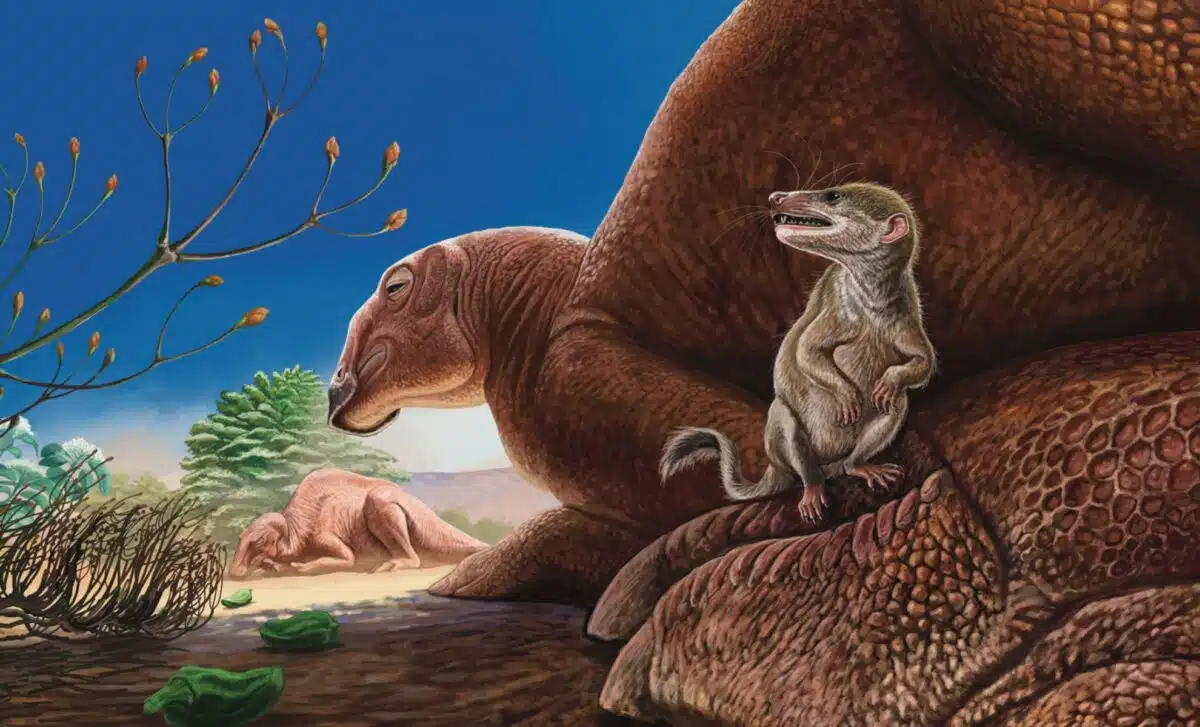
Named Ravjaa ishiii, the species belongs to the Zhelestidae family, a group of early eutherian mammals that lived during the Late Cretaceous. These animals were small, mouse-sized, and evolved alongside dinosaurs, occupying ecological niches that are still being pieced together today.
A Fragment That Changes The Picture
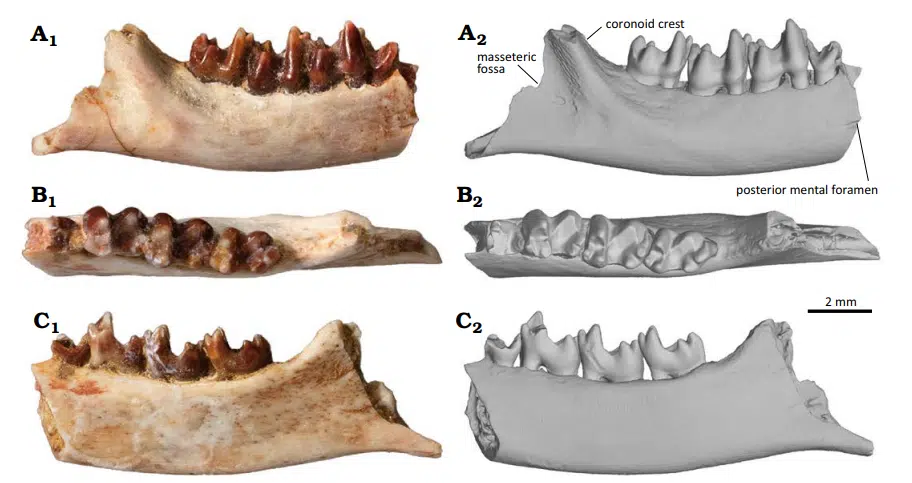
The fossil itself is modest: a limited to a 1-centimeter jaw fragment, preserving the end of a premolar and three molars. Yet, as reported in Acta Palaeontologica Polonica, this fragment provides enough anatomical detail to identify a completely new genus and species. According to Tsukasa Okoshi and colleagues:
“Numerous exquisitely preserved mammal fossils unearthed from Late Cretaceous layers in the Gobi Desert of Mongolia have played a key role in understanding Mesozoic mammalian evolution.”
They also noted that most of these discoveries come from the Baruungoyot and Djadokhta formations, while only two fragmentary mammal remains had previously been recovered from the underlying Bayanshiree Formation.
That context makes this discovery feel almost accidental. The odds of spotting such a small fossil in the vast Gobi Desert are extremely low, a point echoed by the team.
Teeth Adapted To A Changing Environment
What stands out most in Ravjaa ishiii is its dental structure. The molars are unusually tall and robust, differing clearly from those of known relatives. As the researchers explained:
“Its unusually tall molars and distinctive jaw shape differ from known relatives,” which led them to establish a new genus and species. They add that “the robust nature of the molars resembles those of seed and fruit-eating mammals.”
They are also suggesting that early eutherians were already exploiting resources linked to the rise of flowering plants during the Cretaceous. Even as dinosaurs dominated terrestrial ecosystems, some mammals were quietly adapting to new food sources.
One Of The Oldest Members Of Its Group
Beyond anatomy, the fossil also carries evolutionary significance. As stated by the team, Ravjaa ishiii is represents the first zhelestid specimen identified within the Bayanshiree Formation and, more broadly, the first ever discovered in Mongolia. They go on to explain that the species:
“potentially represents the oldest member among zhelestids or as old as the currently known oldest zhelestids collected in Uzbekistan.”
A finding that suggests the group emerged at the juncture between the Early and Late Cretaceous. As Professor Mototaka Saneyoshi of Okayama University of Science said:
“Finding such a tiny fossil in the vast expanse of the Gobi Desert feels like a gift… it’s nothing short of miraculous.”
First Appeared on
Source link





Leave feedback about this