

By Karan Singh
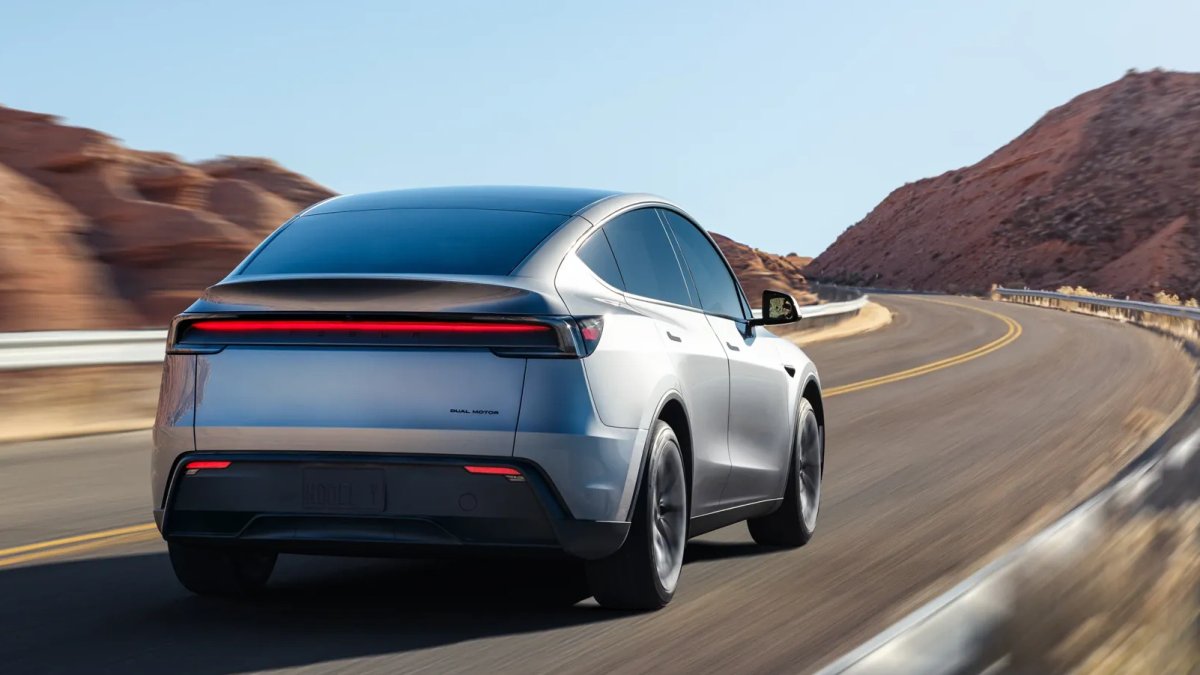
Tesla is officially rolling out software update 2026.8, and the release notes include another quality-of-life improvement for new Model Y owners. Dubbed Comfort Braking, the new feature is designed to eliminate the little jerky feeling that can sometimes occur in the final seconds when coming to a complete stop.
However, if you are driving an older-generation Tesla, you won’t be seeing this in your software menu. Comfort Braking is an exclusive feature on the refreshed Model Y, thanks to major under-the-hood hardware changes Tesla made with the vehicle.
The Chauffeur Stop
According to the 2026.8 release notes, the update “now provides a smoother feel as you come to a complete stop during routine braking.”
If you’ve driven an electric vehicle with aggressive regenerative braking, you are likely familiar with the slight “jerk” or rocking motion that happens the exact millisecond the car physically stops moving. In the automotive world, smoothly easing off the brake pressure at the very last second to prevent this rock-back is known as a “chauffeur stop.”
With Comfort Braking, Tesla has automated the chauffeur stop. The vehicle’s software now actively manages the physical friction brakes in those final moments, feathering the pressure to ensure a perfectly smooth, unnoticeable transition from rolling to a complete halt.
Exclusive to the Refreshed Model Y
While older vehicles also utilize regenerative braking to come to a stop, the refined Comfort Braking feature is hardware-locked to the refreshed Model Y. The secret lies in the vehicle’s hydraulic architecture.
During an interview with Top Gear discussing Tesla’s engineering roadmap, Vice President of Vehicle Engineering Lars Moravy detailed the magic of Tesla’s newer braking systems. Unlike older vehicles, the refreshed architecture utilizes a dual master brake cylinder setup. This redundant, advanced hardware allows the vehicle’s computer to dynamically decouple the brake pedal from the physical calipers and manage hydraulic pressure with extreme precision.
Because the refreshed Model Y has this advanced dual-cylinder hardware, the vehicle can actively modulate the physical brake pads in micro-adjustments at zero miles per hour. This is something the older, traditional single-cylinder brake boosters simply cannot replicate with the same level of granular smoothness.
The Evolution of Brake Blending
Comfort Braking is the ultimate culmination of a software journey Tesla started a few years ago.
Tesla originally introduced “Apply Brakes When Regenerative Braking is Limited,” which lets your vehicle provide a consistent regenerative braking experience by having the vehicle use the physical brakes when regen braking is limited. This lets the driver feel the same amount of deceleration whether regen is fully available or limited.
More recently, Tesla introduced deceleration options in the new Model Y, allowing the vehicle to apply regenerative braking even when the brake pedal is pressed. This maximizes efficiency by leveraging regenerative braking, whether the driver lifts their foot off the accelerator or presses the brake pedal.
Now, with the advanced dual-cylinder hardware of the refreshed Model Y, Tesla takes over some of the braking by smoothly applying the brakes at the end of a stop without spilling your morning coffee.
Ordering a New Tesla?
Use our referral code and get 3 months free of FSD or $1,000 off your new Tesla.
By Nehal Malik
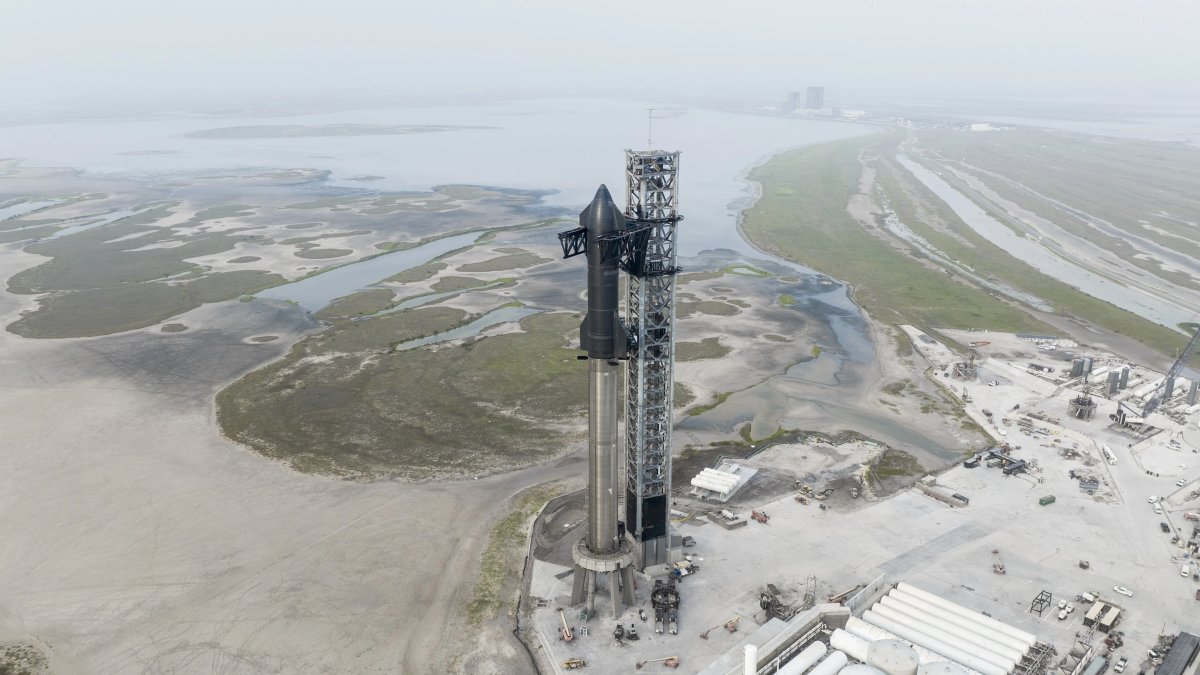
Tesla has officially cleared a major regulatory hurdle to tighten the financial bonds within Elon Musk’s growing ecosystem of companies. According to new filings with the U.S. Federal Trade Commission (FTC), the electric automaker has received government approval to convert its previous $2 billion investment in xAI into a minority equity stake in SpaceX.
This move follows a massive restructuring of Musk’s private ventures. According to Bloomberg, the conversion formalizes the ties between Tesla and the rocket manufacturer just as SpaceX prepares for what could be the largest initial public offering (IPO) in history.
The SpaceX and xAI Merger
The reason for this equity shift stems from SpaceX’s official acquisition of xAI last month. By folding the artificial intelligence startup into the space-launch company, Musk created a combined entity valued at a staggering $1.25 trillion.
The logic behind the merger is to utilize SpaceX’s Starlink satellite network and launch capabilities to ultimately put AI data centers in space, powering xAI’s massive computing needs. Musk wants to launch millions of solar-powered AI satellites that could process information far above the Earth’s atmosphere. Since Tesla’s initial $2 billion investment was funneled into xAI before the merger, that capital is now being rolled over into a SpaceX stake, which analysts estimate to be less than 1% of the rocket company.
A Converging Path for the Musk Empire
This news confirms that Tesla is no longer just a car company working in a vacuum; it is becoming a central node in a multi-industry network. We are already seeing the practical results of these converging paths. Just a few days ago, Musk announced Digital Optimus (playfully nicknamed “Macrohard”), a joint venture between Tesla and xAI aimed at automating office work.
There is growing speculation that this consolidation is only the beginning. With xAI now under the SpaceX umbrella and Tesla holding a direct stake in the parent company, the boundaries between the “car company,” the “space company,” and the “AI company” are blurring. Rumors even surfaced earlier this year that SpaceX had explored a full merger with Tesla, and while that hasn’t happened yet, the financial and technical overlap suggests that Musk is building a singular, vertically integrated technology giant.
What This Means for Shareholders
For Tesla investors, this conversion provides a rare piece of indirect exposure to SpaceX before it hits the public market. If the SpaceX IPO proceeds at its rumored $1.5 trillion valuation later this year, Tesla’s small stake could see a significant jump in value.
While some investors worry about the complexity of these intertwined deals, the FTC’s green light suggests that regulators are satisfied for now. As Musk continues to reorder his empire ahead of the big IPO, the “Musk Galaxy” is looking more like a single, unified organism than a collection of separate businesses.
By Nehal Malik
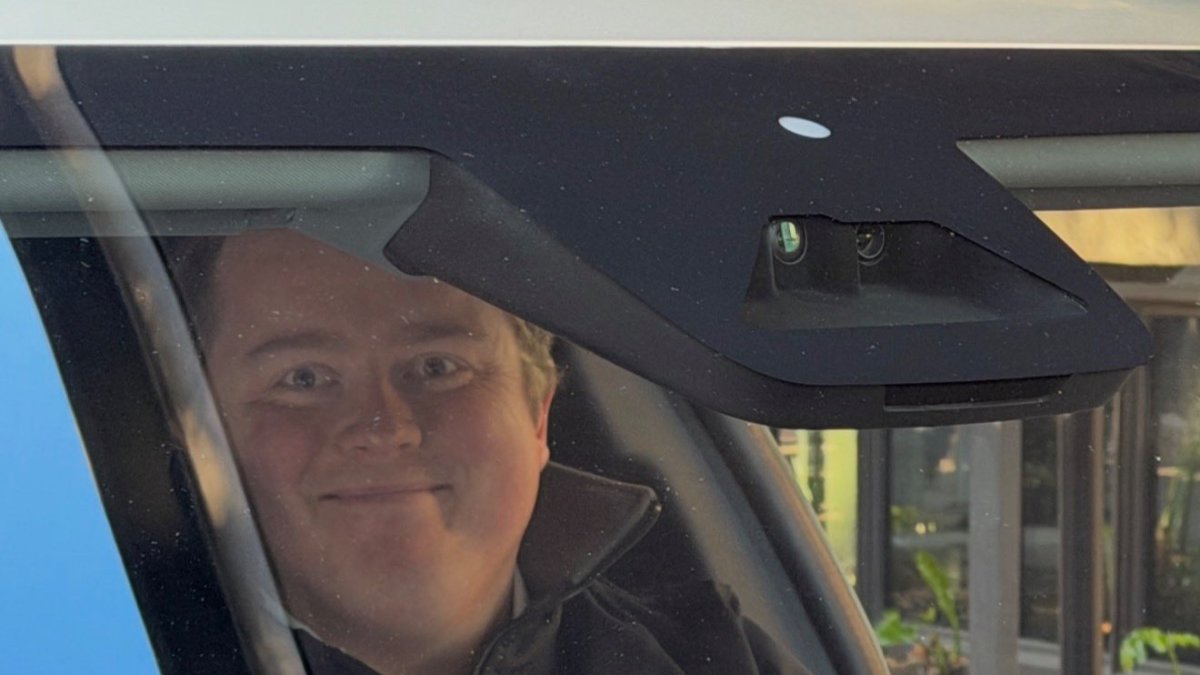
Tesla is entering the final stretch before the official launch of its autonomous ride-hailing fleet, and the latest production units are revealing some major hardware changes. Recent sightings of a Cybercab on display in Austin have caught the attention of the community, specifically highlighting a new set of much larger front-facing cameras, ambient lighting along the doors, and more.
The images, shared by @DavidMoss on X, show a significantly beefed-up camera housing behind the windshield. This has sparked speculation online that Tesla might be testing a new Full Self-Driving (FSD) hardware package, potentially a precursor to AI5 (Hardware 5). While the next-generation AI5 computer isn’t expected to enter mass production until mid-2027, these larger lenses suggest Tesla is upgrading its optical sensors to provide the higher fidelity required for a vehicle with no steering wheel or pedals.
If you look closely, you can see larger lenses and small separators between each front-facing camera.
New Hardware and Interior Refinements
The larger front cameras are just one part of a broader hardware evolution. Another production unit recently showcased at the USDOT Headquarters in Washington, D.C., revealed a massive cabin camera and, for the first time, an interior trunk camera. This new rear-facing sensor is likely designed to ensure passengers don’t leave belongings behind once their autonomous ride ends.
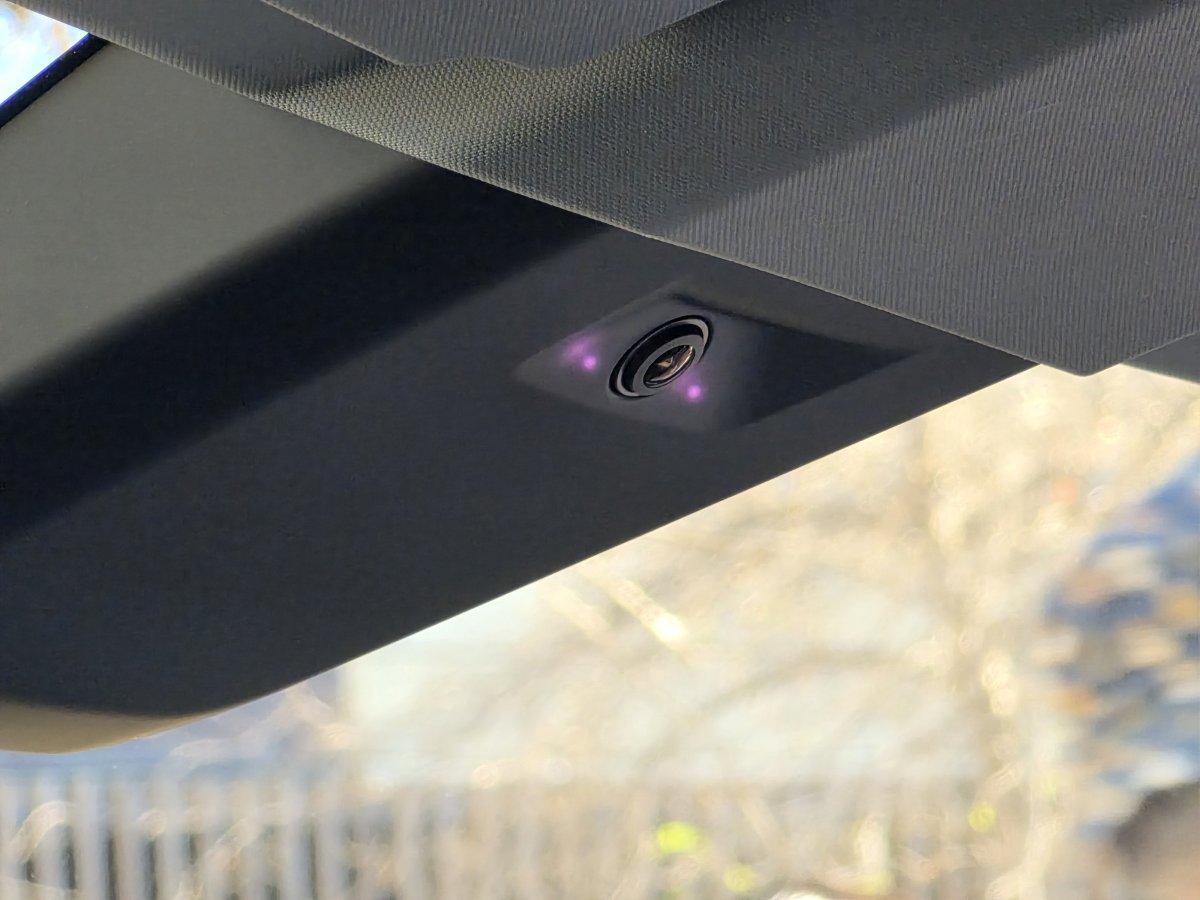
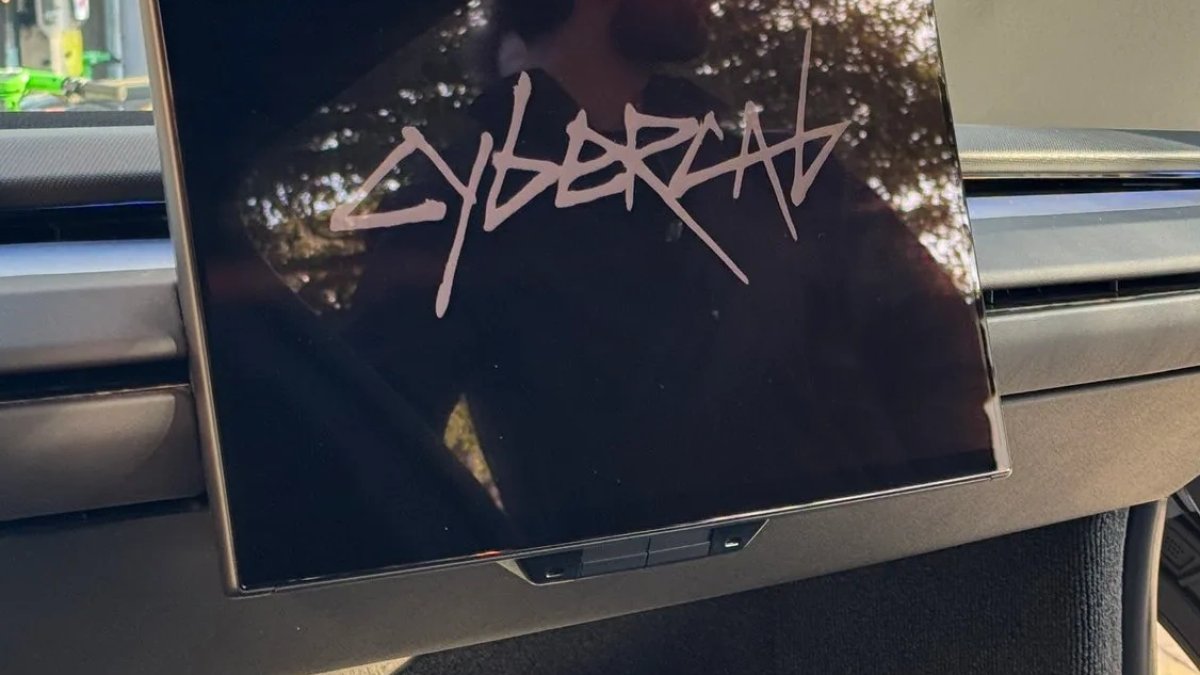
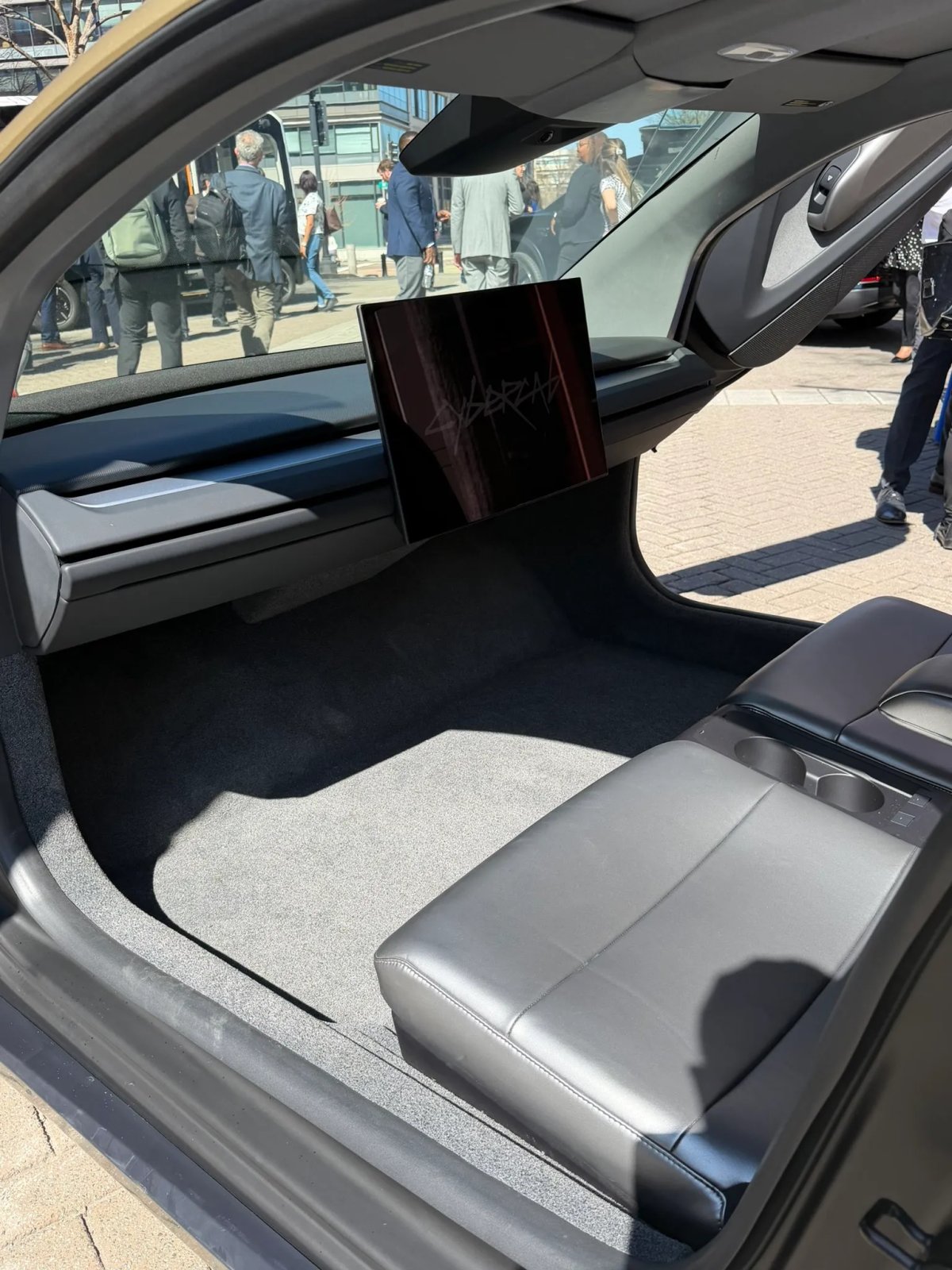
Tesla has also refined the Cybercab’s interior for high-utilization durability. The carpeted storage trunk from the original concept has been swapped for a rugged, non-carpeted material. What’s more, the window control switches and USB-C connectivity ports appear to have been relocated under the massive 21-inch central touchscreen. As recently as with the unit seen at the USDOT headquarters earlier this week, the window control buttons were situated near the cupholders in the center console. The cabin is otherwise remarkably sparse, featuring only an emergency stop button above the screen that also has Braille on it.
Ambient Lighting
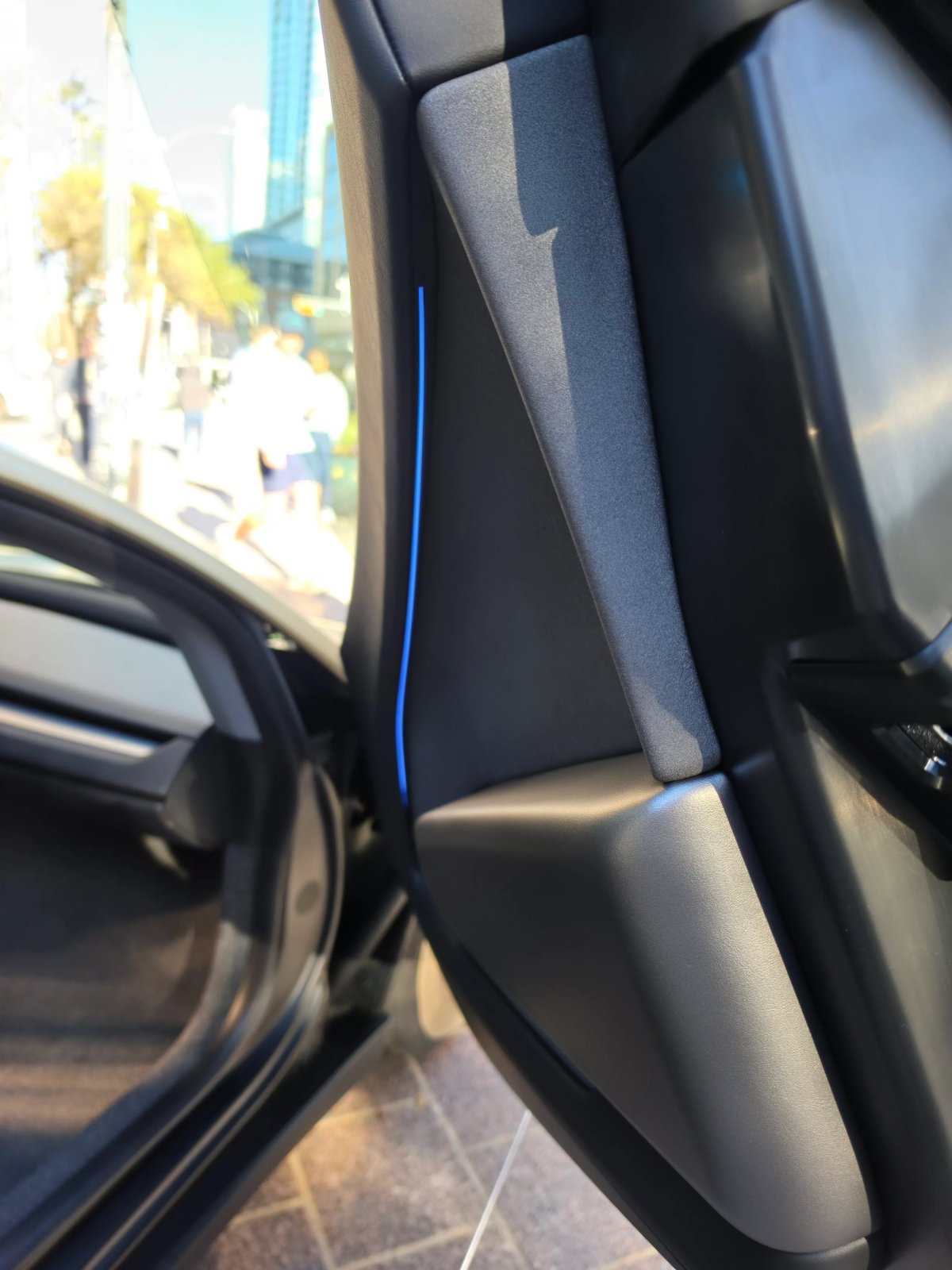
Inside, Tesla has added a touch of luxury that departs from its usual utilitarian minimalism: thin strips of ambient lighting, spotted in the doorframes. This light strip, which emits a soft blue glow in the latest sightings, provides both a futuristic aesthetic and functional illumination for passengers entering and exiting the vehicle at night — a small but critical detail for a ride-hailing service designed to operate 24/7.
Wheels
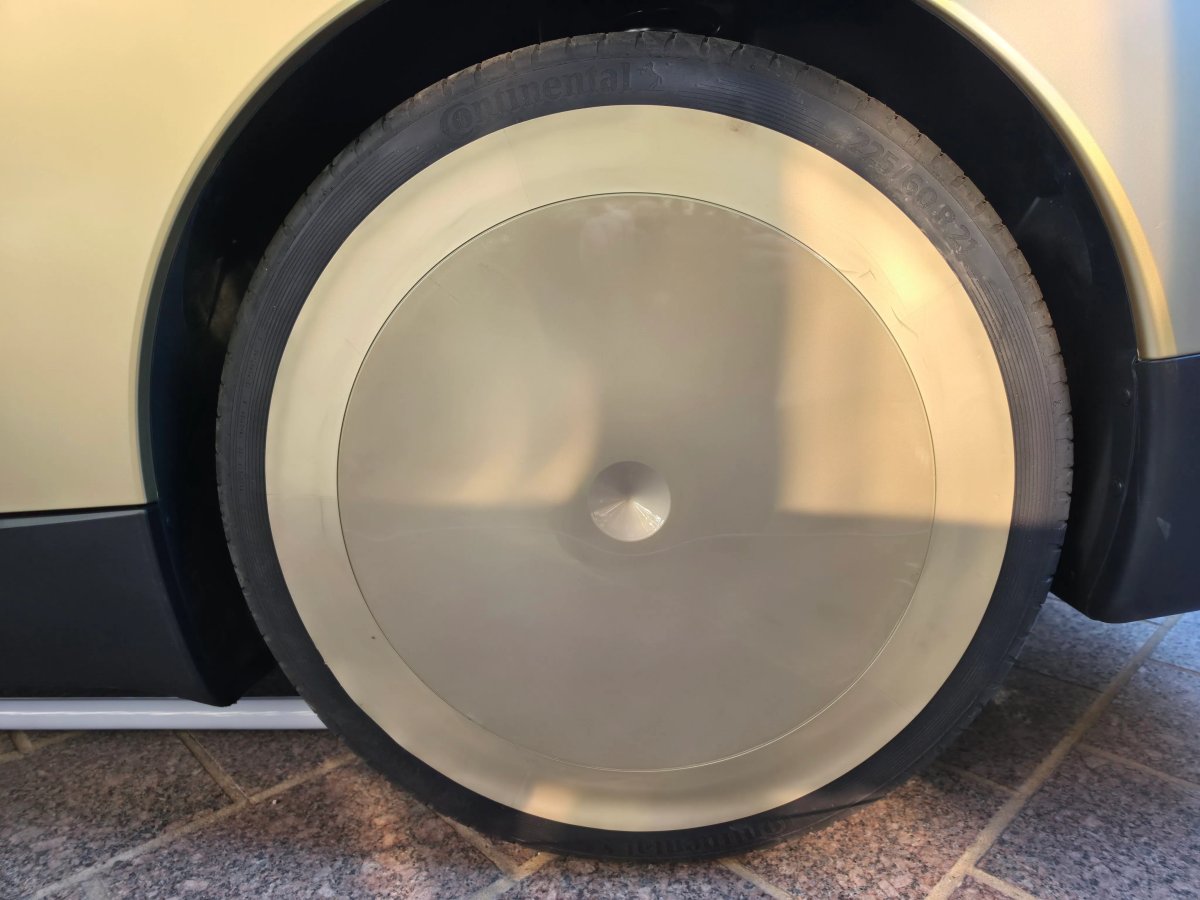
Beyond the upgraded camera suite and interior, production-ready Cybercab units are showing off several hardware refinements that lean into its “premium robotaxi” identity. Most notably, the vehicle appears to use a staggered wheel setup featuring larger and wider tires in the rear to handle the torque of its electric drivetrain. The front is equipped with 215/60R/18 tires, while the rear steps up to a beefier 225/60R/21 setup, all wrapped in Continental aContact rubber with sleek, full-disc aerodynamic hubcaps.
Built for a Driverless Future
The Cybercab is a purpose-built, two-seat electric vehicle designed to be the backbone of the Tesla Robotaxi network. Because it is supposed to rely entirely on camera-only software, Tesla has equipped the vehicle with a high-pressure washer system for every external camera. This ensures that the FSD hardware always has a clear view, even in rain or grime, without human intervention.
While early units were spotted at Giga Texas without traditional controls, Tesla has noted that some early production models might ship with steering wheels to satisfy regional regulations. However, the ultimate goal remains a purely wireless, steering wheel-less experience. Tesla recently received FCC approval for Ultra Wideband (UWB) technology, which will power the vehicle’s planned wireless induction charging system.
Production Timeline
Tesla is moving fast to pivot from a traditional automaker into an AI powerhouse. The first production Cybercab unit recently rolled off the line at Giga Texas, and mass production is officially slated to begin in April.
As the production target draws closer, these small but significant hardware tweaks show that Tesla is focused on the reliability of its “unsupervised” vision. The transition to a driverless society is no longer a future concept; for Tesla, the assembly lines will start moving in just a few weeks.
First Appeared on
Source link



Leave feedback about this