
15 March 2026
Chicago 12, Melborne City, USA
Design

Liberals aim to extend their Wisconsin Supreme Court race winning streak

Three years ago, liberals won a majority on the Wisconsin Supreme Court for the first time in 15 years, a major breakthrough in one of the nation’s most closely divided battleground states.

Next month, they’re aiming to further expand that edge.

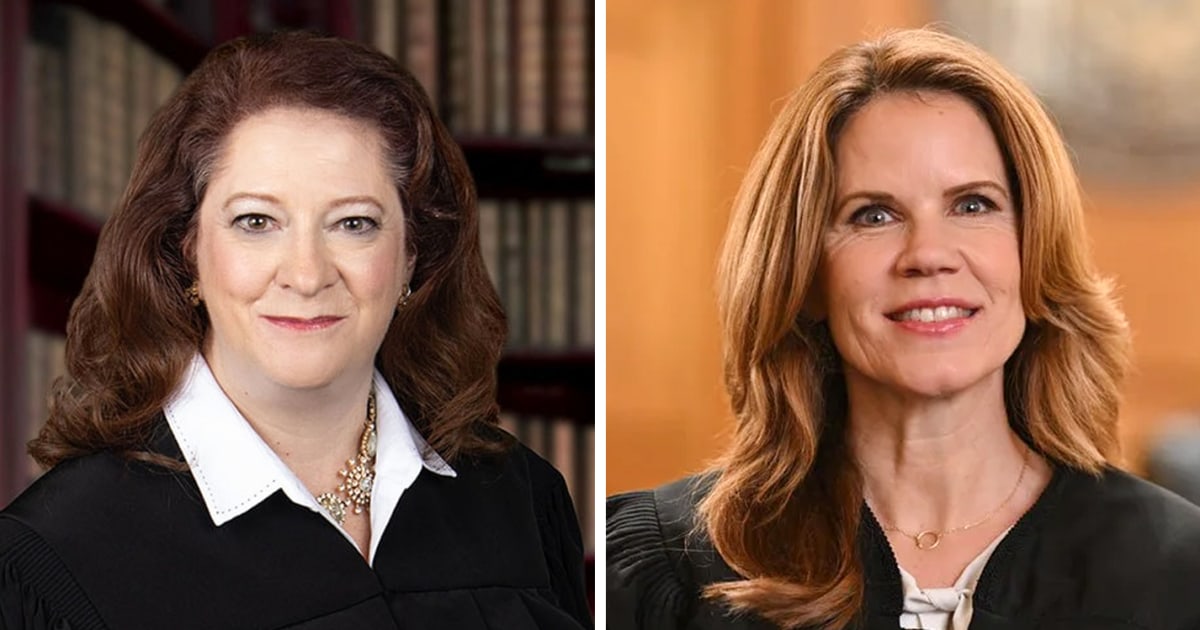
The April 7 election between the Democratic-backed Chris Taylor and the Republican-backed Maria Lazar to fill a seat held by retiring conservative Justice Rebecca Bradley has flown under the radar nationally compared to last year’s Wisconsin Supreme Court race, in which Susan Crawford maintained the liberals’ majority. That contest ended up as the most expensive state judicial race in history after Elon Musk poured in millions of dollars.

But a victory by Taylor, who holds massive fundraising and ad spending advantages, would extend liberals’ winning streak in Wisconsin Supreme Court elections to four — and put conservatives out of reach of the majority for years to come.

“It wasn’t so long ago that state Supreme Court races here used to be ‘nobody knows, and nobody cares’ springtime elections. In many ways, that’s how conservatives won a lot,” said Brandon Scholz, a Republican-turned-independent strategist in Wisconsin. “But the game has been changed. Democrats and liberals have proved they can outraise and outspend Republicans and conservatives — and they’ve changed the game even more because their court candidates have taken political positions that help voters look at these races like issues-based legislative or gubernatorial contests.”

“As a result, they have the issues, the messaging and the money. What else is there?” he added. “Conservatives never woke up. It’s like they never figured out they needed a new page in their playbook.”

Taylor, an appeals court judge who was formerly a Democratic state legislator and a policy director for Wisconsin’s Planned Parenthood group, has put abortion and voting rights at the forefront of her campaign, much like the recent victorious liberal Supreme Court candidates in the state.

Lazar, who is also an appeals court judge and worked in the administration of Republican Gov. Scott Walker, has not shied away from her anti-abortion positions and has focused on contrasting her judicial career with her opponent’s history as a Democratic legislator.

Taylor has held two key edges in the race. In 2025, she raised 10 times as much money as Lazar. And since Jan. 1, Taylor’s campaign has spent $2.3 million on ads, according to the ad-tracking firm AdImpact — more than 14 times the $157,000 Lazar’s campaign has spent. Groups backing Taylor have spent another $1.3 million on ads over the same time span, compared to less than $12,000 for groups supporting Lazar.

Taylor’s ads have focused on reproductive rights, as well as economic issues like rising costs and cuts to food assistance programs.

One Lazar ad takes aim at Taylor’s support for abortion rights, while another labels her a “radical” and accuses her of supporting “noncitizen voting” — a Republican rallying cry and a message pushed by President Donald Trump, who has not endorsed in the race.

The 2026 race has maintained several dynamics that have shaped recent Wisconsin Supreme Court races. Political parties in the state are permitted to transfer unlimited cash to campaigns. And in recent years, the Democratic Party of Wisconsin has grown into a fundraising juggernaut — which has helped give the liberal candidate in the past several Supreme Court races a major cash advantage.

Like the liberal candidates before her, Taylor has spoken more forcefully about how she’d approach significant policy issues that might come before the technically nonpartisan bench, most prominently abortion rights.

And recent liberal candidates and groups supporting them have leaned into messaging targeting Trump and his allies, another factor that operatives in the state said has helped turn out Democratic voters.

Despite Wisconsin’s swing state status, Janet Protasiewicz and Crawford won the 2023 and 2025 Supreme Court races, respectively, by around 10 percentage points — even as Trump carried the state in 2024 by about 1 point.

Their victories are part of a broader trend of Republican and conservative candidates not named Trump struggling to win statewide elections in Wisconsin in recent years. Dating back to 2017, Democratic and Democratic-backed candidates have won 18 of the last 23 statewide races in Wisconsin.

This year, the path isn’t any less challenging for Lazar. Political operatives in the state said that without a court majority on the line, fundraising and enthusiasm was likely to be lower among Republicans.

In addition, Bradley, the outgoing conservative justice, decided relatively late in the cycle that she would not run for re-election. In an announcement last August, she blasted the “conservative movement” in the state and challenged it to “take stock of its failures, identify the problem, and fix it.” As a result, Lazar didn’t jump into the race until October 2025 — a full five months after Taylor.

Adding to Republicans’ concerns is that another conservative on the Wisconsin Supreme Court, Justice Annette Ziegler, announced that she will not run for a third term in 2027, creating yet another opportunity for liberals to further expand their majority. After 2027, three other justices are also set to face re-election for 10-year terms from 2028 to 2030.

The trend has triggered some infighting, with several Republicans and conservatives taking aim at Brian Schimming, chairman of the state party.

“It would really be appreciated if you could engage in the Supreme Court race for Lazar,” former Republican state Sen. Duey Stroebel wrote on X last week, in a post directed at Schimming. Conservative radio hosts have also called for major changes in the state party.

Schimming indicated in an interview that the cash disadvantage had been the biggest problem for conservative state Supreme Court candidates in recent cycles. But he hit back at the notion that he or the state Republican Party were responsible for the recent court losses.

“I don’t think it’s a matter of dropping the ball,” he said. “You know, there’s always a resource issue.”

In an interview, Lazar also acknowledged the challenge that “the fundraising difference” posed for her. But she also expressed confidence in her attacks on Taylor for her votes throughout her eight years in the state Assembly.

“My opponent in this race was a politician for more years than she’s been on the bench,” Lazar said. “She’s been a politician almost 10 years, and on the bench maybe four or five. I’ve been on the bench 11 years.”

Taylor was a member of the state Assembly for eight years before being appointed to circuit court judgeship by Democratic Gov. Tony Evers. She served in that role for three years before being elected to the Court of Appeals in 2023.

A quieter race has led to more uncertainty, however. A Marquette University Law School poll released last month found that 62% of likely Wisconsin voters were undecided. Among those who had made up their mind, Taylor led Lazar 22% to 15%, within the survey’s margin of error. The poll also found that most voters hadn’t been closely following the race and didn’t know much about either candidate.

“Although I am optimistic, impatience for victory guarantees defeat, and I think that we still have work to do,” Wisconsin Democratic Party Chair Devin Remiker said in an interview. “We are not taking this race for granted. We will be running all the way to the finish line.”

Taylor said she was “taking it very seriously that there are a lot of undecided people.” But she also expressed optimism that voters would quickly make up their mind as they tuned in.

“Voters are concerned with the overreach we are seeing from the federal government,” she said in an interview. “We are not going to capitulate to the federal government here in the state of Wisconsin when they attempt to erode our rights, if they attempt, in the future, to take our elections away. We have to have a strong court to stand up for the independence of our state.”

Meanwhile, Remiker and other Wisconsin Democrats are already looking toward another big race in Wisconsin in the fall, for governor, suggesting the Supreme Court election could provide a jolt of momentum. A bevy of Democrats are running to succeed Evers, who is not seeking a a third term, while Rep. Tom Tiffany has emerged as the major Republican candidate.

“For the governor’s race, I think this is another shot of momentum, not just for Democrats in Wisconsin but around the country,” Remiker said, referring to the state Supreme Court campaign. “We’re pretty much the next statewide general election on the docket, and I think that being able to show Wisconsin at scale, statewide, that Democrats are winning and winning big will give more cause for concern for Republicans.”

First Appeared on
Source link
Leave feedback about this

  • Quality
  • Price
  • Service

PROS

+
Add Field

CONS

+
Add Field
Choose Image
Choose Video
Design

Liberals aim to extend their Wisconsin Supreme Court race winning streak

Three years ago, liberals won a majority on the Wisconsin Supreme Court for the first time in 15 years, a major breakthrough in one of the nation’s most closely divided battleground states.

Next month, they’re aiming to further expand that edge.

The April 7 election between the Democratic-backed Chris Taylor and the Republican-backed Maria Lazar to fill a seat held by retiring conservative Justice Rebecca Bradley has flown under the radar nationally compared to last year’s Wisconsin Supreme Court race, in which Susan Crawford maintained the liberals’ majority. That contest ended up as the most expensive state judicial race in history after Elon Musk poured in millions of dollars.

But a victory by Taylor, who holds massive fundraising and ad spending advantages, would extend liberals’ winning streak in Wisconsin Supreme Court elections to four — and put conservatives out of reach of the majority for years to come.

“It wasn’t so long ago that state Supreme Court races here used to be ‘nobody knows, and nobody cares’ springtime elections. In many ways, that’s how conservatives won a lot,” said Brandon Scholz, a Republican-turned-independent strategist in Wisconsin. “But the game has been changed. Democrats and liberals have proved they can outraise and outspend Republicans and conservatives — and they’ve changed the game even more because their court candidates have taken political positions that help voters look at these races like issues-based legislative or gubernatorial contests.”

“As a result, they have the issues, the messaging and the money. What else is there?” he added. “Conservatives never woke up. It’s like they never figured out they needed a new page in their playbook.”

Taylor, an appeals court judge who was formerly a Democratic state legislator and a policy director for Wisconsin’s Planned Parenthood group, has put abortion and voting rights at the forefront of her campaign, much like the recent victorious liberal Supreme Court candidates in the state.

Lazar, who is also an appeals court judge and worked in the administration of Republican Gov. Scott Walker, has not shied away from her anti-abortion positions and has focused on contrasting her judicial career with her opponent’s history as a Democratic legislator.

Taylor has held two key edges in the race. In 2025, she raised 10 times as much money as Lazar. And since Jan. 1, Taylor’s campaign has spent $2.3 million on ads, according to the ad-tracking firm AdImpact — more than 14 times the $157,000 Lazar’s campaign has spent. Groups backing Taylor have spent another $1.3 million on ads over the same time span, compared to less than $12,000 for groups supporting Lazar.

Taylor’s ads have focused on reproductive rights, as well as economic issues like rising costs and cuts to food assistance programs.

One Lazar ad takes aim at Taylor’s support for abortion rights, while another labels her a “radical” and accuses her of supporting “noncitizen voting” — a Republican rallying cry and a message pushed by President Donald Trump, who has not endorsed in the race.

The 2026 race has maintained several dynamics that have shaped recent Wisconsin Supreme Court races. Political parties in the state are permitted to transfer unlimited cash to campaigns. And in recent years, the Democratic Party of Wisconsin has grown into a fundraising juggernaut — which has helped give the liberal candidate in the past several Supreme Court races a major cash advantage.

Like the liberal candidates before her, Taylor has spoken more forcefully about how she’d approach significant policy issues that might come before the technically nonpartisan bench, most prominently abortion rights.

And recent liberal candidates and groups supporting them have leaned into messaging targeting Trump and his allies, another factor that operatives in the state said has helped turn out Democratic voters.

Despite Wisconsin’s swing state status, Janet Protasiewicz and Crawford won the 2023 and 2025 Supreme Court races, respectively, by around 10 percentage points — even as Trump carried the state in 2024 by about 1 point.

Their victories are part of a broader trend of Republican and conservative candidates not named Trump struggling to win statewide elections in Wisconsin in recent years. Dating back to 2017, Democratic and Democratic-backed candidates have won 18 of the last 23 statewide races in Wisconsin.

This year, the path isn’t any less challenging for Lazar. Political operatives in the state said that without a court majority on the line, fundraising and enthusiasm was likely to be lower among Republicans.

In addition, Bradley, the outgoing conservative justice, decided relatively late in the cycle that she would not run for re-election. In an announcement last August, she blasted the “conservative movement” in the state and challenged it to “take stock of its failures, identify the problem, and fix it.” As a result, Lazar didn’t jump into the race until October 2025 — a full five months after Taylor.

Adding to Republicans’ concerns is that another conservative on the Wisconsin Supreme Court, Justice Annette Ziegler, announced that she will not run for a third term in 2027, creating yet another opportunity for liberals to further expand their majority. After 2027, three other justices are also set to face re-election for 10-year terms from 2028 to 2030.

The trend has triggered some infighting, with several Republicans and conservatives taking aim at Brian Schimming, chairman of the state party.

“It would really be appreciated if you could engage in the Supreme Court race for Lazar,” former Republican state Sen. Duey Stroebel wrote on X last week, in a post directed at Schimming. Conservative radio hosts have also called for major changes in the state party.

Schimming indicated in an interview that the cash disadvantage had been the biggest problem for conservative state Supreme Court candidates in recent cycles. But he hit back at the notion that he or the state Republican Party were responsible for the recent court losses.

“I don’t think it’s a matter of dropping the ball,” he said. “You know, there’s always a resource issue.”

In an interview, Lazar also acknowledged the challenge that “the fundraising difference” posed for her. But she also expressed confidence in her attacks on Taylor for her votes throughout her eight years in the state Assembly.

“My opponent in this race was a politician for more years than she’s been on the bench,” Lazar said. “She’s been a politician almost 10 years, and on the bench maybe four or five. I’ve been on the bench 11 years.”

Taylor was a member of the state Assembly for eight years before being appointed to circuit court judgeship by Democratic Gov. Tony Evers. She served in that role for three years before being elected to the Court of Appeals in 2023.

A quieter race has led to more uncertainty, however. A Marquette University Law School poll released last month found that 62% of likely Wisconsin voters were undecided. Among those who had made up their mind, Taylor led Lazar 22% to 15%, within the survey’s margin of error. The poll also found that most voters hadn’t been closely following the race and didn’t know much about either candidate.

“Although I am optimistic, impatience for victory guarantees defeat, and I think that we still have work to do,” Wisconsin Democratic Party Chair Devin Remiker said in an interview. “We are not taking this race for granted. We will be running all the way to the finish line.”

Taylor said she was “taking it very seriously that there are a lot of undecided people.” But she also expressed optimism that voters would quickly make up their mind as they tuned in.

“Voters are concerned with the overreach we are seeing from the federal government,” she said in an interview. “We are not going to capitulate to the federal government here in the state of Wisconsin when they attempt to erode our rights, if they attempt, in the future, to take our elections away. We have to have a strong court to stand up for the independence of our state.”

Meanwhile, Remiker and other Wisconsin Democrats are already looking toward another big race in Wisconsin in the fall, for governor, suggesting the Supreme Court election could provide a jolt of momentum. A bevy of Democrats are running to succeed Evers, who is not seeking a a third term, while Rep. Tom Tiffany has emerged as the major Republican candidate.

“For the governor’s race, I think this is another shot of momentum, not just for Democrats in Wisconsin but around the country,” Remiker said, referring to the state Supreme Court campaign. “We’re pretty much the next statewide general election on the docket, and I think that being able to show Wisconsin at scale, statewide, that Democrats are winning and winning big will give more cause for concern for Republicans.”

First Appeared on
Source link

Leave feedback about this

  • Quality
  • Price
  • Service

PROS

+
Add Field

CONS

+
Add Field
Choose Image
Choose Video