

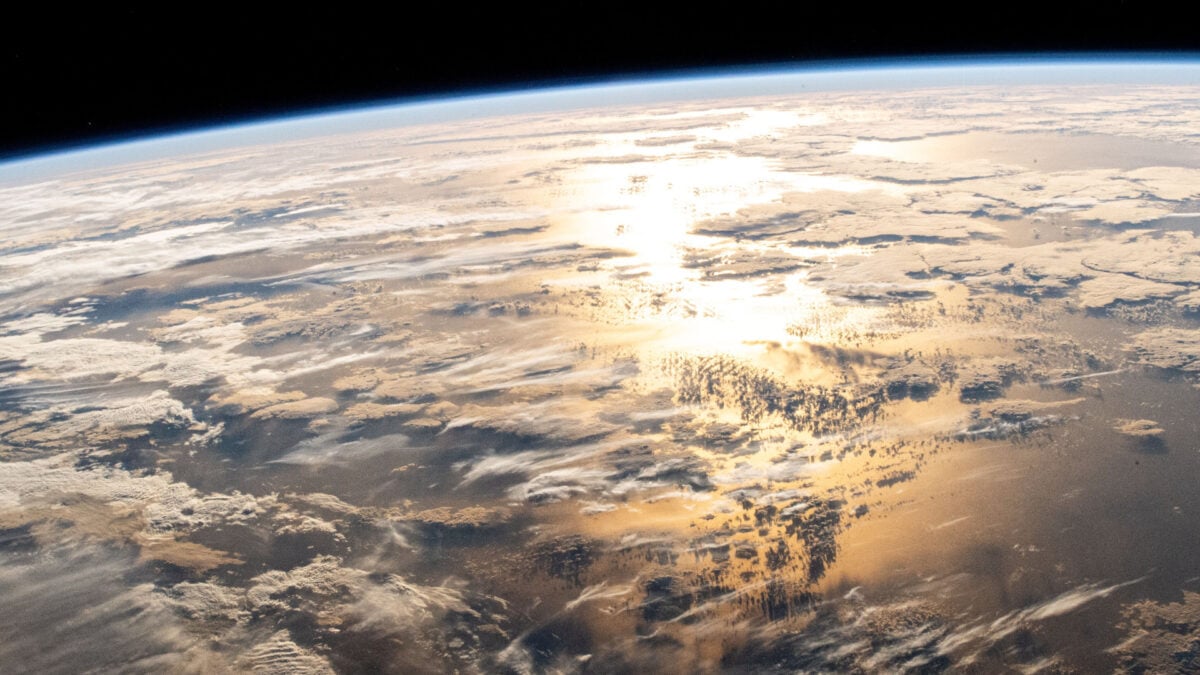
It often feels like the world is spinning faster and faster, just out of control these days, right? Well, I’m sorry to report that this visceral first impression appears to be wrong: New research suggests planet Earth’s spin has been slowing down dramatically.
Geophysics researchers in Vienna and Zurich have deployed paleoclimate data, primarily global sea level variations since the Late Pliocene, to provide the broadest estimate yet on the changing rate of Earth’s rotation. They’ve found that from 2000 to 2020, our days have gotten longer by roughly 1.33 milliseconds (ms) per century—the most rapidly that Earth’s spin has slowed down since the time of gigantic mastodons and saber-toothed cats.
“This rapid increase in day length implies that the rate of modern climate change has been unprecedented at least since the late Pliocene, 3.6 million years ago,” study coauthor Benedikt Soja, a professor of space geodesy at ETH Zurich, said in a press statement. “The current rapid rise in day length can thus be attributed primarily to human influences,” according to Soja.
Big ocean-induced drag
Soja and his colleagues refer to this phenomenon as “continental-ocean mass redistribution” in their research, including their latest published Tuesday in the Journal of Geophysical Research: Solid Earth. As melt from polar ice sheets and mountain glaciers pools down into Earth’s oceans, extra water weight builds up in those wider lower latitudes of the globe near the equator, where all this extra mass is more likely to drag on Earth’s spin.
Soja’s coauthor, Mostafa Kiani Shahvandi, likened the phenomena in a press statement to “a figure skater who spins more slowly once they stretch their arms, and more rapidly once they keep their hands close to their body.”
“Only one time—around 2 million years ago—the rate of change in length of day was nearly comparable, but never before or after that has the planetary ‘figure skater’ raised her arms and sea levels so quickly as in 2000 to 2020,” according to Kiani Shahvandi, a postdoctoral researcher with the University of Vienna’s Department of Meteorology and Geophysics.
Tiny marine fossils, one large dataset
Soja and Kiani Shahvandi turned to a vast trove of sea-level fluctuation data for their new research, harvested from the fossils of tiny, shelled, single-celled marine organisms called benthic foraminifera.
“From the chemical composition of the foraminifera fossils,” Kiani Shahvandi said, “we can infer sea-level fluctuations and then mathematically derive the corresponding changes in day length.”
These calculations required that the duo develop a new deep-learning method based on what’s called a Physics-Informed Diffusion Model (PIDM). In short, PIDMs take the powerful, predictive power of a probability-based, machine-learning AI and guide it within the strict constraints of physics-informed neural networks (PINNs), built on scientifically derived natural laws.
“This model captures the physics of sea-level change, while remaining robust to the large uncertainties inherent in paleoclimate data,” Kiani Shahvandi noted.
Small thousandths of a second matter
Granted, the lengths of Earth’s days have proven to be highly, albeit minutely, variable, with recent stretches where its rotation has also sped up. On July 4th, 2024, for example, Earth clocked a personal planetary record, completing one full spin 1.66 ms (or 0.00166 seconds) faster than usual. Everything from the hot roiling of our planet’s molten core to atmospheric pressure and wind to the shifting orbit of the Moon can and does have an impact on Earth’s daily rotation.
However, the new research is focused on long-term trends: Earth’s behaviors across decades of the 21st century as compared to its rotational rate trends spanning millions of years.
And crucially, according to Soja, today’s increasing oceanic weight in Earth’s thick equatorial middle—an undeniable consequence of climate change—will increasingly become a dominant factor influencing Earth’s rotation speed.
“By the end of the 21st century, climate change is expected to affect day length even more strongly than the moon,” Soja noted in a press statement. “Even though the changes are only milliseconds, they can cause problems in many areas, for example in precise space navigation, which requires accurate information on Earth’s rotation.”
First Appeared on
Source link






Leave feedback about this