

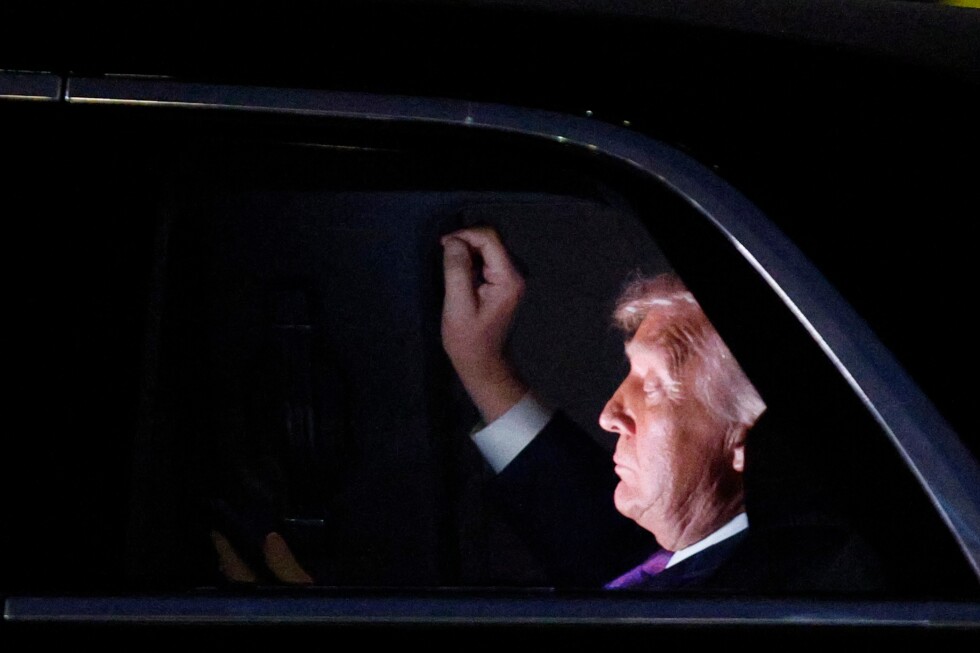
WASHINGTON (AP) — Since starting a war with Iran caused oil and gasoline prices to spike, President Donald Trump has pivoted from a focus on keeping energy prices low to painting high oil prices as a positive.
The about-face comes as Trump’s team has struggled to offer a clear plan for opening up the critical Strait of Hormuz so that tankers full of oil and natural gas are no longer stranded.
“The United States is the largest Oil Producer in the World, by far, so when oil prices go up, we make a lot of money,” Trump said Thursday on his social media site.
It was only last month, in his State of the Union address, that Trump had bragged about gas prices at $2.30 a gallon, a figure that has since soared more than 50% to a national average of $3.60 a gallon, according to AAA.
The flip-flop shows Trump’s political interests at home are suddenly at odds with his desire to flex America’s muscles on the global stage. It comes at a precarious time for Trump’s party, ahead of November midterm elections. Trump has said that high gas prices helped him defeat his predecessor, Joe Biden. But he told reporters on Saturday that he had no worries about the rising costs that could influence voters this year, and create pressure for him to end the conflict prematurely.
The investment bank Goldman Sachs on Thursday said that based on its forecasts and historic experience, higher oil prices would cause inflation to be higher, growth to be slower and the unemployment rate to increase by the end of the year.
Benchmark oil prices have swung violently with Trump’s shifting statements and as most tankers avoid traversing the Strait of Hormuz. On Thursday, the global crude oil benchmark price jumped to $100 a barrel.
“The swings in Brent crude oil prices over the past several days are eye-catching and odds are volatility will remain because of the absence of a timeline for when the conflict will deescalate and when the Strait of Hormuz, which is effectively closed, will see traffic begin to recover,” analysts at the consultancy Oxford Economics concluded on Wednesday.
The president has given a series of contradictory messages about his plans to address this issue. He said in a Monday news conference that the Strait of Hormuz “is going to remain safe” well after it was identified as a danger zone, claiming that the presence of the U.S. Navy and insurance for tankers would keep things secure.
By Tuesday, he said on Truth Social that Iran would face “Military consequences” that would be “at a level never seen before” if it placed mines in the Strait of Hormuz, later stressing that the U.S. military was blowing up Iran’s mine-laying ships.
On Wednesday, Trump’s Energy Secretary Chris Wright briefly posted that the U.S. Navy had escorted a tanker through the strait — later deleting the false claim.
After initially downplaying the need to tap strategic reserves, Trump by Wednesday said the U.S. would join with other countries and release oil to lower prices, with the administration later saying it would draw down 172 million barrels. The coordinated release among countries is unlikely to bring down oil prices, so much as stabilize the market.
“Such a move will slow rather than stop rising oil prices and offer a temporary salve to the searing burn of rising gasoline prices,” said Joe Brusuelas, chief U.S. economist at the consultancy RSM.
The White House also said it may waive Jones Act requirements to use U.S.-flagged ships to move goods between U.S. ports, a temporary move that White House press secretary Karoline Leavitt said could “ensure vital energy products and agricultural necessities are flowing freely to U.S. ports.”
Wright, the energy secretary, took to television on Thursday to acknowledge the conflict was causing “a significant disruption” in short-term gas prices, but sought to emphasize the long-term benefits of an Iran that no longer poses a threat to the U.S. and Middle Eastern nations.
Trump on Wednesday had said “the straits are in great shape” and said he thought oil companies should use them. But on Thursday, Wright could not provide a timeline on when the U.S. Navy might escort tankers through the Strait of Hormuz, the bottleneck causing the price spike.
“It’ll happen relatively soon, but it can’t happen now,” Wright told CNBC. “We’re simply not ready. All of our military assets right now are focused on destroying Iran’s offensive capabilities.”
___
Associated Press writer Collin Binkley contributed to this report.
First Appeared on
Source link


Leave feedback about this