

By David Lawder and Ismail Shakil
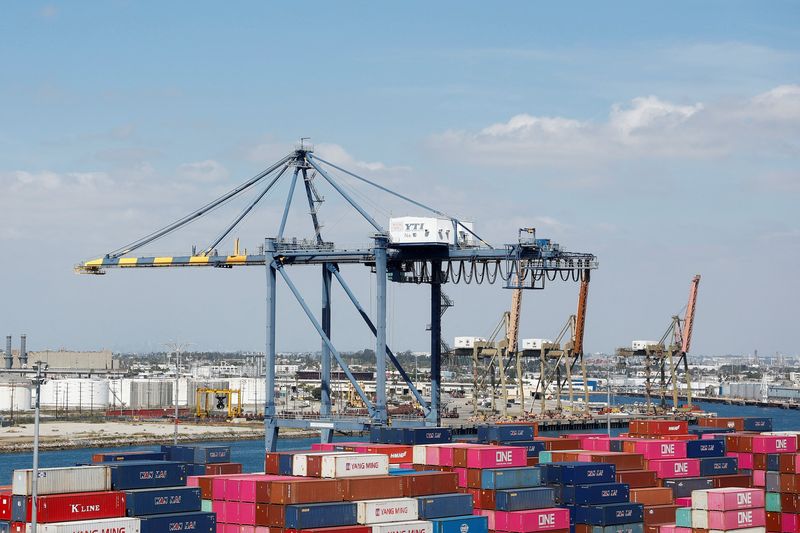
WASHINGTON, March 12 (Reuters) – U.S. President Donald Trump’s administration said on Wednesday it was launching two trade investigations into excess industrial capacity in 16 major trading partners and into forced labor, rebuilding tariff pressure after the Supreme Court tore down much of Trump’s tariff program last month.
China, the European Union, India, Japan, South Korea and Mexico are among partners that could face new tariffs by this summer under the investigation of unfair trade practices, said U.S. Trade Representative Jamieson Greer.
Other countries subject to the excess-capacity probe under Section 301 of the Trade Act of 1974 are Taiwan, Vietnam, Thailand, Malaysia, Cambodia, Singapore, Indonesia, Bangladesh, Switzerland and Norway. Canada, the second-largest U.S. trading partner, was not included.
China said on Thursday the U.S. claim of overcapacity was a “false proposition” and Beijing opposed “political manipulation under this pretext”. China is against all forms of unilateral tariff measures, foreign ministry spokesperson Guo Jiakun said at a regular press conference.
U.S. LOOKING AT TRADE SURPLUSES, UNDERUSED CAPACITY
The 27-nation European Union has said it wants to stick to the terms of a deal signed at Trump’s Turnberry golf course last July, and that any new tariffs should reflect the broad 15% overall U.S. levy agreed then.
European Parliament lawmakers, who have repeatedly delayed a vote on that deal, said uncertainty remained.
“Who can guarantee that the final outcome will not mean even higher tariffs for the EU? It is not enough to simply assume – on both sides – that we will end up within the Turnberry framework. We need clarity,” trade committee chair Bernd Lange wrote on X.
Greer told reporters the investigations “will focus on economies that we have evidence appear to exhibit structural excess capacity and production in various manufacturing sectors, such as through larger persistent trade surpluses, or underutilized or unused capacity”.
USTR’s official notice cited the automotive sector in China and Japan, saying a growing number of companies were unprofitable or unable to meet interest payments.
Japan is scrutinizing details of the probe but will continue to implement its existing trade agreement with the U.S., Chief Cabinet Secretary Minoru Kihara told a press conference.
USTR said although China’s electric-vehicle capacity outstrips national demand, top EV maker BYD was “aggressively expanding” its overseas manufacturing footprint, with factories in Uzbekistan, Thailand, Brazil, Hungary and Turkey, and was expected to expand capacity in Europe, where existing automotive plants operate at only 55% of capacity.
First Appeared on
Source link



Leave feedback about this