

Six months ago, the federal government loudly proclaimed the likely benefits of an existing drug called leucovorin for treating autism. Now that proclamation has officially turned into a whimper.
On Tuesday, the Food and Drug Administration approved the expanded use of leucovorin to treat cerebral folate deficiency, a rare condition potentially linked to some autism cases. Notably, however, the agency did not endorse it as a treatment for autism, citing a lack of strong evidence. President Donald Trump, Health Secretary Robert F. Kennedy Jr., and other health officials previously claimed leucovorin could help a large number of children in the U.S. with autism, possibly in the hundreds of thousands.
A promising treatment, but not for autism
Leucovorin (folinic acid) is a form of the vitamin folate, also known as vitamin B9. Among other things, folate is key to the healthy development of a fetus, and women with low folate levels during pregnancy have a higher risk of children being born with neural tube birth defects. Leucovorin has historically been used to counteract the side effects of certain chemotherapy drugs.
Most of the time, a folate deficiency can be easily treated or prevented with folic acid supplements. More rarely, people can develop a condition early in life characterized by low folate levels in the brain but normal levels in blood. These low brain levels can then lead to neurological symptoms like seizures and intellectual disability.
There are different types of cerebral folate deficiency, but it’s typically caused by issues with the receptor primarily responsible for transporting folate across the blood-brain barrier. Leucovorin can be transported through a different delivery method, however, meaning it can raise brain folate levels. Research has shown that leucovorin can mitigate cerebral folate deficiency, especially the earlier it’s given, and it’s long been used as an off-label drug for these patients.
The FDA’s decision formally makes leucovorin the first approved treatment for people with cerebral folate deficiency caused by a harmful variant in the folate receptor 1 gene. While the ruling might help some children better access leucovorin, this genetic form of the condition is incredibly rare, with perhaps 50 or fewer cases ever described in the medical literature. And the limited approval is a far step down from the fanfare Trump and other health officials previously expressed over the drug.
The bait-and-switch
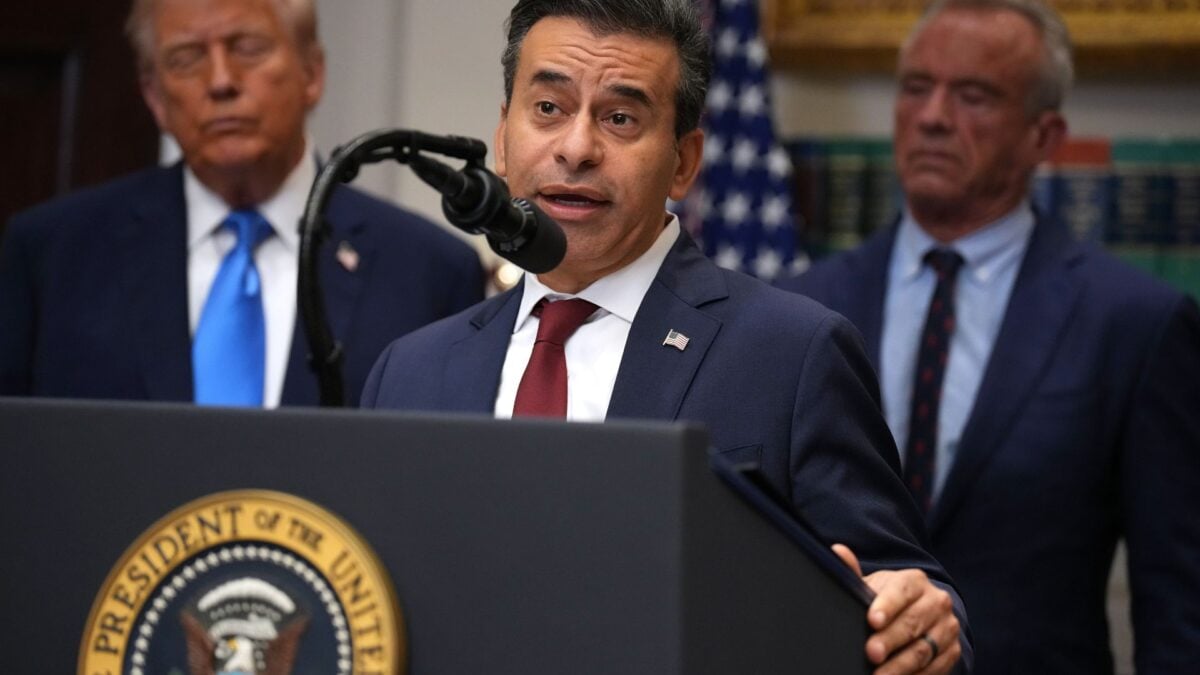
Last September, the Trump White House held a press conference and singled out leucovorin as one of the two major breakthroughs it had made in better understanding autism (the other being a supposed link between maternal acetaminophen use and autism risk that outside experts have also largely denounced).
Limited studies have suggested children with autism might be more likely to have low brain folate levels, and some of the symptoms of cerebral folate deficiency can resemble severe autism. Based on that meager evidence, officials like RFK Jr. claimed in September that leucovorin was an exciting therapy that might benefit “large numbers of children” with autism. FDA commissioner Marty Makary even stated that leucovorin could possibly help “hundreds of thousands of kids”; at another point, he seemed to imply that leucovorin could treat the “20, 40, 50% of kids with autism” who had this deficiency.
Credible data supporting leucovorin for autism has always been barebones, and it’s gotten worse recently. In late January, a journal yanked a positive trial testing leucovorin supplements in children with autism after outside researchers discovered numerous “errors” and “concerns” with the data, according to the retraction notice. It was the largest such trial conducted so far, with 77 children, and one of only five trials total.
It’s hardly a surprise, then, that the FDA didn’t feel confident approving leucovorin for anything beyond cerebral folate deficiency. At a press briefing Monday, an FDA official stated, “we don’t have sufficient data to say that we could establish efficacy for autism more broadly.”
Makary did seemingly still try to imply that leucovorin can help treat autism in his statement announcing the drug’s expanded approval, though with much less certainty than before. “This action may benefit some individuals with FOLR1-related cerebral folate transport deficiency who have developmental delays with autistic features,” he said.
What happens now?
The FDA is still calling for companies to study whether leucovorin can be beneficial for autism, though it’s uncertain whether anyone will bite. While the drug’s original maker, GlaxoSmithKline, did submit it for a label update last September, it only did so at the behest of the FDA. Soon after, the company stated it would not seek to market the drug as an autism treatment.
That said, the Trump announcement in September did lead to a spike in outpatient prescriptions of leucovorin, a study this month found. So it’s possible more families of autistic children may choose to try the drug, even if it’s off-label. Without a strong endorsement from the FDA, though, perhaps leucovorin will hopefully become nothing more than the latest fad autism treatment to fade away.
First Appeared on
Source link






Leave feedback about this