

By Shanaka Anslem Perera | March 9, 2026
At midnight Greenwich Mean Time on 5 March 2026, seven of the twelve International Group Protection and Indemnity clubs that collectively insure roughly 90% of the world’s ocean-going tonnage executed identical cancellation notices for war-risk coverage across the Persian Gulf, the Gulf of Oman, and Iranian territorial waters.
Gard, NorthStandard, Skuld, Steamship Mutual, the American Club, the Swedish Club, and the London P&I Club withdrew coverage. They did not act because a government ordered them to. They did not act because a naval commander declared a blockade. They did not act because a single mine had been laid in the shipping channel. They withdrew because their London treaty reinsurers, confronting unlimited tail exposure in an active combat zone, could no longer satisfy the 99.5% Value-at-Risk capital charges mandated by the European Union’s Solvency II directive. The reinsurers pulled capacity. The clubs, which operate as mutuals whose losses fall directly on member shipowners, had no mathematical alternative.
In that instant, seven letters accomplished what the entire Iranian navy could not.
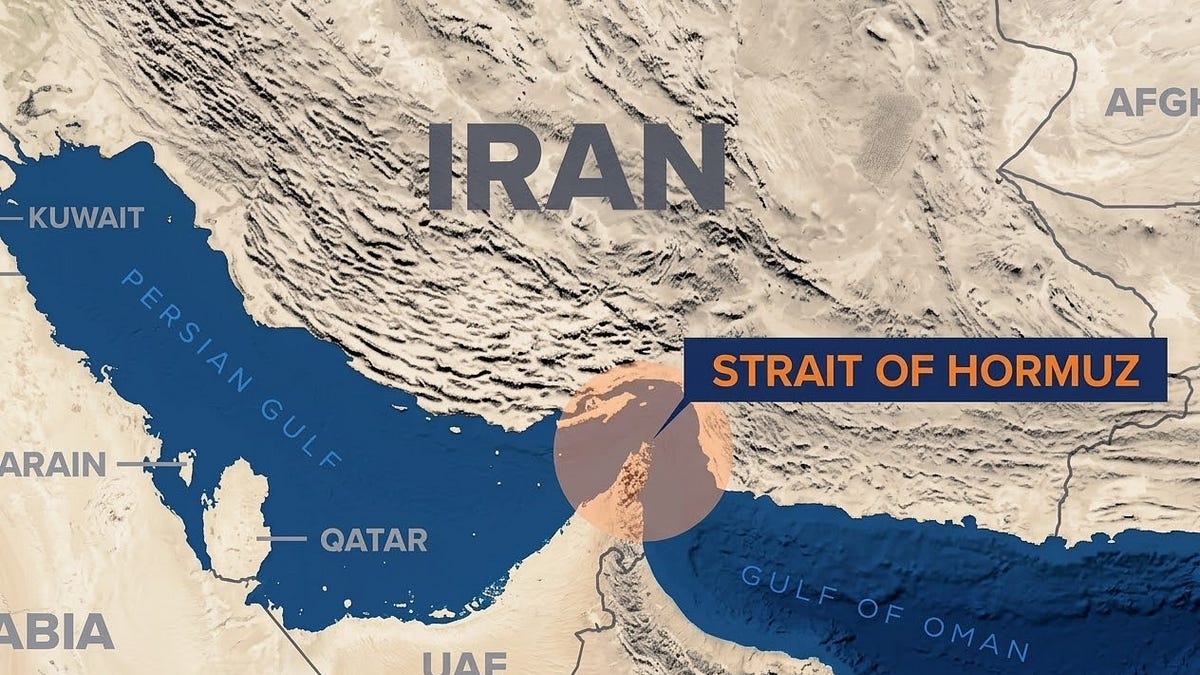
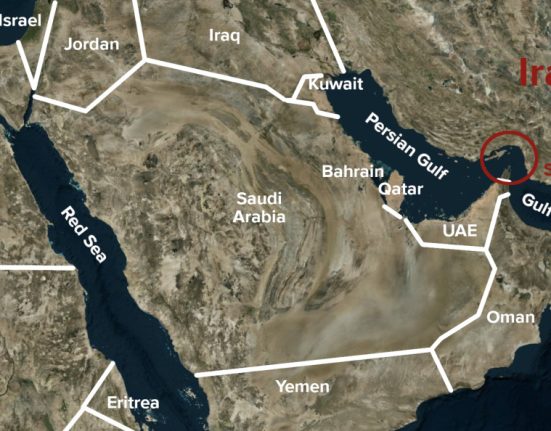
The Strait of Hormuz, a 21-mile corridor through which 20 million barrels of oil and 20% of global liquefied natural gas transit every day, collapsed from an average of 138 daily vessel crossings to fewer than eight. By 7 March, tanker traffic had fallen to zero. Three hundred oil tankers sat anchored idle in the Gulf of Oman. One thousand commercial vessels representing $25 billion in hull value were trapped inside the Persian Gulf with nowhere to discharge. Very Large Crude Carrier charter rates on the Baltic Exchange hit an all-time record of $481,170 per day. Brent crude, which had been trading near $67 a barrel before Operation Epic Fury began on 28 February, breached $100 on 8 March for the first time since July 2022 and settled at $108, marking the largest single-week gain in oil futures since records began in 1983.
Every sell-side research desk, every geopolitical risk model, and every energy strategy team at every major institution on Earth is currently modelling this closure as a kinetic problem solvable by military force. The United States has three carrier strike groups in theatre. It has achieved tactical air superiority over Iranian airspace. It has destroyed 80% of Iran’s integrated air defence network, sunk 43 warships, and reduced Iranian missile launches by 86% from their opening-day peak. By every traditional metric of military dominance, the campaign is succeeding.
Yet the Strait remains commercially paralysed.
The US Navy has not escorted a single commercial tanker through Hormuz. The Development Finance Corporation’s $20 billion emergency reinsurance facility, announced on 6 March, has not produced a single confirmed insured VLCC transit at scale. And the market, anchored to a consensus of two-to-four-week military resolution, is mispricing the duration of this closure by a factor of at least three.
This is not a geopolitical risk overlay. This is the first live demonstration of Actuarial Warfare: a paradigm in which private reinsurance desks, operating under regulatory capital constraints, exercise de facto sovereignty over the planet’s most critical maritime chokepoint more durably than navies, missiles, or executive orders. The closure mechanism is financial, not kinetic. Its reversal requires not military victory but the sequential, multi-party reconstruction of a commercial risk market that was already structurally hollowed by 26 months of Houthi losses before the first bomb fell on Tehran. And this mechanism is now interacting with four other channels, each independently severe, in ways that produce emergent dynamics no compartmentalised institutional framework can synthesise.
What follows is the mechanism, the timing, the positioning vulnerability, the evidence chain, and the executable trade. Inside this analysis: why the reinsurance cascade cannot be reversed by political will on any timeline shorter than six months. Why the nuclear fatwa that restrained Iran for two decades died with its author on 28 February and cannot be reconstituted by his son. Why the 31 autonomous IRGC provincial commands that replaced centralised authority after the decapitation strikes create a counterparty problem that insurers cannot price and diplomats cannot negotiate. Why the interceptor arithmetic sets a hard expiration date that the industrial base cannot extend. And why the interference pattern among these five channels is where the consequential alpha lives, because it is the one thing that Goldman’s 500 analysts, Bridgewater’s principles, and Citadel’s thousand-person research team cannot generate from their compartmentalised frameworks.
The positions are already being built. The question is whether yours sits on the right side of a duration mismatch that global markets have not yet priced.
The standard model of chokepoint closure begins with a naval blockade. Mines are laid. Fast-attack craft patrol the channel. Anti-ship missiles are positioned on the coastline. The defending navy responds with minesweepers, escort convoys, and air strikes against launch sites. The chokepoint reopens when the military threat is suppressed. This model governed the 1987-1988 Tanker War, when Operation Earnest Will escorted reflagged Kuwaiti tankers through the Gulf using 30 warships over 14 months. It governed the 2019 Fujairah tanker attacks, when premiums spiked tenfold but coverage remained available. It is the model that every energy desk, every defence analyst, and every geopolitical consultancy is applying to the 2026 Hormuz crisis today.
The model is obsolete.
It is obsolete because it treats maritime insurance as an exogenous variable, a passive background condition that adjusts to reflect kinetic reality. In truth, maritime insurance is the gating variable. It is the mechanism that converts military risk into commercial closure. And the mechanism operates under constraints that are structural, regulatory, and institutional rather than military.
Global seaborne trade does not run on naval protection. It runs on a layered stack of private financial guarantees. At the base sit the Protection and Indemnity clubs, mutual associations of shipowners pooling third-party liability risk across their membership. Above them sit the treaty reinsurers, predominantly London-based syndicates that absorb catastrophic accumulation risk. Above those sits the retrocession market and insurance-linked securities, a $41 billion capital pool providing the ultimate backstop. This stack possesses a critical structural vulnerability: the retrocession and ILS market systematically excludes war risk. The war-risk market therefore operates under a hard capital ceiling of approximately $1 billion in annual premiums and a handful of treaty reinsurers whose aggregate capacity cannot absorb a single major total-loss event.
When Operation Epic Fury commenced on 28 February and the IRGC declared the Strait closed to ships from the United States, Israel, and their Western allies on 2 March, London reinsurance desks did not convene committees. Their Solvency II risk models immediately flagged the Gulf as an uninsurable accumulation zone. The problem was not merely that the probability of loss was elevated. The problem was that the tail was unlimited. A single VLCC total loss could easily exceed $150 million for the hull, $100 million for the cargo, and virtually infinite liability for environmental pollution. Against a premium pool that writes $1 billion annually, a single major claim would consume the entire global war-risk market’s revenue.
Reinsurers issued cancellation notices to the P&I clubs on 1-2 March. The clubs, unable to absorb unlimited exposure without their reinsurance backing, issued corresponding 72-hour cancellation notices effective midnight 5 March. NorthStandard’s circular was explicit: the club “has received Notice of Cancellation from reinsurers in respect of certain war risks” and therefore excludes cover under the War Risks Clause for the Persian Gulf and adjacent waters. The Joint War Committee simultaneously issued JWLA-033 on 3 March, expanding Listed Areas to include Bahrain, Djibouti, Kuwait, Oman, and Qatar, triggering mandatory war-risk surcharges across the entire region.
The cancellations targeted non-poolable, fixed-premium P&I extensions: charterers’ liability, crew covers, and offshore extensions. The mutual P&I protection and International Group pooling arrangement technically survived. Hull and machinery war cover remained theoretically available through the London market. But “available” at what price changes everything. War-risk premiums for a seven-day VLCC transit surged from the pre-crisis range of 0.05% to 0.25% of hull value to between 1.0% and 3.0%. For a modern VLCC valued at $100 million, this translates to between $1 million and $3 million in additional, unrecoverable cost for a single transit. When the premium exceeds the voyage margin, the coverage is commercially unavailable regardless of its theoretical existence.
This is Verification Cost Inversion operating at planetary scale. The very attempt to price the risk forces capital flight at the precise moment coverage is demanded. Each additional day of closure feeds new data into insurer models, raising the actuarial cost of reopening and extending the closure in a reflexive, self-reinforcing loop. The down-barrier to closure was crossed in hours. The up-barrier to reopening, measured in the time required for sustained safe conditions, actuarial recalibration, and reinsurance capital replenishment, operates on a timescale of months to years.
The structural analogy that clarifies the mechanism comes not from military history but from financial crisis theory. In the 2008 global financial crisis, the repo market froze not because the underlying collateral had suddenly become worthless but because the cost of verifying the quality of that collateral exceeded any feasible haircut. The result was a withdrawal of financing that persisted long after the underlying assets began recovering, because the verification infrastructure itself had been damaged. In the Hormuz crisis, the “collateral” is the safety of a transit. The “verification cost” is the war-risk premium. The “haircut” is the maximum premium the voyage economics can absorb. When verification cost exceeds haircut, the market seizes regardless of actual loss probability.
The insurance mechanism is amplified by a second channel that the market cannot price at all: the atomisation of the counterparty that would need to guarantee safe passage.
Marine insurance does not merely price hazard. It prices governance. When the entity that can credibly guarantee non-attack is ambiguous or internally fragmented, underwriters face a qualitatively different risk, because assurances cannot be validated or enforced.
The 28 February decapitation strikes succeeded kinetically but produced a strategic paradox. When Ali Khamenei was killed in the opening salvo of Operation Epic Fury, the IRGC immediately activated its pre-planned Decentralised Mosaic Defence doctrine, a framework developed over two decades by former commander Mohammad Ali Jafari to survive precisely this scenario. The doctrine divided the IRGC into 31 autonomous provincial commands, one for each of Iran’s 30 provinces plus Tehran, each with independent firing authority, local command-and-control infrastructure, integration with Basij paramilitary elements, and pre-delegated authority to launch missiles, drones, or conduct naval harassment without requiring authorisation from the capital. Provincial commanders do not need real-time communication with Tehran. They execute pre-programmed retaliatory protocols designed to function in the absence of central leadership. Foreign Minister Araghchi stated the doctrine “enables us to decide when, and how, war will end.”
Negotiating safe passage with “Iran” now requires simultaneous agreement from multiple counterparties whose incentives diverge by port exposure and revenue dependency. Insurance markets demand a unitary sovereign guarantor. The Mosaic supplies the opposite.
China is currently attempting to secure bilateral safe passage for its vessels, leveraging the fact that it purchases approximately 90% of Iran’s oil exports. At least two vessels have successfully transited by broadcasting “CHINA OWNER” on their Automatic Identification System transponders. But a senior shipping executive, quoted by Lloyd’s List, captured the structural impasse: “Iran’s government and the IRGC operate under two separate command structures, and it remains unclear whether the Chinese government has direct access to the latter.” Even within the IRGC, the Mosaic doctrine means that a safe-passage guarantee negotiated with central command cannot reliably bind 31 decentralised provincial commanders who control the coastline, the drone launchers, and the anti-ship missile batteries. COSCO, China’s largest shipping conglomerate, suspended all Gulf bookings on 4 March. Lloyd’s List assessed the Iron Maiden transit as “an isolated case” with “no official clearance from Beijing or Iranian authorities.”
The campaign destroyed the head of the Iranian state. In doing so, it shattered the only apparatus capable of issuing a centralised guarantee of safe passage. The more completely the centralised state is dismantled, the harder it becomes to reopen the commercial chokepoint. This is the counterparty paradox no existing geopolitical framework captures.
The options and futures markets currently embed a consensus timeline of two to four weeks for meaningful commercial normalisation of the Strait of Hormuz. Brent’s backwardation structure implies that the market expects significant price reversion by the third quarter. This consensus rests on three assumptions: that US military power can achieve its objectives within Trump’s stated four-to-five-week window, that the DFC backstop and Navy escorts can force commercial compliance, and that the June 2025 Twelve-Day War provides the appropriate reference class for conflict duration.
Each assumption fails under mechanism analysis.
The first fails because campaign objectives are expanding, not contracting. On 8 March, Israel struck civilian oil infrastructure for the first time, targeting storage depots in Tehran and Karaj. That same day, Axios reported that the administration is actively weighing deploying special forces to physically seize Iran’s enriched uranium stockpile, with Secretary Rubio telling Congress that “people are going to have to go and get it.” The IAEA confirmed approximately 441 kilograms of uranium enriched to 60%, enough for roughly 11 weapons if further enriched, stored in underground facilities that survived the June 2025 GBU-57 strikes and that the current campaign cannot reach with aerial munitions. The shift from an air campaign to potential ground operations represents a qualitative escalation that extends the conflict timeline from weeks to months by any historical reference class.
The second fails because the DFC facility and Navy escorts address the wrong constraint. The binding constraint on Hormuz reopening is not kinetic risk but the sequential, multi-party process of reinsurance recapitalisation, actuarial reassessment, and individual vessel re-underwriting. Even if every Iranian target were destroyed tomorrow and a ceasefire signed by sunset, reinsurers would need to rebuild risk models incorporating the new conflict data, each vessel would need individual re-underwriting on a voyage-by-voyage basis, and pricing would need to clear across the entire chain from retrocession through treaty market to P&I clubs to shipowners. This is a sequential, institutional process that cannot be compressed by political will, executive order, or naval presence.
The third fails because the June 2025 reference class is inapplicable. That conflict involved limited Israeli strikes without US participation, without Hormuz closure, without leadership decapitation, without multi-front proxy activation, and without insurance-market withdrawal. The appropriate reference class is the 2023-2025 Houthi Red Sea disruption, where insurance-driven rerouting persisted for 26 months despite continuous military operations, and premiums never returned to baseline.
The interceptor arithmetic reinforces the timing constraint from the military side. The United States entered 2026 with approximately 534 THAAD interceptors and 414 SM-3 missiles. The June 2025 Twelve-Day War consumed roughly 150 THAAD interceptors, approximately 25% to 30% of the global stockpile, in under two weeks. Operation Epic Fury has consumed an estimated additional 40 THAAD, 90 Patriot, and over 180 naval interceptors in its first nine days. Current THAAD production runs at approximately eight per month. The January 2026 Lockheed Martin framework agreement to quadruple production to 400 per year requires seven years to reach full capacity; new missiles will not arrive in volume until 2028 at the earliest. Iran entered the conflict with an estimated 2,500 ballistic missiles and production capacity of 50 to 300 per month. Secretary Rubio acknowledged the structural disparity publicly: Iran produces “over 100 of these missiles a month” compared to “six or seven interceptors” the US can build. The cost asymmetry compounds the problem: a Shahed-136 drone costs $20,000 to $50,000 to manufacture; a PAC-3 interceptor to defeat it costs $4 million; a THAAD interceptor costs $12.7 million. Iran’s successful strikes on the AN/TPY-2 radar at Muwaffaq Salti Air Base in Jordan and radar positions in the UAE and Qatar further degrade defensive efficiency, requiring more interceptors per engagement.
The Stimson Center projects critical magazine depletion within four to five weeks of sustained high-intensity operations. The campaign must achieve its objectives before interceptor stocks reach viability floors, yet those objectives now include debated ground operations requiring a functioning counterparty for resolution. Trump demands unconditional surrender. Iran’s Foreign Minister Araghchi told NBC on 8 March: “We are not asking for a ceasefire. Unless we get a permanent end to the war, I think we need to continue fighting.” Ali Larijani declared that Iran “will not negotiate with the United States.” The Senate rejected the War Powers resolution 47 to 53 on 4 March. The House rejected its version 212 to 219. The Pentagon is reportedly preparing a $50 billion supplemental request.
The temporal arbitrage is explicit and unpriced. The market embeds a resolution timeline of weeks. The mechanism analysis, calibrated to reinsurance recapitalisation cycles, Mosaic counterparty fragmentation, and interceptor production constraints, projects a minimum of six months and more likely 12 to 18 months before commercial confidence returns to the Strait.
Institutional positioning heading into Operation Epic Fury was a textbook concentration of risk built on three embedded beliefs: that the Strait of Hormuz would never actually close because the mutual economic damage was too great for any rational actor to sustain, that US military power could rapidly resolve any disruption, and that global energy bypass capacity and strategic reserves could absorb a temporary interruption. Each belief has been operationally refuted in the first nine days of the war.
The first belief died on 2 March when the IRGC declared the Strait closed not through a military blockade but through demonstrated strikes on commercial vessels followed by the insurance cascade. The assumption that rational self-interest would prevent closure overlooked a critical asymmetry: Iran’s centralised decision-making, which might have calculated costs, was eliminated in the opening strikes. The 31 autonomous provincial commands operating under Mosaic doctrine are executing pre-delegated protocols, not cost-benefit analyses.
The second belief is dying in real time. Three carrier strike groups cannot escort enough tankers to restore 20 million barrels per day of flow, and the Navy has explicitly stated it is “focused on other things” than commercial escort. The DFC programme covers less than 6% of the estimated exposure gap.
The third belief collapsed on 8 March when oil breached $100 despite the existence of pipeline bypasses. The combined maximum viable spare bypass capacity of the East-West Petroline and the Abu Dhabi ADCOP pipeline is estimated at 3.5 to 5.5 million barrels per day. Against a baseline daily flow of 20 million barrels through the Strait, this leaves an irresolvable deficit of 14.5 to 16.5 million barrels trapped inside the Gulf every day the Strait remains closed. Iraq, which exports over 3.3 million barrels per day entirely through southern ports with no viable bypass, has already cut production by approximately 60% according to Bloomberg, with Rumaila, its largest field, shut down completely. Regional onshore storage approaches exhaustion within 20 days, after which involuntary production shutdowns become physically necessary regardless of price incentives.
The positioning vulnerability is concentrated in identifiable pools. Systematic strategies including commodity trading advisors and risk-parity allocators entered the crisis with historically low energy volatility assumptions and are being forced into volatility-driven deleveraging that amplifies the price moves their models failed to anticipate. The VIX surged 49% to 29.49 in the first week. The KOSPI recorded its worst single-day decline in history at negative 12.1%, triggering circuit breakers, as the market recognised that South Korea’s refining and petrochemical sectors face total margin collapse when the physical barrel is unavailable at any price. European TTF gas surged 64% as QatarEnergy’s force majeure declaration following Iranian strikes on Ras Laffan and Mesaieed removed approximately 20% of global LNG supply. Goldman Sachs warned of 2022-level gas price risk if the disruption persists. Pakistan faces a projected $3 billion monthly loss from the conflict. The IMF issued a monitoring statement on 3 March but has not announced emergency funding.
The single most vulnerable position in global markets is any allocation framework that models the Hormuz disruption as a temporary supply shock analogous to prior geopolitical events. The disruption is transitioning from a transient logistics delay into a genuine upstream supply contraction. This is not mean-reverting. It is a structural removal of barrels from the global supply curve that persists until the Strait reopens, bypass capacity is expanded (a multi-year infrastructure project), or demand is destroyed through recession. The repricing has further to run.
The thesis rests on three independently verifiable pillars, each grounded in primary sources.
The first pillar is the documented insurance cancellations. NorthStandard’s Circular No.1 2026/27, dated 1 March, explicitly states the club received Notice of Cancellation from reinsurers and excludes cover under the War Risks Clause for the Persian/Arabian Gulf and Iranian waters. Identical notices from Gard, Skuld, the London P&I Club, and the American Club are published and verifiable. The Joint War Committee’s JWLA-033 circular of 3 March expanded Listed Areas with precise coordinates.
The second pillar is the measured traffic collapse, documented by independent maritime intelligence platforms using satellite-derived AIS data. Kpler, Vortexa, and MarineTraffic confirm the reduction from baseline levels to single digits. Reuters, via Vortexa data, confirmed crude tanker transits falling to four on 1 March versus a pre-war average of 24 per day. Bloomberg reported only 48 total vessel transits since 1 March as of 7 March.
The third pillar is the confirmed parameters of the DFC programme and its structural mismatch. The $20 billion facility is documented in the DFC’s own announcement. The $352 billion exposure gap is published by JPMorgan. Secretary Bessent’s public criticism is confirmed. The absence of confirmed large-scale VLCC transits under the programme is corroborated by multiple shipping intelligence sources.
Historical calibration anchors the duration estimate. The Red Sea precedent demonstrates that premiums elevated twentyfold by Houthi attacks never returned to baseline over 26 months. The Fujairah 2019 precedent shows a 12-month normalisation cycle after a far lower-intensity event.
Three uncertainties carry measurable carrying costs and must be declared.
The largest is the precise location and accessibility of Iran’s enriched uranium stockpile. The Axios report that the administration is weighing special forces operations to seize approximately 450 kilograms suggests US intelligence believes the material survived and may be surface-accessible, but operational details remain classified. If the material has been dispersed to clandestine locations, breakout timelines extend and the ground option becomes exponentially more complex. This uncertainty directly affects the conflict’s duration and the probability of severe escalation.
The second is the behavioural elasticity of the 31 autonomous IRGC provincial commands under sustained economic pressure. If provincial commanders begin negotiating ad hoc safe-passage deals with individual shippers in exchange for revenue, a fragmented and unpredictable partial reopening could emerge. The degree to which this occurs is not observable from open sources.
The third is whether Houthi restraint will persist. Despite IRGC instructions to attack and multiple solidarity declarations, the Houthis have launched zero confirmed strikes since the war began. Their entry would close Bab al-Mandab in addition to Hormuz, removing the Cape of Good Hope rerouting option and transforming the disruption from severe to catastrophic.
These uncertainties widen the duration error bands by months but do not alter the directional thesis. They are the reason that position sizing must remain disciplined.
The primary expression is long near-term Brent crude volatility, structured as calendar spreads or straddles on one-to-three-month options, sized at 1.5% to 2.5% of portfolio risk capital. The current volatility surface treats the Hormuz closure as a temporary geopolitical shock. The mechanism analysis establishes it as a structural commercial closure with a most-likely duration of 12 to 18 months. The target is a 25% to 40% volatility expansion as the market digests the persistence of the actuarial blockade and the failure of sovereign backstops to catalyse traffic resumption. The hedge is a short position in out-of-the-money puts on duration-sensitive energy credit or tanker equities at a ratio of 0.5 to 1, providing protection against the scenario where a rapid, unexpected ceasefire compresses the timeline.
The tripwire for aggressive addition: MarineTraffic data showing more than 30 non-Chinese commercial transits through the Strait without corresponding P&I reinstatement notices. The kill-switch for hard exit: sustained transit recovery above 60% of pre-war baseline combined with formal reinsurer reinstatement notices within 21 days, or a confirmed centralised IRGC safe-passage agreement endorsed by the London insurance market. Entry is immediate. The primary catalyst is any VLCC total loss in the Gulf, which would validate the unlimited tail risk that reinsurers have been pricing and trigger a secondary cancellation wave. Monitoring cadence is daily, keyed to MarineTraffic AIS data, Lloyd’s List premium reporting, P&I club circulars, and CENTCOM operational statements.
The secondary expression is a phased gold entry, structured as physical allocation or GLD call options, initiated at the first confirmed gold-to-oil ratio expansion signal or following a dovish tilt in the 17-18 March FOMC statement. Gold at $5,100 reflects the safe-haven bid. Gold at $6,000 and above reflects the structural repricing of verification costs when institutional promises fail across domains simultaneously: insurance promises to cover transit risk, diplomatic promises to negotiate ceasefire, monitoring promises to track nuclear material, and financial promises to backstop sovereign exposure. Every one of these promise structures has failed in the first nine days of the war. Size: 1% to 2% of risk capital. Hedge: short dollar. Kill-switch: sustained Hormuz traffic recovery above 50 tankers per day combined with P&I reinstatement within 14 days.
The tertiary expression is a defence industrial base allocation, focused on prime contractors with munitions production exposure. The mathematical certainty of interceptor depletion guarantees a multi-year procurement supercycle. Lockheed Martin has already reached an all-time high at $676.70. The seven-year timeline to replace THAAD and Patriot stocks ensures revenue visibility extending to the end of the decade. The anticipated $50 billion supplemental would be the largest emergency defence appropriation since the post-September 11 era.
All positions sized to matter if correct and survive if wrong.
The 2026 Iran conflict will not be remembered primarily for the military campaign that achieved air superiority in 48 hours, nor for the assassination of a Supreme Leader whose nuclear fatwa died with him, nor even for the oil price spike that breached $100 a barrel for the first time in four years. It will be remembered as the moment the world discovered that the global energy system’s most critical chokepoint is governed not by navies but by actuaries.
The binding constraint on the flow of 20 million barrels of oil per day is the willingness of a handful of London reinsurance syndicates to allocate capital against unlimited tail risk under regulatory frameworks designed for peacetime. The reinsurance desks that cancelled war-risk cover for the Persian Gulf on 5 March wielded more effective denial power over the Strait of Hormuz than the entire Iranian navy. Unlike kinetic denial, which superior military force can overcome, actuarial denial operates on institutional timescales that no executive order, emergency programme, or naval deployment can compress.
This is Regulatory Chokepoint Theory: in any financialised system, the node where private verification capital is thinnest relative to the risk it must absorb becomes the effective chokepoint, regardless of physical geography or military balance. This model applies to the Strait of Hormuz today. It will apply to the Taiwan Strait, to undersea cables, to rare-earth shipping lanes, and to cloud infrastructure siting tomorrow. The mechanism transfers because the invariants are structural: concentrated private verification infrastructure, unlimited tail-risk exposure, regulatory capital constraints, and absent sovereign backstops.
The interference pattern among the five mechanisms, the insurance cascade, the counterparty fragmentation, the interceptor depletion, the nuclear ambiguity, and the desalination targeting precedent, has produced a metastable system balanced on multiple independent triggers. The campaign must end before interceptors run out, yet it cannot end without a counterparty the campaign is simultaneously destroying. The Strait must reopen before storage exhaustion forces production shutdowns, yet it cannot reopen without governance guarantees the Mosaic doctrine prevents. The nuclear material must be secured before breakout becomes irreversible, yet the ground option now under debate represents the most consequential escalation threshold since the campaign began.
What to watch. The MarineTraffic daily transit count is the highest-frequency indicator of the insurance mechanism’s persistence. P&I club circulars are the documentary evidence of whether the reinsurance rebuild has begun. IAEA statements are the verification indicator for the nuclear channel. Provincial IRGC statements contradicting central command are the governance fragmentation indicator. And the 17-18 March FOMC statement is the macroeconomic indicator of whether the Federal Reserve can navigate the impossible trinity of oil-driven inflation, growth-threatening uncertainty, and financial stability concerns without falling into the same paralysis that consumed the institution during the 1973 oil embargo.
One final observation. The fatwa that restrained Iran’s nuclear ambitions for two decades was a personal ruling from a living cleric. In Twelver Shia jurisprudence, such rulings do not survive the death of the scholar who issued them. Mojtaba Khamenei, the 56-year-old son named Supreme Leader on 8 March in the first hereditary succession since the revolution overthrew the Pahlavi monarchy, holds the mid-level clerical rank of hojatoleslam. He lacks the theological authority to reimpose the prohibition even if he wished to, which there is no evidence he does. The fissile material survived. The IAEA is blind. The institutions that price nuclear risk as a low-probability tail event in their allocation models have not yet updated to a world where the only constraint between 441 kilograms of near-weapons-grade uranium and a nuclear-armed Iran is the logistical challenge of operating centrifuges inside damaged tunnels.
When they update, the repricing will not be gradual.
The market is not pricing a war. It is not pricing a chokepoint closure. It is not pricing a nuclear crisis. It is pricing a legacy framework in which these events are temporary, resolvable, and mean-reverting. The mechanism analysis establishes they are structural, self-reinforcing, and regime-changing. The gap between what the market believes and what the evidence demonstrates is the alpha.
It is available now. It will not be available at the same price on Monday afternoon.
DISCLAIMER: This analysis is published by Shanaka Anslem Perera for informational and educational purposes only. It does not constitute investment advice, a solicitation, or a recommendation to buy, sell, or hold any security, commodity, derivative, or financial instrument. All views expressed are the author’s own and do not represent the views of any affiliated institution, employer, or client. Past performance is not indicative of future results. Trading in leveraged instruments, options, futures, and commodity markets involves substantial risk of loss and is not suitable for all investors. Readers should consult qualified financial, legal, and tax advisors before making investment decisions. The author may hold positions in instruments discussed herein. All factual claims are sourced from publicly available primary documents including IAEA reports, P&I club circulars, CENTCOM statements, and independent maritime intelligence platforms as of 9 March 2026. The author makes no guarantee regarding the accuracy, completeness, or timeliness of information presented. Epistemic uncertainties are declared within the text. This publication is protected by copyright. Unauthorised reproduction or distribution is prohibited. Contact Author via Substack for any redistribution.
First Appeared on
Source link




Leave feedback about this