

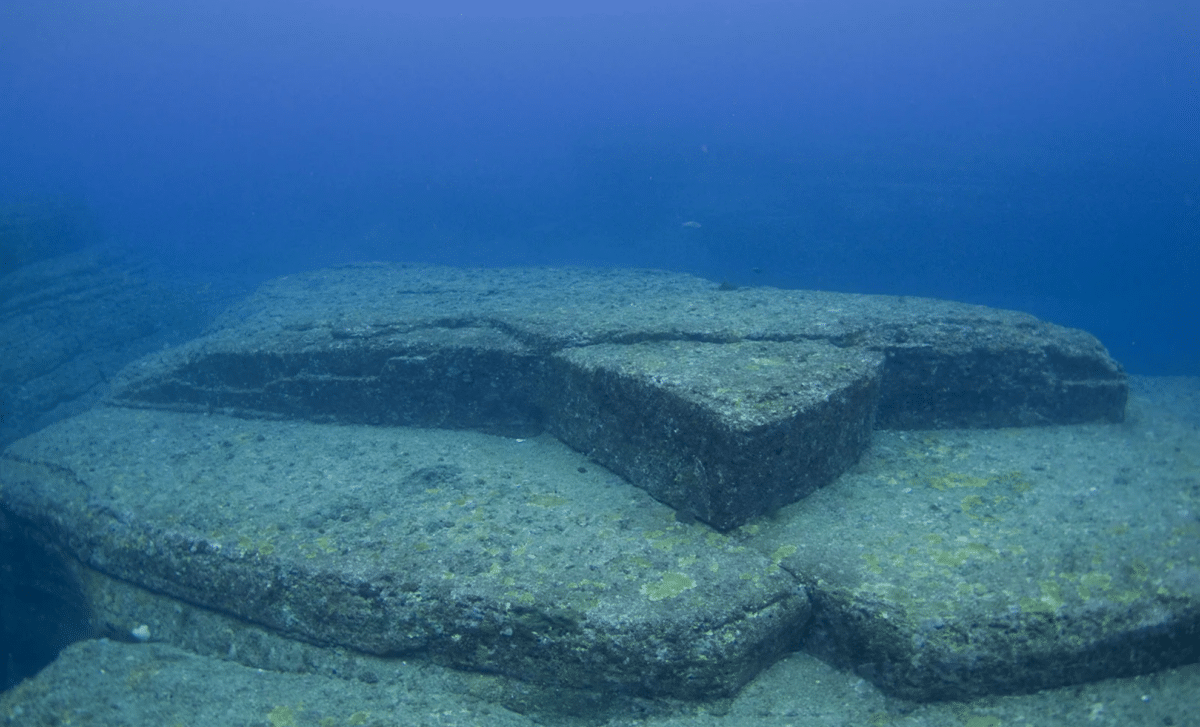
The Yonaguni Monument, located off the coast of Yonaguni Island in Japan, has long been a subject of debate and intrigue. First discovered by diver Kihachiro Aratake in 1986, the submerged rock formations bear a striking resemblance to ancient man-made structures, such as terraces or stepped pyramids. Over the years, many theories have been proposed, ranging from the idea that the monument is the sunken ruins of a lost civilization to the belief that it could be remnants of the mythical Atlantis. However, recent findings, particularly a study presented by Hironobu Suga and his team at the 2024 Association of Japanese Geographers Spring Academic Conference, challenge these speculations. According to their research, the formations are more likely the result of natural geological processes, offering new insights into the structure’s origins.
A Natural Wonder or Ancient Monument?
The initial discovery of the Yonaguni Monument caused a stir, with many immediately jumping to the conclusion that it was a human-made structure, perhaps built by an ancient civilization. The formations appeared to resemble terraces or steps, sparking theories about an ancient lost culture that might have built them. However, geologists and scientists have taken a different view, suggesting that the monument is a natural formation shaped by the forces of nature over thousands of years.
As noted by geologist Robert Schoch of Boston University, who dived at the site in 1997, “Yonaguni lies in an earthquake-prone region; such earthquakes tend to fracture the rocks in a regular manner.” This observation highlights the role that tectonic activity could have played in shaping the monument. The region’s seismic activity could have caused fractures in the rock, giving rise to the angular features seen at the site. Schoch, known for his controversial theories about ancient structures, further remarked on the natural nature of the formations, emphasizing that the regularity of the fractures was consistent with natural geological processes.
(Melkov/Wikimedia Commons, CC 1.0 Universal)
The Role of Erosion in Shaping Yonaguni
Further research by experts has brought the process of erosion into the conversation, adding another layer to the debate. According to the findings of Suga’s team,
“Through underwater observations, we were able to observe erosion processes, such as bedrock detachment, abrasion, and gravel generation, as well as the ongoing formation of erosional formations, such as potholes of various shapes and sizes.”
This study, presented at the 2024 Association of Japanese Geographers Spring Academic Conference, provided crucial evidence that the monument’s features are likely the result of continuous weathering and erosion of sandstone on the seafloor.
Suga’s team meticulously documented the various erosion processes at work, such as the detachment of bedrock and the formation of potholes. The gradual wear and tear of the rock, influenced by ocean currents, temperature fluctuations, and the constant movement of tectonic plates, have led to the creation of the unique formations. This research contradicts the idea that these features were deliberately constructed by an ancient civilization and instead points to the natural forces that have shaped the landscape over time.
An Ancient Mystery with Modern Answers
Despite the convincing evidence of natural processes at work, the Yonaguni Monument continues to attract interest due to its unusual appearance and the mystery surrounding its origins. Many visitors, drawn by the idea of a lost civilization, still visit the site, hoping to uncover a glimpse of a hidden past. However, as noted by the late author John Anthony West, who explored the site with Schoch, “Though the slope itself, now a tumult of ragged, fractured planes, did not much look like the underwater formation we’d been studying, it was clear enough that it was basically the same geomorphology – just that the slope, exposed only to wind and rain, had taken on a very different and ragged appearance over thousands of years.”
West’s reflection points to the enduring fascination with the site, even as scientific evidence increasingly leans toward a natural explanation. Over the years, the monument has transformed into a symbol of both the power of nature and the mysteries that continue to captivate humanity’s imagination. While it may not be the lost city of Atlantis or a relic of an ancient civilization, it remains an awe-inspiring natural wonder, shaped by the forces of the Earth itself.
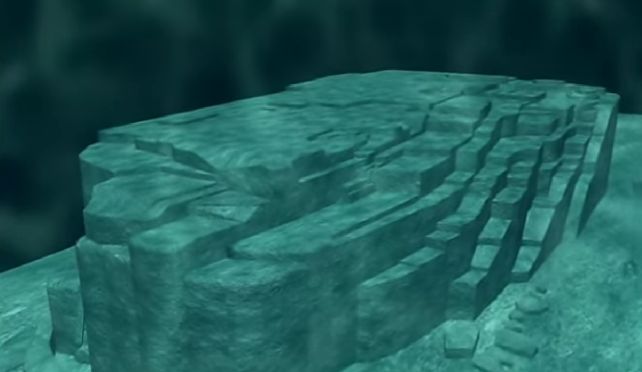
Credit: 明智光秀/YouTube
The Continuing Debate: Artificial or Natural?
While many geologists and experts now agree that the Yonaguni Monument is likely the result of natural geological forces, there are still those who remain unconvinced. The symmetry and regularity of the formations continue to spark debates about their true origin. Some even argue that the presence of certain features, such as straight edges and right angles, cannot be fully explained by natural processes alone.
However, the research presented by Suga and his team provides a compelling case for the natural origin of the site. “While these formations were once thought to be artificial, no archaeological remains or traces of human activity have been found,” they noted in their 2024 study. This absence of evidence for human intervention strongly suggests that the monument is a product of geological forces rather than human hands.
First Appeared on
Source link






Leave feedback about this