

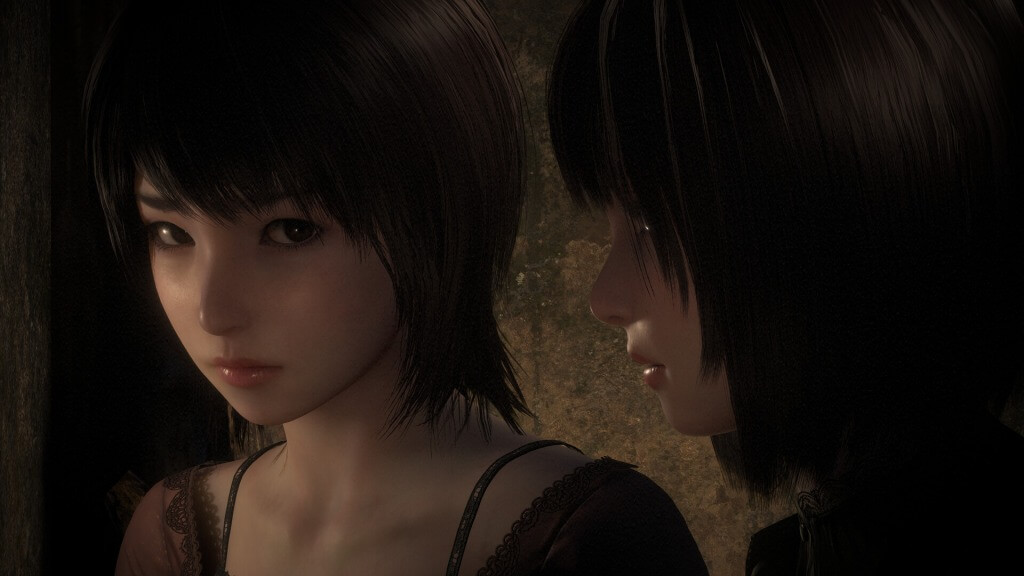
If there’s an upside to the game industry’s continued obsession with risk-averse remakes, it’s that this trend has brought several iconic horror series back from the dead. The latest to get the remake treatment (in this case, for the second time) is Fatal Frame II: Crimson Butterfly, a 2003 PlayStation 2 game often considered an undisputed great. Simply put, it’s about ghost photography. Less simply put, it’s about the suffocating specter of traditionalism and a town so steeped in past sins that it’s frozen in an endless loop of repentant torment. Make no mistake, Minakami Village is not an ideal tourist destination.
As for this remake, like virtually all of these recent horror retreads, there’s a devil’s bargain at play. It trades the original’s fixed camera angles and the atmosphere that came with it for shiny new graphics, a much friendlier control scheme (the original had character movement on the right stick and camera movement on the left, which is just twisted), and the ability to play it, like, at all—it has never been re-released, and a PS2 disc goes for a lot on eBay. Thankfully, what matters most returns intact: This remake is damn scary, both in an immediate sense, as creepy ghosts pop out of nowhere, and in its chilling reminder of how structural violence can seep into the very bones of a place.
The bad times begin as a pair of twins, Mio and Mayu, reminisce in a forest glade. They had played here when they were little kids, something that brings back a not-so-pleasant memory for Mio. Her overeagerness once led to her sister Mayu taking a steep fall, one that left her with a permanent leg injury. When Mio snaps out of reliving this, she sees that Mayu is wandering off, following a crimson butterfly into the forest while mumbling something incoherent. Mio chases after her, but is swallowed by the woods. When she finally breaks into a clearing, the sky has turned dark. In front of her is a decrepit town that looks straight out of the previous century. She’ll soon learn its name—Minakami Village—and become very familiar with a heinous ritual conducted there. Mio has to track down her sister and discover a way out of this very bad place before it swallows them.
Doing this isn’t so easy, mostly because of the ghosts. To survive, Mio needs to use a powerful relic, the Camera Obscura, a tool that can perform exorcisms by taking pictures of the dead. Just like when the game first came out, this focus on photography is ingenious because it goes against what most people want to do when something really unnerving is on the screen: close their eyes. You’ll need to stare straight at ghoulish apparitions as you wait for the camera to focus. Not only that, but you’ll have to wait until the spirit is about to lunge before snapping a picture to get the most out of your film and stun the ghost out of its attack. If you don’t time it right, well, at least there are healing items conveniently stashed throughout the village (although picking them up may trigger a jump-scare and another haunting).
Beyond this paranormal game of chicken that leaves you waiting for the perfect moment, there are plenty of smaller Camera Obscura features to fiddle with, like filters that come with pros and cons—one lets you take pictures from much further away but is longer to reload, while another is highly damaging but only works at close range. It’s not exactly as complicated as navigating a DSLR, but the basic camera functionality of adjusting your focus, zoom, filters, and various types of film (basically ammo) offers lots of options to lay the dead to rest. These many toggles also create natural moments of panic as you fumble to get the perfect configuration while something nasty approaches.
First Appeared on
Source link




Leave feedback about this