

Sign up for the Slatest to get the most insightful analysis, criticism, and advice out there, delivered to your inbox daily.
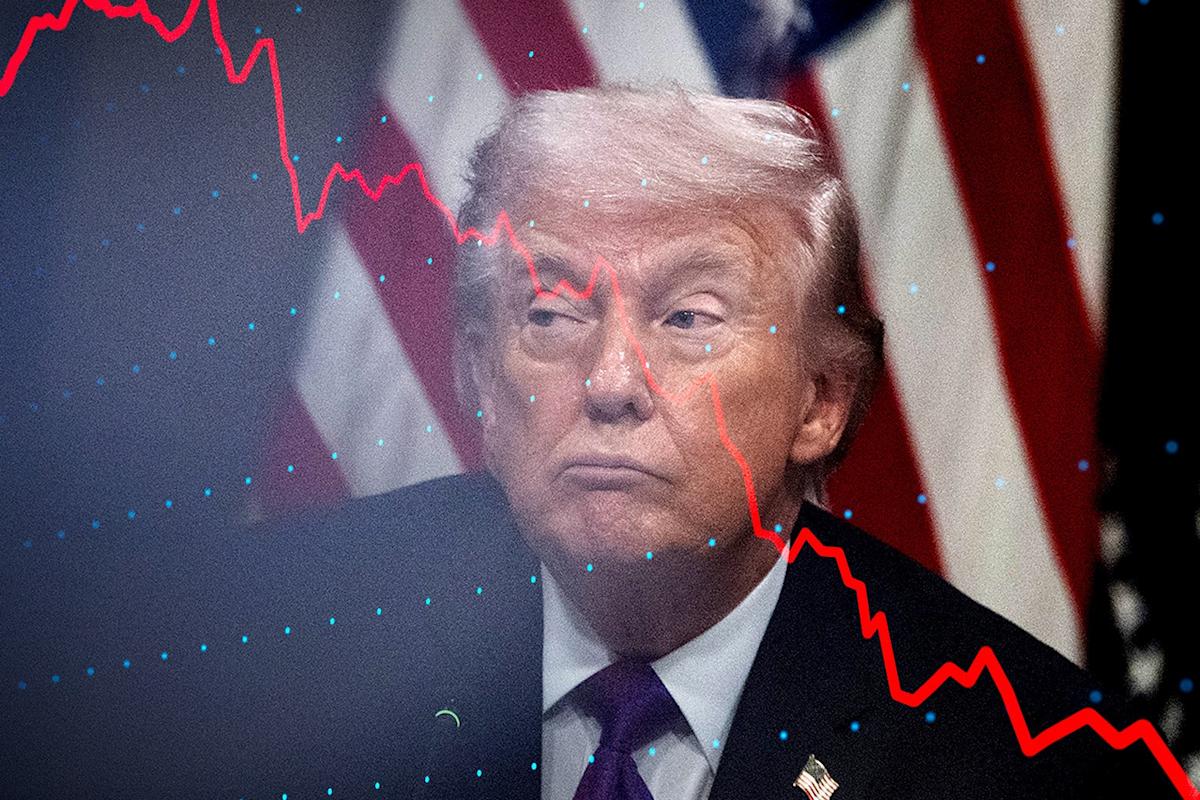
For any president, it’s not a great sign when you see job numbers going down and gas prices going up. That’s particularly true when you’re a president who has bragged of ushering the American economy into a “golden age.” And that’s exactly where Donald Trump finds himself Friday, thanks to two economic developments that add up to bad politics news. One is the latest twist in a slow-moving story about the health of the job market. The other is the predictable fallout of Trump’s days-old war against Iran.
First, the twist. Friday morning, the Labor Department released the latest figures on how many jobs the U.S. economy created in February. Except “created” turns out to be the wrong word. The new numbers show that the economy lost 92,000 jobs last month. Worse still, the department reported that the federal government had overestimated the number of jobs employers added in its two previous reports. (It often refines its estimates as more data comes in, but in this case the revisions have essentially zeroed out any job creation over the past three months.)
The numbers surprised forecasters, reviving fears of a potential recession. Investors recoiled, sending stocks falling. Even Trump officials struggled to sugarcoat the situation. “I think we have to address the fact that this is not a good report in its raw numbers,” Labor Secretary Lori Chavez-DeRemer conceded on Fox Business, before blaming a labor strike in California and the weather. (As New York Times economics reporter Ben Casselman notes, bad weather can depress job numbers. But that doesn’t seem to have been a big factor this time, with fewer people reporting being unable to work because of the weather than did a year earlier.)
The government reports job figures on a predetermined schedule, but there’s no question that the latest ones land at an inopportune moment for Trump. Which leads to the second economic development this week that should worry the president: skyrocketing gas prices. Trump’s bombing campaign against Iran has disrupted the pumping and shipping of crude oil, driving up gas prices worldwide. In the U.S., a gallon now costs $3.32 on average, an 11 percent jump since last week and the highest recorded sticker price during either of Trump’s presidencies. What happens in Tehran, it turns out, doesn’t stay in Tehran.
Wars—as well as claiming civilian lives and producing horrifying humanitarian crises—sometimes cause one-off price shocks. But sustained fighting could also further logjam oil production and drive up the cost of other goods the region exports, including aluminum, farm fertilizer, and natural gas. The cost of anything that uses oil as an input, from making an iPhone to buying a plane ticket, could soon rise. The war has strangled shipping through the Strait of Hormuz, a U-bend-like chokepoint off the Iranian coast that acts as a highway for more than a third of the world’s oceangoing oil exports each year. On Wednesday, the number of tankers that passed through the strait was zero.
First Appeared on
Source link






Leave feedback about this