

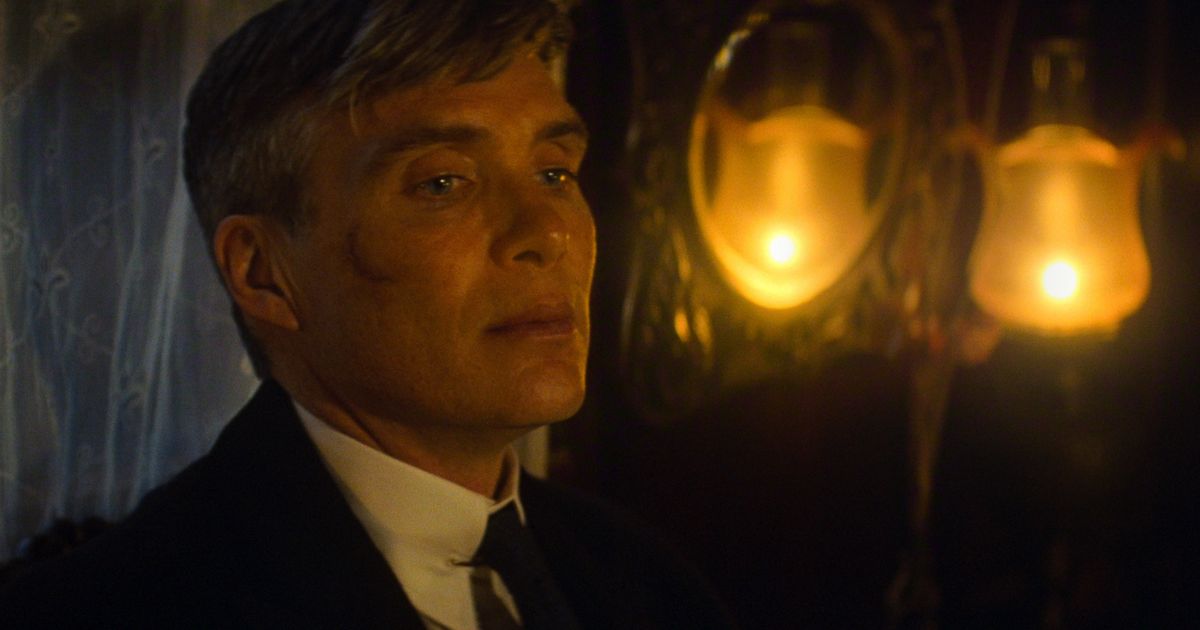
Peaky Blinders: The Immortal Man, the feature-length continuation of the hit Netflix show, begins with a massacre. Late on the night of November 19, 1940, we watch as a group of women pour into a munitions factory in Birmingham. Before the start of their evening shifts, the women sing happy birthday to one of their own, until a Looney Tunes–esque slide whistle signals that a bomb is falling and the whole factory goes up in flames. The jarring sequence intends to remind us of the literal stakes at play in World War II. It’s not just that Europe is at war, but Birmingham is too. Which means the Peaky Blinders, the based-on-real-life Victorian gang that haunted its cobblestoned streets, have to take a side in this soon-to-be global conflict. Before the credits roll at the end of the film, The Immortal Man informs the audience that not only did the bombing of this munitions factory in Birmingham actually happen but that the film you’ve seen up till that point is dedicated to the memory of those who died that night. So when you’re watching Cillian Murphy and Barry Keoghan mud wrestle, just know that’s a tribute to fallen factory workers, okay?
The faux-seriousness of The Immortal Man is especially egregious when the film plays up the television show’s worst behaviors. The appeal of Peaky Blinders has always been somewhat two-fold: There’s the rollicking, arch family crime drama where the Shelbys and their kin have to come together and defeat a slightly more famous big bad, like a rum mogul (Tom Hardy in season two) or the Sicilian mafia (led by Adrien Brody in season four). And then there’s the part of the show that seems designed for manosphere Instagram Reels, one that treats Murphy’s crime boss turned politician Tommy Shelby like a Walter White–ian figure who is justified in all the violence he does no matter how much it tortures him. It felt like a bad omen when the first trailer for The Immortal Man was mostly absent of recurring characters from the show — where are the canonical Blinders? — though maybe director Tom Harper and writer and showrunner Steven Knight wanted things to feel fresh for a potentially new audience.
In that sense, The Immortal Man is probably perfect for someone who has mostly only engaged with Peaky Blinders over minute-long social-media clips and montages of fight scenes. Light on lore, the film reintroduces Murphy’s Tommy as a retired crime boss loping around his house avoiding ghosts of characters killed onscreen and off. What has he been doing other than trudging around? Well, writing a book called The Immortal Man, which is about as close the film gets to a running joke. Eventually, Tommy’s no-fun sister Ada (Sophie Rundle) comes knocking because his bastard son Duke (Barry Keoghan) has been running the Peaky Blinders and he’s doing so in too fascist a way for Ada to tolerate. Literally: Duke has been working with Nazi operator Beckett (a very hammy Tim Roth) on a scheme to flood England with counterfeit bills and tank the economy. New cast members don’t have to sink the ship: The show had a rotating rogues’ gallery of guest stars (including but not limited to the aforementioned Hardy, Josh O’Connor, Anya Taylor-Joy, and so on), all of whom were able to brighten the show’s dour qualities. Here it feels like everyone has been instructed to take their cues from Murphy, who might as well be half-asleep.
The Immortal Man has scarcely enough plot to justify a whole episode, let alone a movie — all of it is an overwrought story of fathers and sons. Who will take responsibility for Duke — Tommy or Beckett? Who will Duke embrace as his guide to “justified” violence — the Nazi or the crime boss? Neither of these questions are very interesting, but the film belabors them in dark, dusty rooms long past when the answer is obvious. In the meantime, The Immortal Man embraces a violence in Tommy that’s usually relegated for the show’s season finale, when he’s past the point of no return. The film’s relationship to Tommy’s violence is that much more wobbly and flexible — whatever honor code he once abided by can be found in the graveyard he haunts on his big estate. In the meantime, women are brutalized and corpses get fed to hungry pigs. Never mind that most crime organizations would probably be more fascist than not: Somehow Tommy gets to be both woke when it comes to politics but also murders a wise-cracking soldier in the Garrison without batting an eye. The frisson between what Tommy believes and what he does should make The Immortal Man interesting, but mostly it just makes the tone incomprehensible and cruel.
The film’s closing dedication to those factory workers lands especially bitterly when the women in the film are more cannon fodder than ever before. Almost every woman in the film is either killed or a sexual object, with Rebecca Ferguson’s “Queen of the Gypsies” Kaulo being a literal vehicle through which a dead woman speaks. Peaky Blinders has never had, like, the best representation of women, but the film’s repeated use of dead women as motivating factors in family violence gets repetitive and tedious, especially when fans of the show know its early seasons were populated with bright and compelling female characters like the late Helen McCrory’s Aunt Polly or Natasha O’Keeffe’s Lizzie. The Immortal Man could care less about this, especially when there’s explosions for guys to look cool walking away from. The guys get off scot-free — the status quo shaken, but not spilled — and the women are relegated to the credits.
First Appeared on
Source link





Leave feedback about this