

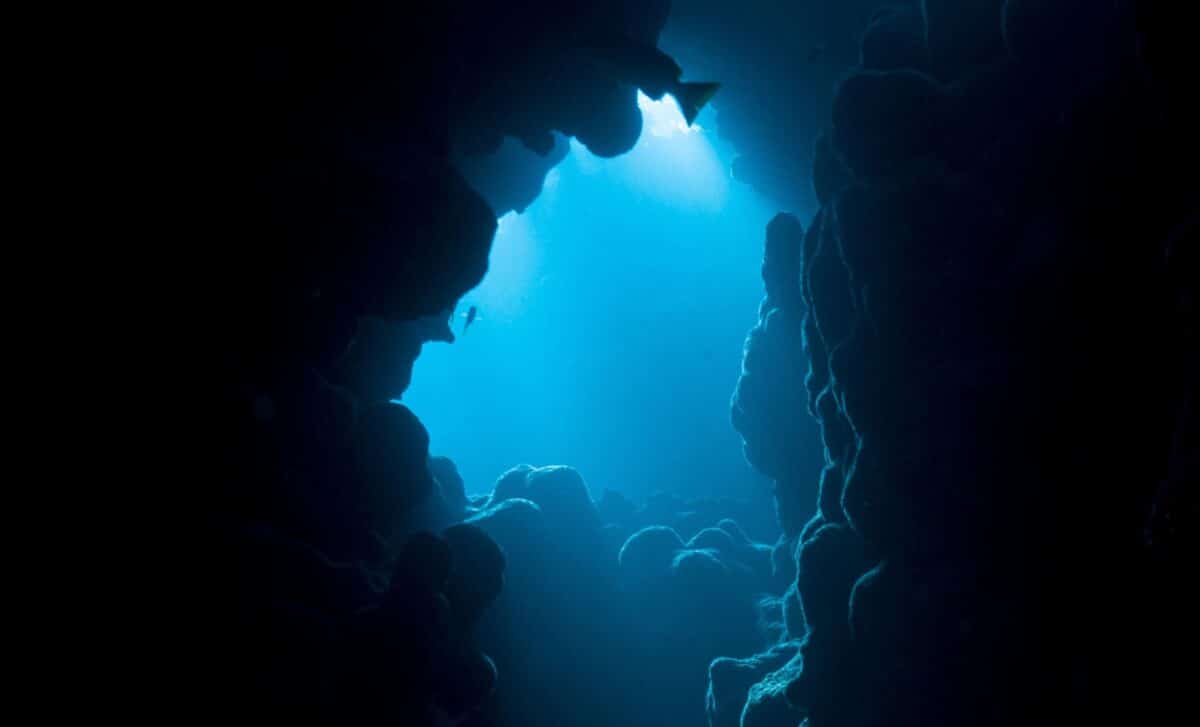
A massive canyon hidden beneath the Atlantic Ocean has long baffled geologists. Scientists now believe they may finally understand what helped create it, and this findings help clarify how one of the ocean floor’s most striking structures came into being.
About 1,000 kilometers off the coast of Portugal, the King’s Trough complex stretches across roughly 500 kilometers of seafloor. Because of its immense scale and canyon-like structure, scientists often describe it as the “Grand Canyon of the Atlantic.” Despite its prominence in maps of the eastern North Atlantic, its origin remained uncertain for decades.
Rece,tly, the researchers from the GEOMAR Helmholtz Centre for Ocean Research recently revisited the formation using new datasets and detailed mapping.
A Vast Canyon System Beneath the Ocean
The King’s Trough complex (KTC) is made up of elongated trenches and deep basins carved into the Atlantic seafloor. Among its most prominent features are Peake Deep and Freen Deep, located toward the eastern part of the structure.
Scientists had previously proposed that the system formed simply as the oceanic crust stretched apart over time. That hypothesis seemed plausible given the tectonic activity in the North Atlantic. Still, it did not fully explain why such a large structure developed precisely in that location.
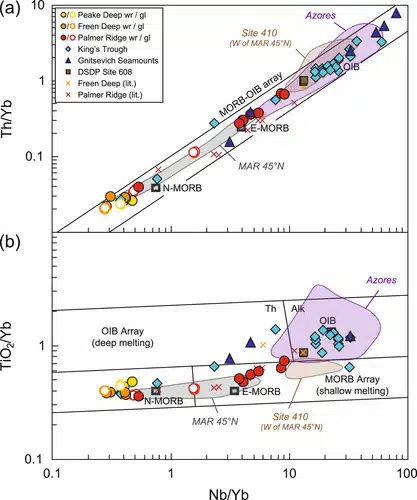
To investigate further, the research team carried out high-resolution sonar mapping of the seafloor. They also collected volcanic rock samples from several points inside the trough system. According to the study published in Geochemistry, Geophysics, Geosystems, the chemical composition of these rocks helped researchers determine both their age and geological origin.
Signs of an Ancient Plate Boundary
Analysis of the samples suggests that the King’s Trough complex formed between about 37 and 24 million years ago. During that time, researchers believe a temporary tectonic plate boundary passed through the region.
This moving boundary created intense fracturing and stretching of the seafloor, which likely produced the large trough system. Marine geologistAntje Dürkefälden explained that:
“Researchers have long suspected that tectonic processes – that is, movements of the Earth’s crust – played a central role in the formation of the King’s Trough.”
The plate boundary did not remain there permanently. Once it shifted southward toward the area of the present-day Azores, the geological activity responsible for shaping the trough system gradually ceased.
Mantle Plume from the Deep
The researchers also identified another factor that may explain why the plate boundary passed through this specific region: the presence of a mantle plume, a column of hot material rising from deep inside Earth. As cited by the study, the heat from this plume likely weakened the crust, making it easier for tectonic forces to fracture the seafloor. Marine geologist Jörg Geldmacher suggested that the heated crust became mechanically weaker.
Scientists believe this plume was probably an early branch of the Azores mantle plume, which remains active about 700 kilometers south of the King’s Trough today.
“Large submarine canyon-like troughs are still poorly understood features on the ocean floor,” the researchers report in their paper.
The researchers also point to the Terceira Rift in the Azores region as a comparable system currently forming trenches of similar size.
First Appeared on
Source link






Leave feedback about this