

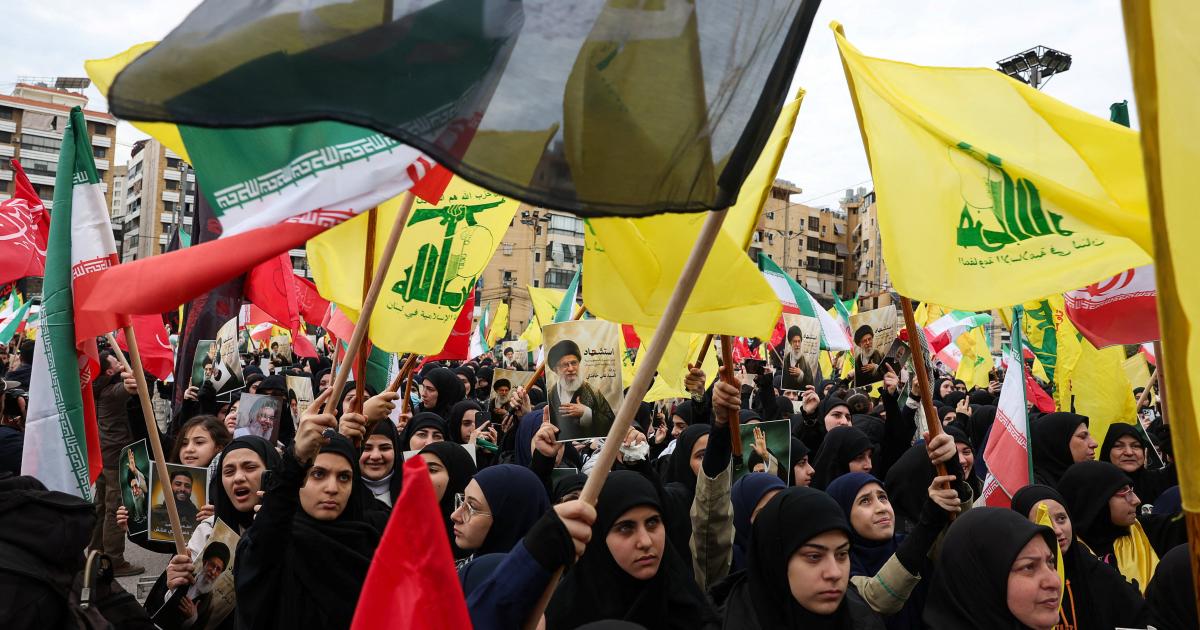
Hezbollah, Iran’s proxy in Lebanon, has joined the war against the United States and Israel, launching missiles and drones at Israeli military sites in response to the assassination of Iran’s supreme leader and other senior officials. Israel promptly responded by killing Hezbollah’s intelligence chief and bombing Hezbollah positions in Lebanon. On Tuesday, Israel sent more ground forces into southern Lebanon and warned 80 villages to evacuate.
Israel’s fight against Hezbollah will not be easy. Hezbollah remains deeply embedded in Lebanon, and the dysfunction of the Lebanese army and political system stands in the way of defeating the group. Hezbollah is adapting to war by promoting new leaders to replace those who have fallen and decentralizing its military operations. The group also still has rockets, drones, and missiles to launch and can likely mount overseas terrorist attacks, as it has in the past. Israel has fought Hezbollah for over 40 years—sometimes with on-again, off-again strikes and in other cases with massive bombings and limited invasions of Lebanon—and the group, while battered, survived.
But Hezbollah, once described by a senior U.S. official as the “A-team of terrorists,” is no longer what it once was. Since 2023, the group has been devastated by attacks from Israel, and its longtime ally, the regime of Syrian President Bashar al-Assad, has fallen. Its patron, Iran, has been battered by U.S. and Israeli airstrikes, both ongoing and from last June, and by domestic unrest. And Hezbollah’s opponents at home, long cowed by the group’s popular appeal and willingness to kill, are finally standing up. Politically, Hezbollah today may be weaker than at any time since its founding in the 1980s.
In other words, Hezbollah is down but not out. The United States, Israel, and regional partners should seize on Iran’s vulnerability to step up pressure on Hezbollah even further. It is possible to diminish the group’s power and influence permanently, but it will take sustained pressure, long-term investment in state institutions, including the Lebanese armed forces, and careful diplomacy.
“FROM AN ARMY TO A MILITIA”
Hezbollah’s trials began on October 8, 2023, the day after Hamas’s devastating attack on Israel. After decades of conflict, Hezbollah and Israel exchanged limited tit-for-tat blows for months. In September 2024, however, Israel went on the offensive. It killed or wounded over 1,000 members of Hezbollah by detonating explosives hidden in their pagers and walkie-talkies. Israel followed by striking Hezbollah’s military positions; assassinating high-ranking officials, including the group’s long-time leader Hassan Nasrallah; and invading southern Lebanon. Reeling from these attacks, Hezbollah’s vaunted military forces and arsenal of rockets and missiles proved ineffective. In November 2024, the group agreed to a cease-fire, under which it withdrew its forces from south of the Litani River, which sits about 20 miles from the Israeli border, to be replaced by the Lebanese armed forces.
Nasrallah’s successor, Naim Qassem, publicly admitted that Hezbollah suffered 18,000 casualties in the fighting, including 5,000 deaths. Israel claimed it had destroyed 80 percent of the group’s rocket arsenal. Other losses were less tangible. Qassem, for example, is markedly less charismatic and commanding than Nasrallah was. As the Lebanon analyst Hanin Ghaddar has written, “Hezbollah has been reduced from an army to a militia.” But even after the fighting, Hezbollah still could field 25,000 rockets and missiles and between 40,000 and 50,000 full- and part-time fighters and reserve forces.
After the cease-fire, Israel kept five military posts within Lebanese territory and routinely fired at Hezbollah, which Hezbollah claimed was a violation of the truce. Between November 2024, when the cease-fire was agreed to, and the outbreak of war in Iran in February 2026, Hezbollah did little in response to Israeli operations, believing (probably correctly) that resisting would be ineffectual and could lead to punishing retaliation. The group’s muted reaction, however, cost it some credibility among its core supporters. Hezbollah, after all, has branded itself as part of a movement to resist the Israeli state.
The group not only suffered militarily and reputationally but also financially. Throughout 2024, Israel bombed branches of a Hezbollah-affiliated bank in an attempt to damage the group’s financial infrastructure. And in response to U.S. pressure, the Lebanese government has put some restrictions on Hezbollah financial institutions. The organization’s expenses, meanwhile, have soared: it must recruit new fighters, acquire new weapons, and take care of the families of those killed in its service. According to the news outlet The New Arab, Hezbollah has frozen or reduced payments to its fighters and their dependents.
FEW FRIENDS, MORE FOES
Declining support from foreign governments has made Hezbollah’s problems worse. In December 2024, the Assad regime, which had supported Hezbollah for decades, was overthrown and replaced by a government vehemently opposed to the group. Syria’s new rulers now interdict weapons flowing to Lebanon and have cracked down on the drug trade that was once a revenue stream for Hezbollah. The United States, after its capture of Venezuelan leader Nicolás Maduro, has also cut Hezbollah off from an important hub for its international smuggling networks.
Iran remains committed to Hezbollah in theory, but it, too, is on the back foot. Before 2023, Iran gave Hezbollah around $700 million per year, accounting for most of the group’s annual budget. It would be difficult for Tehran to send anywhere near that amount today. Iran’s infrastructure has been devastated by U.S. and Israeli strikes, and its economy is sputtering from mismanagement and sanctions. Over the last eight years, Iranians’ purchasing power has fallen more than 90 percent. The domestic protests in January, in which the Iranian government gunned down thousands of its own people, were originally animated by a collapse of Iran’s currency and a broader affordability crisis. The next Iranian government, even if dominated by clerical or Islamic Revolutionary Guard Corps hard-liners, might cut off or at least substantially reduce aid to Hezbollah, either because it is won’t be able to afford or because it could be bound to do so by an eventual cease-fire deal with the United States and Israel. U.S. President Donald Trump has justified his war, in part, by pointing to Tehran’s support for “terrorist militias.”
Hezbollah is also suffering from a crisis of counterintelligence. Through the pager detonations and a string of assassinations, Israel proved it had deeply penetrated the group. (Israeli intelligence was similarly successful in Iran.) Hezbollah must now rid itself of spies and secure its communications systems—tasks that are daunting in peacetime and nearly impossible to accomplish while under siege from Israel. Hezbollah’s leaders are probably struggling to communicate with one another, let alone trust one another.
Rival factions within Lebanon are also challenging Hezbollah in ways big and small, apparently less intimidated by the diminished group. The Lebanese armed forces have deployed to southern Lebanon to disarm and replace Hezbollah forces there—a move that would have been inconceivable before 2023—and have even searched homes for weapons belonging to Hezbollah, in response to Israeli demands. In addition, the Lebanese armed forces now controls Beirut’s airport, which Hezbollah used for years to fly in weapons and supplies. In November, Lebanese President Joseph Aoun even broke a taboo by admitting the country had “no choice” but to negotiate with Israel, either on border demarcation or, more ambitiously, a peace agreement.
Hezbollah’s foes will probably become more emboldened as Iran suffers through the latest round of fighting. On Monday, in response to Hezbollah’s attack on Israel, the Lebanese government announced a ban on Hezbollah military activities—a ban it cannot enforce, but the sentiment behind it shows more willingness to stand up to the group.
FINISHING THE JOB
Hezbollah’s biggest advantage lies in the weakness of its domestic opponents. The Lebanese armed forces are unwilling and probably unable to confront Hezbollah head-on throughout the country. And although many figures within Lebanon’s government oppose Hezbollah, they, too, are divided and have a history of turning on one another.
Hezbollah also maintains support, however begrudgingly, among Lebanon’s Shiite community, which makes up around 40 percent of the population. Many Lebanese Shiite Muslims are alienated by Hezbollah’s corruption, protection racket, and violence, but they have no clear alternative. They rely on the group to fight for their share of the Lebanese political pie. Power in Lebanon is carved up along religious lines, and Hezbollah performed well in the May 2025 parliamentary elections.
The group will also do whatever it can to resist the Israeli and U.S. goal of complete disarmament. Weapons are essential to its self-image; its flag even features an assault rifle. But there could be hope for a partial disarmament. Last year, the group held internal discussions on what that might look like. More recently, the Lebanese army has presented a vision for disarming Hezbollah between the Litani and Awali Rivers.
Hezbollah’s biggest advantage lies in the weakness of its domestic opponents.
The United States can continue to chip away at Hezbollah by strengthening the Lebanese state’s institutions, including its armed forces. Some military and financial aid will be stolen, while other programs will prove ineffective—as they have in the past. Although progress in building the armed forces has been limited, the investment is still worth making. Washington should also provide support to the Lebanese state so it—not Hezbollah—leads the country’s reconstruction. According to a 2025 World Bank assessment, Lebanon needs $11 billion to rebuild, and that does not factor in damage stemming from this latest round of fighting. Lebanese citizens, especially those who are Shiite, will turn to Hezbollah for services if the government cannot provide them. The United States’ goal should be to steadily increase government influence in Lebanon and create space for less violent alternatives to Hezbollah to emerge.
The United States should also work carefully to get the Lebanese government and Israel on the same page. The United States should encourage the Lebanese government to negotiate a cease-fire with Israel with the promise of a more lasting peace. An Israeli withdrawal from Lebanon should be part of these negotiations: as long as Israel occupies Lebanese territory, Hezbollah can claim it must remain armed to defend Lebanon’s sovereignty. Washington’s goal should be to demonstrate that negotiations, not resistance, will lead to positive change for Lebanon and that Hezbollah’s troublemaking has a cost for Lebanese citizens. That way, Hezbollah either acquiesces to talks or risks being blamed for dragging Lebanese civilians back into war.
Any U.S. successes against Iran, both in the military sphere and at the negotiating table, can also help undermine Hezbollah. Even if Washington cannot convince Tehran to abandon its proxies, the United States could wear Iran down so much that it could no longer afford to provide massive funding to them—undermining Iran’s status as a reliable patron. The United States and its allies should also capitalize on Tehran’s weakened position and support Hezbollah’s opponents at home. At the very least, such continued pressure will keep Hezbollah off balance.
Loading…
First Appeared on
Source link





Leave feedback about this