

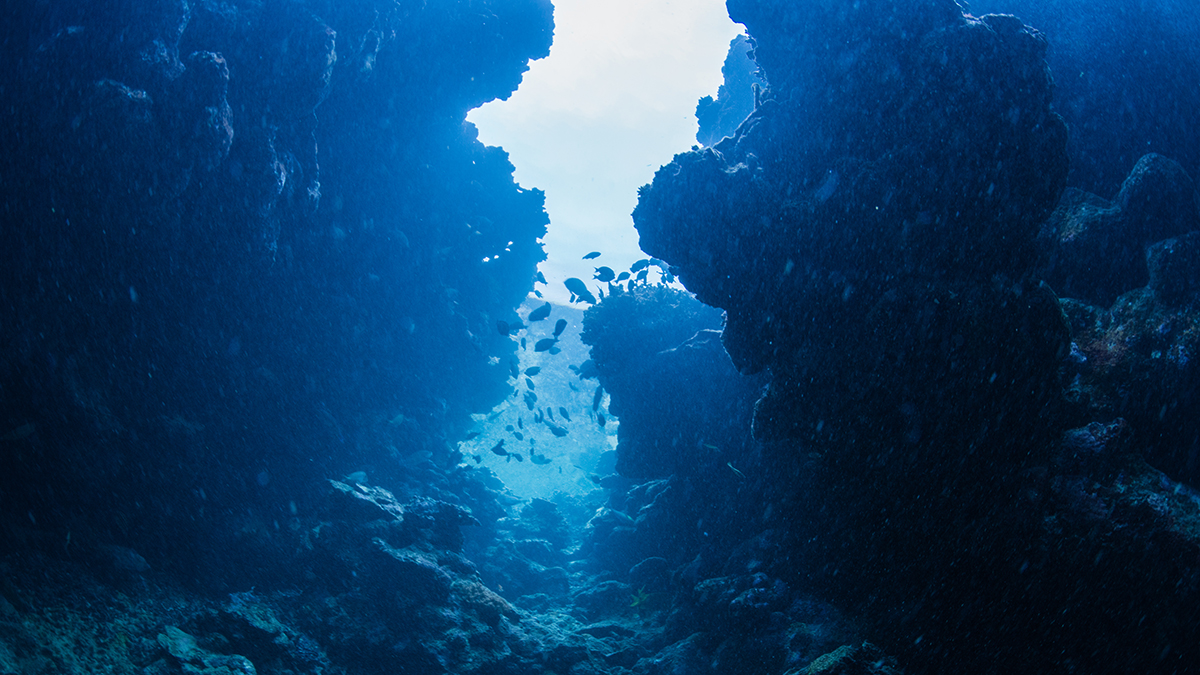
The King’s Trough complex, about 1,000 kilometers (roughly 600 miles) off the coast of Portugal, is known as the ‘Grand Canyon of the Atlantic’ because of its vast size, and a new study details the monumental forces that formed it.
Experts have long debated how this gigantic network of trenches and basins, extending some 500 kilometers across the seafloor, was created. One plausible explanation was that the features were simply the result of the oceanic crust being pulled apart.
The researchers behind the new study, led by a team from the GEOMAR Helmholtz Centre for Ocean Research in Germany, wanted to take a closer look – and they say the reality is rather more complicated.
Based on new, comprehensive datasets, the team suggests that a combination of weakening from heat from an existing mantle plume and the immense pressure of a temporary plate boundary caused the King’s Trough complex (KTC) to form in this spot.
“Researchers have long suspected that tectonic processes – that is, movements of the Earth’s crust – played a central role in the formation of the King’s Trough,” says marine geologist Antje Dürkefälden, from GEOMAR.
“Our results now explain for the first time why this remarkable structure developed precisely at this location.”
The researchers used high-resolution sonar to map the KTC, then collected volcanic rock samples from various points within the trough to analyze their chemical composition, which revealed their ages and origins.
Various new discoveries were made: First, the team was able to make a more educated guess about when the KTC was created, placing the event between 37 and 24 million years ago.
They also found strong evidence of a plate boundary passing through the region, creating the KTC, and moving on. It’s along this boundary that the key stretching and fracturing happened, the researchers think.
The main reason the plate boundary took this particular route was likely the existing mantle plume in the area, which effectively guided the boundary and its fracturing effects along the path of least resistance and helped determine where the KTC took shape.
“This thickened, heated crust may have made the region mechanically weaker, so that the plate boundary preferentially shifted here,” explains marine geologist Jörg Geldmacher, from GEOMAR.

However, as colossal as the tectonic forces were here, they weren’t strong or sustained enough to create a full seafloor-spreading ridge like the Mid-Atlantic Ridge, the researchers concluded.
“When the plate boundary later moved further south towards the modern Azores, the formation of the King’s Trough also came to a halt,” says Geldmacher.
The temporary plate boundary location and the mantle plume represent an unusual scenario for the KTC to form in, and these new details can now serve as the basis for future studies of this underwater phenomenon.
There are also connections to the rest of the planet, as the researchers believe the plume they identified was an early branch of the Azores mantle plume, which is currently active some 700 kilometers south.
The Terceira Rift in the Azores region is a comparable system of trenches currently in formation, the team suggests, matching the KTC in activity and in size.
If that comparison holds, it may offer scientists a rare, living example of how these incredible underwater canyon networks form and how they’re influenced by forces from above and by heat rising from deep inside Earth.
Related: Giant Chunks of The Seafloor Are Mysteriously Upside Down, Scientists Find
“Large submarine canyon-like troughs are still poorly understood features on the ocean floor,” write the researchers in their published paper.
“It can be speculated that the jump of the plate boundary toward the King’s Trough area and the repeated jump toward the Azores region were caused by the arrival of the respective plume branch at the base of the lithosphere.”
The research has been published in Geochemistry, Geophysics, Geosystems.
First Appeared on
Source link






Leave feedback about this