

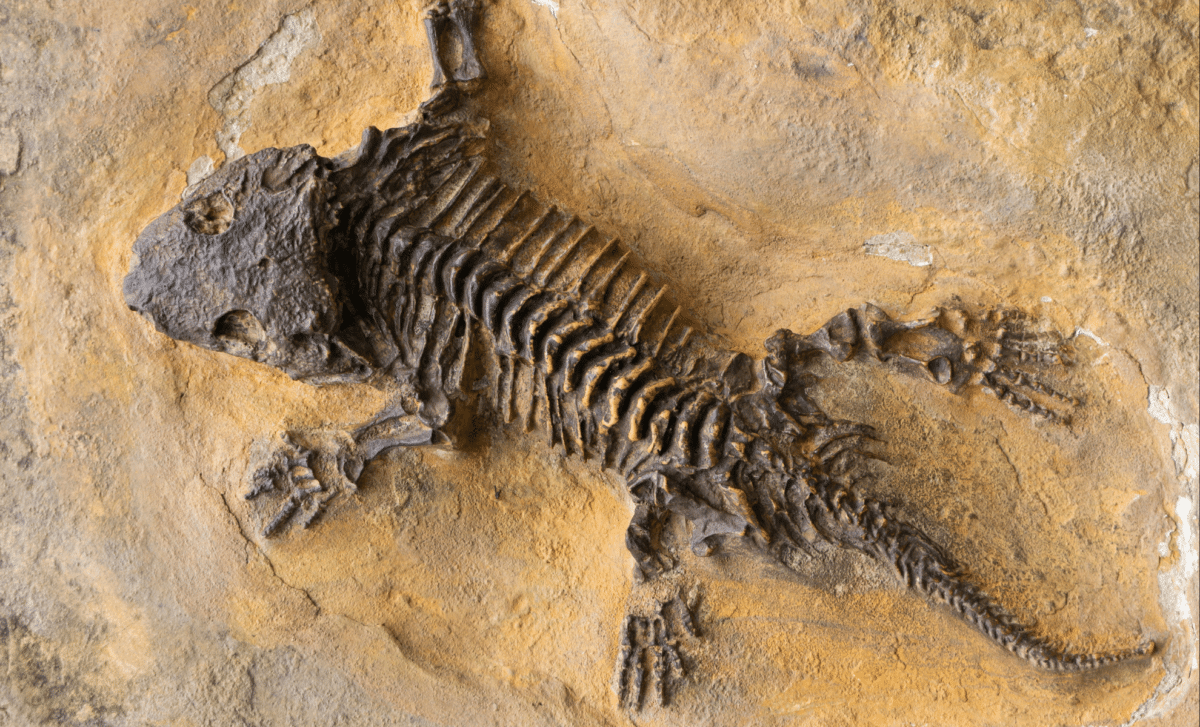
More than 280 million years ago, in the early Permian period, the complex dynamics of predator and prey were already shaping life on Earth. Researchers have uncovered remarkable evidence from fossilized skeletons of young herbivores, shedding light on a time when large land predators were hunting these plant-eating animals. This discovery, revealed in a recent study in Scientific Reports, offers a rare glimpse into the early interactions between apex predators and herbivores long before the age of dinosaurs. The findings challenge previous ideas about the development of predator-prey hierarchies, pushing back the timeline for the emergence of sophisticated ecosystems on land.
Uncovering Ancient Predator-Prey Relationships
The study, co-authored by Professor Robert Reisz, reveals how early terrestrial ecosystems functioned in ways similar to those we see in modern times. “This discovery shows predator-prey hierarchies were formed earlier than previously expected,” said Reisz. The research provides the earliest known direct evidence of interactions between large apex predators and herbivores in the fossil record, providing a key piece of the puzzle in understanding how early life on land developed. While predator-prey dynamics are well documented from the “Age of Reptiles,” the researchers explain that little information was available regarding the Paleozoic Era, when land vertebrates first evolved into large predators and herbivores.
This new study shifts the timeline for when such hierarchies first began to form, showing that large predators were already playing crucial roles in shaping the ecosystems of the Permian period. The findings are significant because they demonstrate how early vertebrate animals were adapting to new ecological pressures long before the more familiar age of the dinosaurs. By analyzing bite marks on fossilized skeletons of young herbivores, the study offers a glimpse into the complex interactions between predators and their prey in the ancient world.
The Role of Bite Marks in Identifying Predators
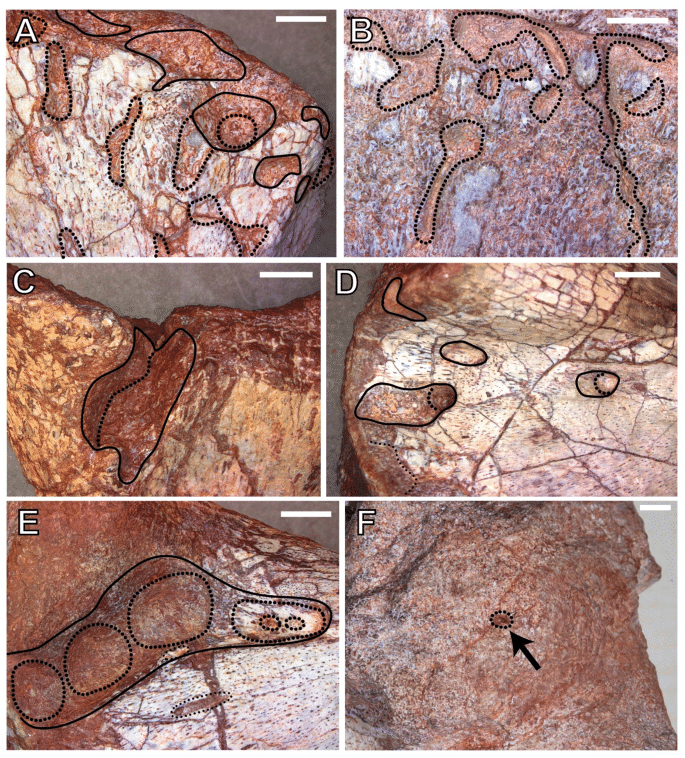
The researchers focused on the skeletal remains of three young herbivores that lived during the early Permian period. By closely examining the bite marks left on these fossils, they were able to identify evidence of large predators in the region.
“The puncturing, pitting, scoring, and furrowing marks on the skeletons of these three young plant-eating animals are indicative of large predators found on this site and in nearby areas,” said lead author Jordan M. Young.
These markings were crucial in identifying the specific types of predators involved, as they correspond to the tooth patterns of certain prehistoric species.
Among the predators implicated in the study are varanopid synapsids, such as Varanops, and sphenacodontid synapsids, including the well-known Dimetrodon. These animals were part of a group of early synapsids that would eventually give rise to mammals, and they were already exhibiting complex predatory behaviors. The bite marks were not only a sign of hunting but also suggested that scavengers and smaller arthropods may have been involved in the feeding process. The study offers a rare window into the food webs that existed during the Permian period, long before the dinosaurs dominated the land.
Scavengers and Arthropods: Adding to the Feast
In addition to the large predators, the study also uncovered evidence that smaller scavengers and arthropods played a role in consuming the remains of these young herbivores. As the skeletal remains showed signs of additional borings from arthropods, it became clear that these ancient creatures were also part of the early food chain. The research highlights how the Permian ecosystem involved not just large predators but a wide range of species interacting with one another in a dynamic and complex way. While large synapsids were likely the primary predators, smaller creatures also contributed to the process of decay and consumption, creating a rich and diverse ecological system.
The evidence of arthropod borings suggests that these creatures played an important role as opportunistic feeders. The cartilaginous bone ends in the skeletons provided a prime location for these arthropods to leave their marks. These types of interactions are often overlooked in studies of ancient ecosystems but are crucial for understanding the full extent of ecological networks. The combination of large predators, scavengers, and small arthropods shows that the Permian period was far from a simplistic world of giant herbivores and their top predators—it was a highly complex system with multiple layers of feeding and ecological interactions.
A New Chapter in Understanding Prehistoric Ecosystems
The study published in Scientific Reports marks a pivotal moment in paleontology by offering new insights into the earliest predator-prey dynamics in terrestrial ecosystems. The research demonstrates that even during the Paleozoic Era, ecosystems were already sophisticated and contained numerous trophic levels. As Professor Reisz explained,
“While these interactions are well known in the ‘Age of Reptiles,’ there has been little information available in the Paleozoic Era, when terrestrial vertebrates first evolved into large apex predators and herbivores.”
This highlights the importance of the Permian period in the evolution of land-based ecosystems.
The findings challenge long-held assumptions about the development of complex predator-prey relationships, suggesting that the foundations for these interactions were laid much earlier than previously understood. By investigating bite marks and other fossil evidence, the study provides a clearer picture of how life on land evolved and interacted with the environment. This research will likely open the door to further studies, deepening our understanding of the early history of life on Earth.
First Appeared on
Source link






Leave feedback about this