

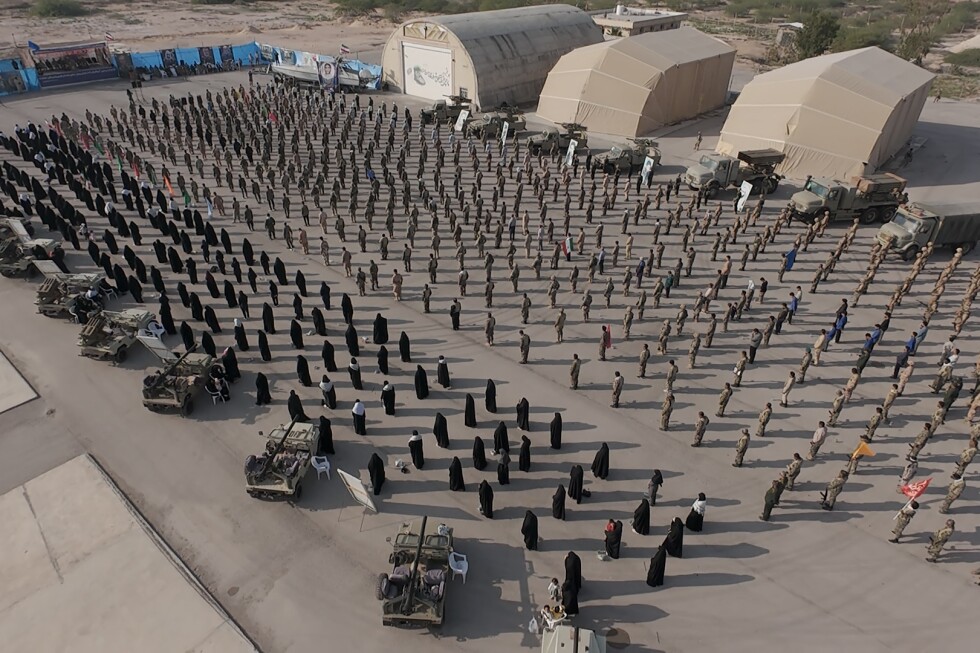
DUBAI, United Arab Emirates (AP) — The widening war in Iran has ground tanker traffic through the Strait of Hormuz to a halt and oil prices have soared, highlighting the important role the narrow passageway plays in global energy supply.
The Strait of Hormuz is the narrow mouth of the Persian Gulf through which about a fifth of the world’s oil passes. Tankers traveling through the strait, which is bordered in the north by Iran, carry oil and gas from Saudi Arabia, Kuwait, Iraq, Qatar, Bahrain, the UAE and Iran. Most of that oil goes to Asia.
Any disruption to traffic through the Strait of Hormuz is highly disruptive to the oil trade.
“The scale of what is at stake cannot be overstated,” said Hakan Kaya, senior portfolio manager at investment management firm Neuberger Berman. He said a partial slowdown lasting a week or two could be absorbed by oil companies. But a full or near full closure lasting a month or more would push crude oil prices, trading around $80 on Tuesday, “well into triple digits” and European natural gas prices “toward or above the crisis levels seen in 2022.”
Here’s what to know about the strait and the widening Iran war.
A key waterway for global shipping
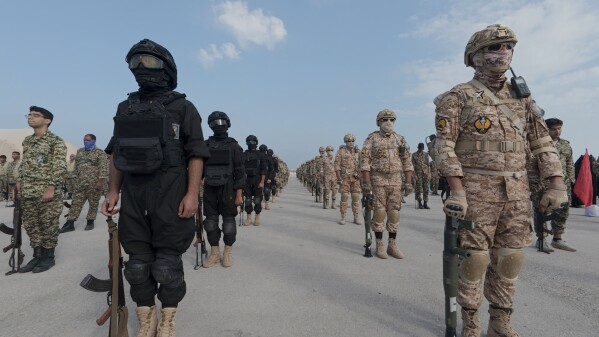
The Strait of Hormuz is a bending waterway, about 33 kilometers (21 miles) wide at its narrowest point. It connects the Persian Gulf to the Gulf of Oman. From there, ships can then travel to the rest of the world. While Iran and Oman have their territorial waters in the strait, it’s viewed as an international waterway all ships can ply. The United Arab Emirates, home to the skyscraper-studded city of Dubai, also sits near the waterway.
The strait long has been important for trade
The Strait of Hormuz through history has been important for trade, with ceramics, ivory, silk and textiles moving from China through the region. In the modern era, it is the route for supertankers carrying oil and gas from Saudi Arabia, Kuwait, Iraq, Qatar, Bahrain, the UAE and Iran. The vast majority of it goes to markets in Asia, including Iran’s only remaining oil customer, China.
While there are pipelines in Saudi Arabia and the UAE that can avoid the passage, the U.S. Energy Information Administration says “most volumes that transit the strait have no alternative means of exiting the region.”
Threats to the route have spiked global energy prices in the past, including during the Israel-Iran war in June.
Is the strait closed?
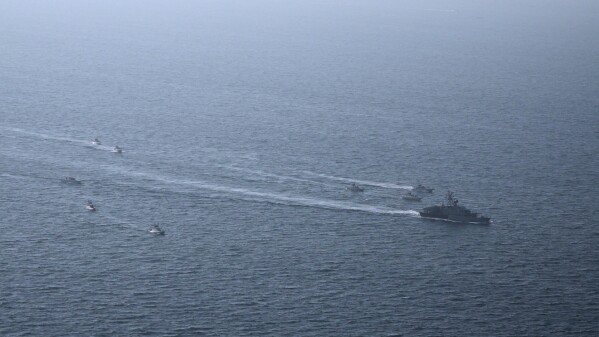
Iran has attacked several ships Strait of Hormuz and threatened any ships who try to pass through, effectively closing it.
“The Strait of Hormuz is closed,” declared Iranian Brig. Gen. Ebrahim Jabbari, an adviser to the paramilitary Revolutionary Guard, vowing that any ships that passed through it would be set on fire.
Previously, Iran temporarily shut down parts of the strait in mid-February for what it said was a military drill. Oil prices jumped about 6% in the following days.
In past times of tension and conflict, Iran has at times harassed shipping though the narrows, and during the 1980s’ Iran-Iraq war, both sides attacked tankers and other vessels, using naval mines to completely shut down traffic at points. But Iran had not carried out repeated threats to close the waterway altogether since the 1980s, even during last year’s 12-day war when Israel and the U.S. bombarded Iran’s key nuclear and military sites.
Global shippers suspend operations
Global shippers have issued service alerts saying they have suspended operations in the area. Danish shipping company Maersk, the world’s biggest shipping company, said Sunday it is suspending all vessel crossings in the Strait of Hormuz until further notice. Other ocean carriers including Hapag-Lloyd, CMA-CGM and MSC made similar announcements.
“No one is wanting to navigate it, and there’s no insurer who’s willing to stand behind any transport going through there right now.,” said Tom Goldsby, logistics chairman in the Supply Chain Management Department at the University of Tennessee. “Those ships that got stuck in the Gulf are not going anywhere. … There’s also a whole host of ships that were heading into the Gulf to replace them, and of course they’re anchored or going elsewhere now.”
Data and analytics firm Kplr estimated on Monday there were 70 laden oil tankers and 75 clean tankers, which carry refined oil products, in the Mideast Gulf, seemingly waiting to pass through. That’s roughly twice as many as usual, according to Kplr. Meanwhile, about 60 tankers are sitting just outside the Mideast Gulf, east of the Strait of Hormuz, in a holding pattern.
__
Anderson reported from New York.
First Appeared on
Source link





Leave feedback about this