

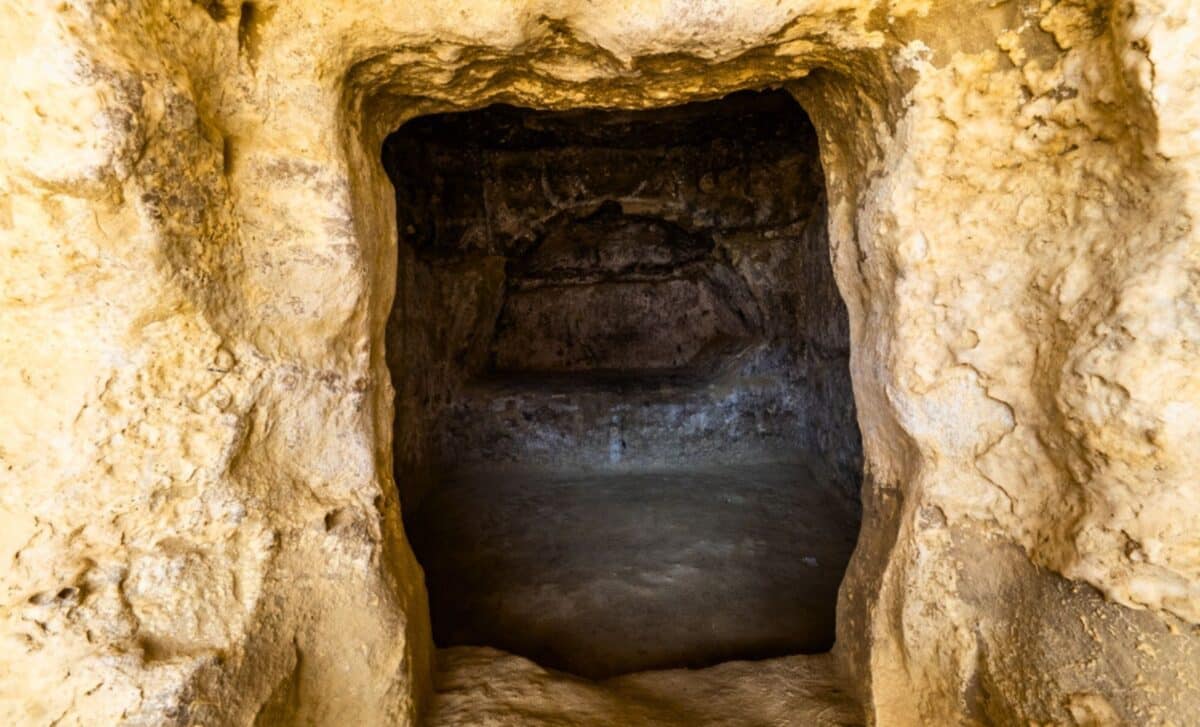
The stone slab had not moved since the seventh century B.C. It sat flush against the rock-cut face of a hillside in central Italy, sealing the entrance to a chamber that time and looters had somehow passed over. For the archaeologists who first spotted it, the question was not what they might find inside, but whether the seal was truly intact.
Davide Zori, a professor of history and archaeology at Baylor University, had spent years working the necropolis at San Giuliano, a site documented by the San Giuliano Archaeological Research Project approximately 70 kilometers northwest of Rome. Since 2016, his team had documented more than 600 tombs carved into the surrounding hills. Every chamber tomb they encountered, the kind shaped like a small house with a pitched roof, had been emptied. Some were looted as early as the late third century B.C., when the Romans began absorbing Etruscan territory. Others were plundered more recently.
This one was different.
When the team removed the massive stone blocking the entrance this past summer, they found themselves looking into a space that had remained dark and undisturbed for roughly 2,600 years. The air inside was still. On carved stone beds lay the skeletal remains of four individuals, surrounded by more than 100 grave goods that had not moved since the day they were placed there.
What the Sealed Chamber Contained
The tomb held ceramic vases, 74 of them nearly completely intact, alongside iron weapons, bronze ornaments, and delicate silver hair spools. The objects were precisely where mourners had left them in the seventh century B.C., a period when Etruscan civilization dominated much of central Italy before the rise of Rome.
Preliminary analysis suggests the four individuals buried together may represent two male-female pairs, though the research team is awaiting anthropological, isotopic, and genetic study before drawing firm conclusions. The arrangement of bodies and goods offers an unusually clear window into Etruscan funerary practices, one that has not been available from this region before.
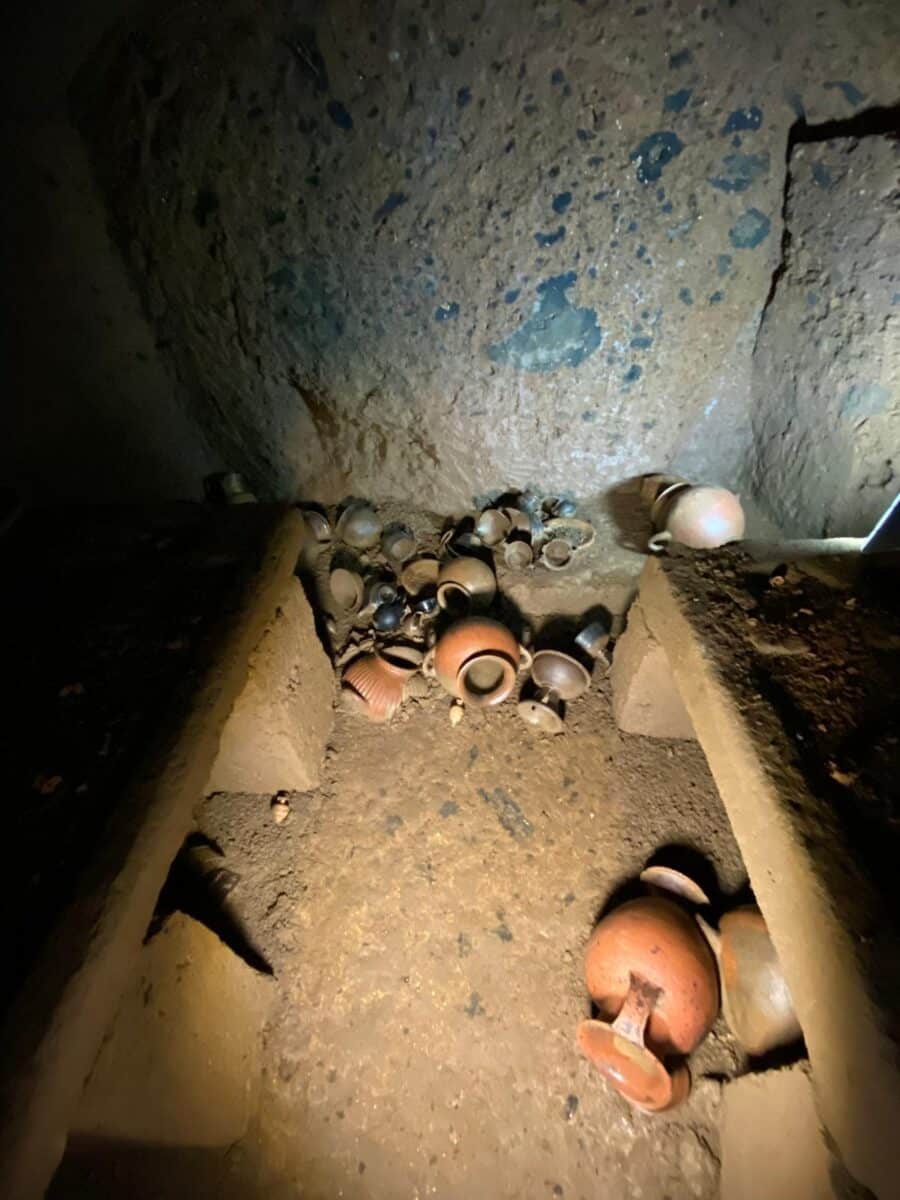
“This completely sealed burial chamber represents a rare find for Etruscan archaeology,” Zori said in a statement following the discovery, as reported by Baylor University News. “In the internal hilly region of central Italy, where the SGARP team works, a preserved chamber tomb of this age has never before been excavated with modern archaeological techniques.”
A Research Program Built on Collaboration
The San Giuliano Archaeological Research Project operates as a consortium led by Baylor University in partnership with the Virgil Academy in Rome and the local town of Barbarano Romano. The program functions under the auspices of Italy’s Ministry of Culture, and each summer brings Baylor undergraduates to the site as part of a study abroad course in archaeological research.
Jerolyn Morrison, the project’s laboratory director and a lecturer at Baylor, described how the discovery extended beyond the research team. Throughout the excavation and the subsequent documentation process, residents of Barbarano Romano visited the lab to view the vases as students cleaned and cataloged them. The artifacts, Morrison noted, connected the modern community to the ancient one buried in the hills above their town.
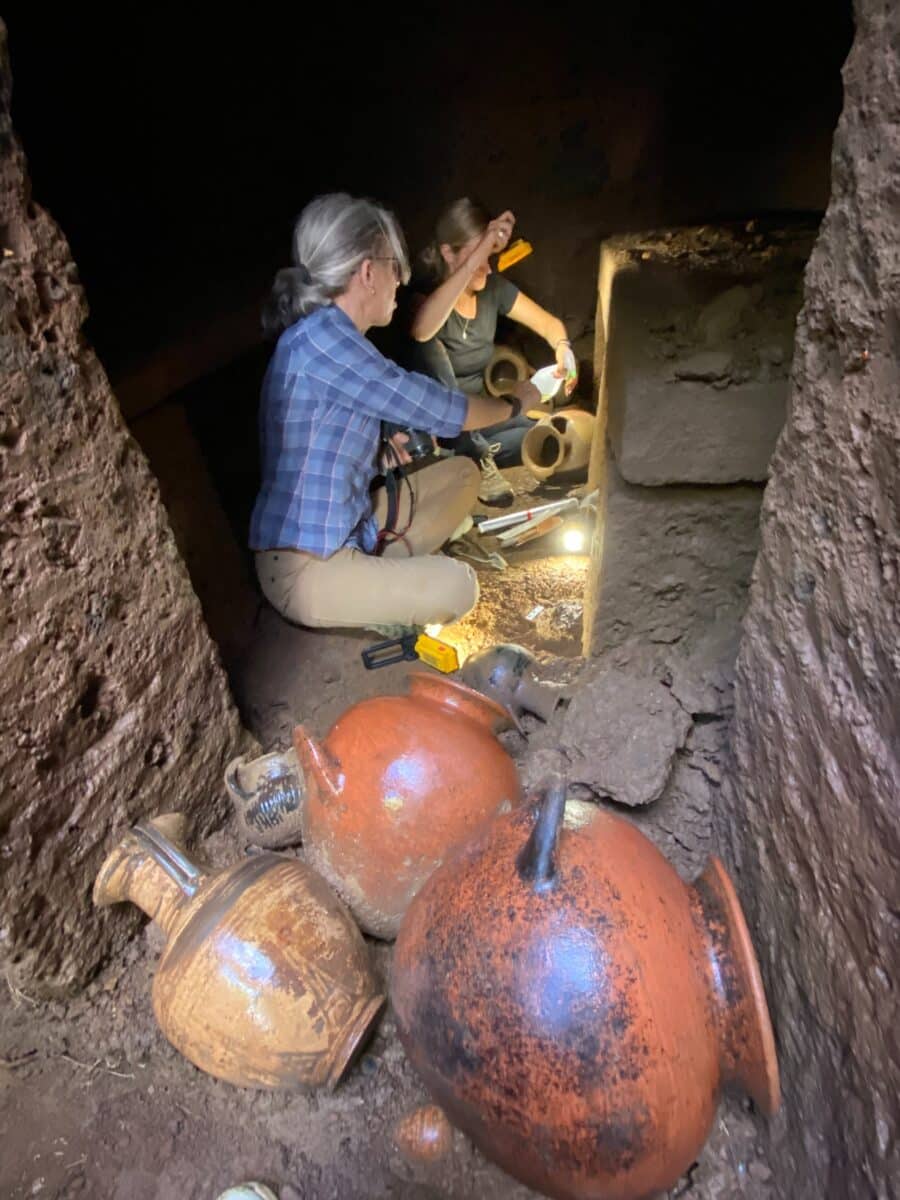
For the students involved, the experience was formative. Kendall Peterson, a senior anthropology major from San Antonio who participated in the excavation, described the moment of discovery as surreal, something archaeologists might hope for across an entire career but rarely witness.
What Comes Next
The excavation of the tomb itself is complete, but the scientific work has just begun. The research team will conduct detailed analysis of the skeletal remains, the pottery styles, and the composition of metal objects to understand who these four people were and how they fit into the broader Etruscan settlement on the San Giuliano plateau.
The site holds evidence of occupation across multiple eras, Etruscan, Roman, medieval, before its abandonment sometime before 1300 A.D. The intact tomb provides a fixed point in that long sequence, a single moment from the seventh century B.C. preserved without disturbance.
Jamie Aprile, the area supervisor who led the excavation where the tomb was discovered, emphasized that the find resulted from sustained, methodical work rather than sudden revelation. The project had documented hundreds of looted tombs before encountering this one. Its discovery, he said, establishes the program as a contributor to Mediterranean archaeology through research that produces results of international significance.
The four individuals on their stone beds have waited more than two millennia to be studied. That work is now underway.
First Appeared on
Source link






Leave feedback about this