

Sign up for the Slatest to get the most insightful analysis, criticism, and advice out there, delivered to your inbox daily.
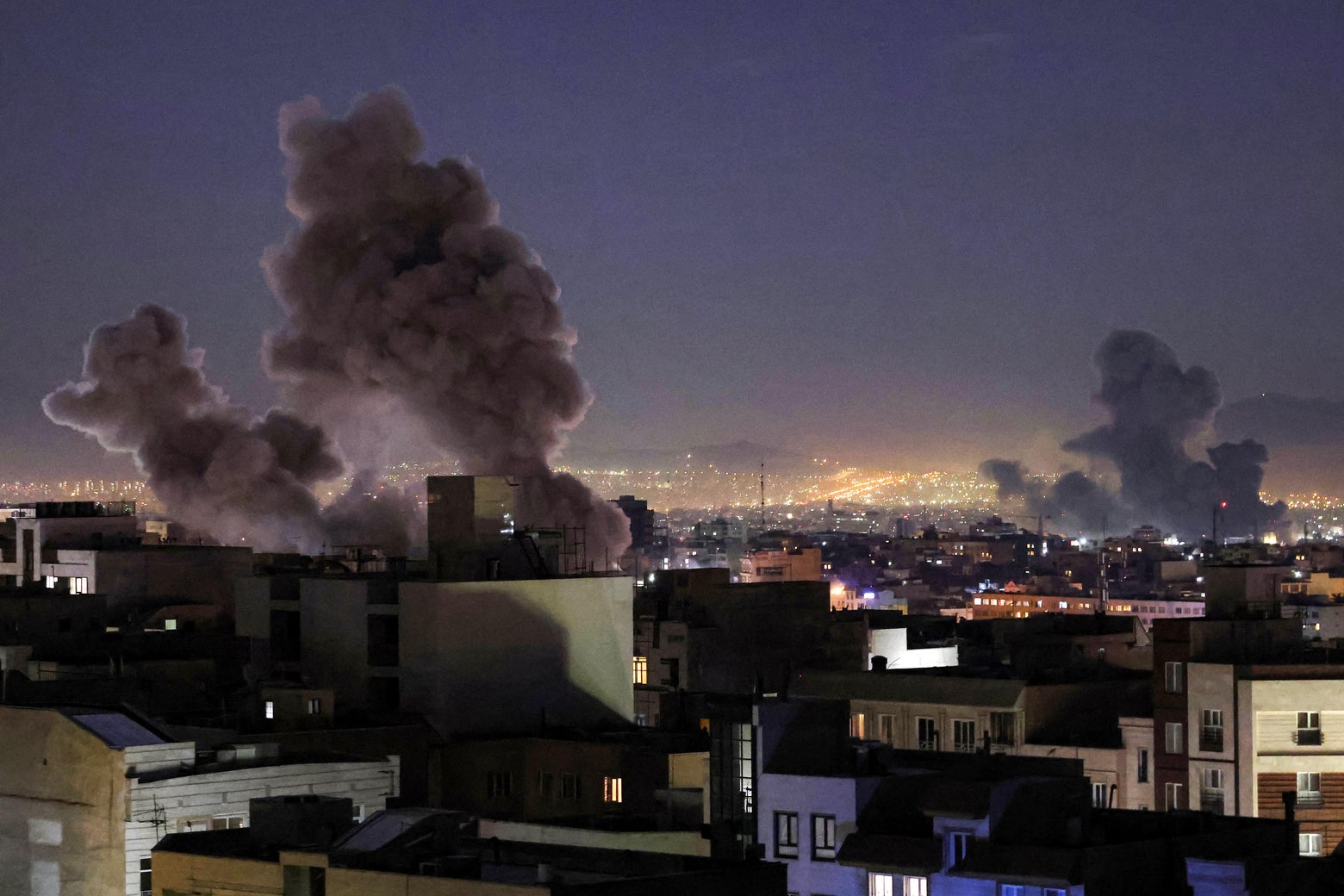
There are plenty of people who were not surprised when President Trump released a video early Saturday morning announcing that the United States and Israel had launched “major combat operations” in Iran. But I have to admit, I was not one of them. Saturday morning, I was woken up by a text that read, simply, “Jesus Fucking Christ.”
The Atlantic’s Shane Harris was among the unsurprised. He told me, “When I went to bed on Friday night, a lot of us were anticipating that there might be military action perhaps the next evening. So it happened a little bit earlier than we expected.”
Shane and his colleagues had been seeing signs of this incoming attack for months. Describing the military buildup in the Gulf, Shane said, “They put more forces in the region than we’ve seen any time since the U.S. invaded Iraq in 2003.” Describing the attack as the “maximalist option,” Shane also told me he and his colleagues couldn’t anticipate the scale of the United States’ and Israel’s attack on Iran over the weekend.
On What Next, host Mary Harris spoke to national security reporter Shane Harris about the president’s reasons for kicking off yet another war in the Middle East, the dissolution of talks between Iran and the U.S. in Geneva, and the opaque nature of what might constitute “success” in Iran now. This transcript has been edited and condensed for clarity.
Mary Harris: Let’s talk about the lead-up to what’s happening now, because as you said in your reporting, this didn’t come out of the blue. How long has Trump been toying with the idea of striking Iran?
Shane Harris: I mean, I think he’s been toying with it since his first term, really.
In his first term, notably, he killed Qassem Soleimani, this high-ranking official, and that was, I think, the first time I asked, Are we going to war with Iran? We’ve been asking this question repeatedly.
Exactly. There was another period in which he was prepared to strike Iranian targets and notably called the planes back when they were in the air, because he was worried about casualties—U.S. casualties as well. On the way out the door, in his first term, administration officials were contemplating a possible strike on Iran. In the more recent events that we’re talking about now, the first indication that he might hit Iran came in response to this brutal crackdown by the regime on protesters in Iran, in which the president was essentially saying, you know, if you start killing people and you start hanging people, there are going to be consequences.
This was in December, January.
Right, exactly, and then we start seeing forces moving into the region in greater numbers for what you would presume to be a major strike. There was so much hardware in the way of vessels and planes and missiles being moved into the region that it looked very likely that the president was going to order something. So we had this “stop the killing of protesters” argument. Then, there was this argument about Iran as a regional menace that supports proxy groups and terrorist actors, which is true. Maybe that’s the justification for it. And then we moved into this longstanding complaint that the United States has had—and President Trump has also had—about Iran’s desires, as he sees it, to build a nuclear weapon.
Notably, the United States struck Iran’s nuclear facilities a few months ago, and Donald Trump said he obliterated them.
That’s right.
So the question becomes: How were we a couple of hours away from developing a nuclear weapon when we just pulled the plug on that, right?
That’s right. And I mean, all of these statements from the administration officials, including Steve Wyckoff, the president’s envoy, have been very contradictory. Steve Wykoff saying that they were essentially on the cusp and maybe weeks away from being able to build a weapon. Where’s that coming from? If we destroyed these sites—P.S., we didn’t destroy the sites—I mean, that’s what it should tell you. When we think about Iran’s nuclear program, it’s important to remember it’s all these various components, but it’s also the people who know how to build these devices; it’s the people who know how to enrich the uranium. Iran has advanced in its understanding of this technology and its engineering past where they were when the United States under President Obama signed the Iran nuclear deal with other countries.
Which Donald Trump trashed.
Which Donald Trump pulled us out of in his first term. The circumstances on the ground, in terms of what the Iranians know and what they’re able to do, had changed, but I don’t know of any credible or verified intelligence that said Iran was about to build a nuclear weapon the way I think some people in the administration have been portraying it.
I gotta ask—and maybe this just isn’t the right question or right time—but I just think it’s so notable that so few Americans seem to want this. I’m looking at a poll from the University of Maryland critical issues poll from early February. Only 21 percent of Americans favored an attack on Iran. That is very, very low. It seems like a complete rejection of the sentiment of the country to launch strikes like this.
I think it’s also a complete rejection of what Donald Trump said he would do when he got into office. In the category of “there’s a tweet for everything”: People have been pulling up all of the statements, “elect the peace candidate,” you know? “What George W. Bush did in Iraq was the worst foreign policy decision ever.” Donald Trump has said he was not going to get involved in foreign wars. He’s gotten involved in many of them. And this is the biggest one yet.
In 2011, I think he warned that Obama would launch an attack on Iran, and there’s video of him saying it.
Right, and now you have people believing that Donald Trump is doing this to distract from other problems that he’s having with the economy or the Epstein files. There is growing division within the MAGA movement and within the MAGA base over this, because there are people who are very opposed to the United States getting involved in other countries’ affairs and risking our own blood and treasure to do it. There also is real misgiving on the political front within Republican political circles that the president has, for more than a year now, as they see it, been distracted by these foreign adventures and by foreign policy and is not paying enough attention to the state of economy and the bread and butter issues that he got reelected on. Republicans are looking at midterms coming up in November and are really worried that this is going to drag down their support among voters even more and lead to an even worse outcome than the fair walloping that they’re expecting Republicans will take, certainly in the House of Representatives.
Politico just nabbed an interview with John Bolton, who is, of course, arch-conservative, used to work for Donald Trump, and has been very much in favor of going after Iran from the jump. He’s ready. He is buckled in and ready for this. But he almost sounds like a dove in this circumstance. The headline was something like, “Trump’s one-time national security advisor warns the strike on Iran may deepen conflict, create a dangerous power vacuum, and plunge the region into turmoil.” When that’s from a guy who is maybe your firmest advocate for war in Iran? You’re in a spot.
Yeah, you could imagine Bolton saying, like, “I said regime change, but not like this.”
Is the U.S. prepared for deepening conflict, a dangerous power vacuum, regional turmoil?
I think we’re not. There are plenty of people in the U.S. government who are very smart and can think through these things and plan. But if you just look at the leadership in the administration and the decisions they are making, even the president is not saying we’re in this for the long haul, right? There are so many unanswered questions. And I get it. It’s fog of war. This is very early, and maybe we’ll get clarity in a few days.
I just keep coming back to the fact that the president has not really articulated what the end state here looks like. He hasn’t really said what he wants. He’s not making demands, per se, of the Iranians. You go back to something like the Powell Doctrine, so-called, of military force: an overwhelming use of military force, state clear objectives, be ready to know when you get out. We don’t have that here. If history is a guide, at some point Trump will just stop bombing Iran and say either, “Mission accomplished,” or, “We did all we could, and the Iranian people seem to just want to live this way, so we’re out of here.” We’ll see, but you’re just not hearing a firm definition from him right now. In the midst of a massive military assault, that’s just very striking that the commander-in-chief has not really given us an idea of how we’ll know when we’ve achieved objectives.

First Appeared on
Source link

Leave feedback about this