

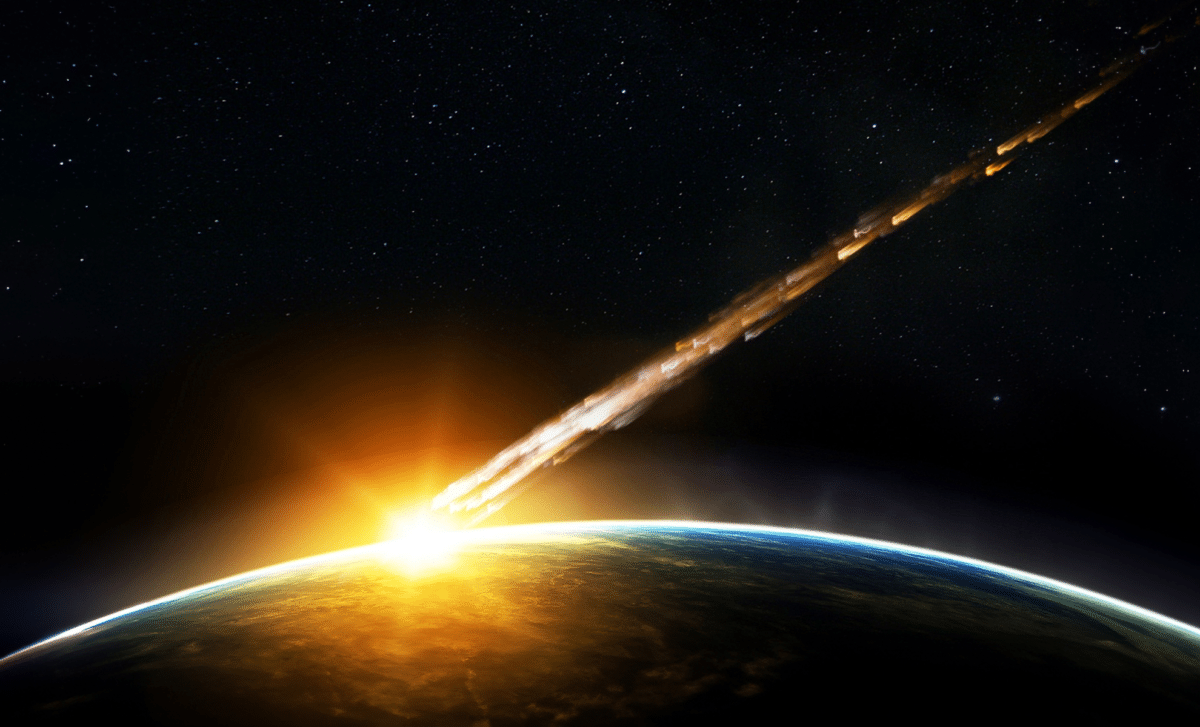
For millions of years, Earth’s history has been shaped by cosmic impacts, yet one ancient collision in Brazil remained hidden, until now. A recent study published in Geology has uncovered evidence of a meteorite strike that occurred 6.3 million years ago. Led by Álvaro Penteado Crósta, the discovery reveals a new field of tektites, expanding our understanding of extraterrestrial impacts and their geological influence in South America.
The Discovery of Geraisites in Brazil
For the first time, researchers have identified the field of tektites in Brazil, which has been named “geraisites” after the Minas Gerais region where they were first found. Tektites are natural glass formed when extraterrestrial objects, like meteorites or asteroids, strike the Earth with such force that the resulting heat melts surface rock, propelling molten material into the atmosphere. As the material cools rapidly, it solidifies into glassy fragments, which can be scattered across vast areas. Before this discovery, tektite fields were known only in specific regions of the world, such as Australasia, Central Europe, and North America. The new Brazilian strewn field has now become an important addition to this list, opening a window into the region’s ancient geological history.
The Brazilian tektites have been found to cover a region spanning over 900 kilometers, an unexpected result that indicates a large and powerful impact. Álvaro Penteado Crósta, a geologist at the Institute of Geosciences at the State University of Campinas (IG-UNICAMP), and his international team documented hundreds of these tektite fragments in northern Minas Gerais, with further specimens discovered in neighboring states. The presence of these glass fragments, some as large as 85 grams, is consistent with other tektite fields around the world.
“This growth in the area of occurrence is entirely consistent with what is observed in other tektite fields around the world. The size of the field depends directly on the energy of the impact, among other factors,” Crósta explains.
Characteristics of Geraisites and Their Formation Process
When scientists first encountered these fragments, they appeared black and opaque. However, exposure to strong light revealed their true appearance, a translucent, grayish-green hue. This is a key characteristic of tektites, as their formation process involves extreme temperatures that alter their chemical structure. Upon closer examination, Crósta and his team found numerous small cavities on the surfaces of the geraisites. These cavities are formed when gas bubbles, trapped within the molten material as it travels through the atmosphere, escape during the rapid cooling process. “These small cavities are traces of gas bubbles that escaped during the rapid cooling of the molten material as it traveled through the atmosphere, a process also observed in volcanic lava but especially characteristic of tektites,” says Crósta.
These features are crucial for distinguishing tektites from other types of volcanic or natural glass. The rapid cooling in the Earth’s atmosphere produces characteristic forms, including spherical, ellipsoidal, and drop-shaped tektites. In this case, the pesquisadores discovered a variety of shapes, which further supports the identification of the materials as tektites and not other glassy substances.
Chemical Composition and Tektite Classification
One of the most important aspects of the study, published in Geology, was the chemical analysis of the geraisites. The fragments were found to contain a high concentration of silica (SiO₂), a common feature of tektites. Further tests revealed that the glassy fragments were rich in other elements, such as sodium, potassium, chromium, and nickel, suggesting that the molten material originated from a chemically diverse source. “One of the decisive criteria for classifying the material as a tektite was its very low water content, as measured by infrared spectroscopy: between 71 and 107 ppm. For comparison, volcanic glasses, such as obsidian, usually contain from 700 ppm to 2% water, whereas tektites are notoriously much drier,” Crósta points out. This low water content is a hallmark of tektites, further confirming their extraterrestrial origin.
Additionally, the team detected rare inclusions of lechatelierite, a form of silica glass that forms under extreme temperatures, providing further evidence of the intense heat that produced the tektites. This chemical and physical data confirms that the geraisites were indeed the product of a powerful extraterrestrial impact.
The Timing and Origins of the Impact Event
Dating the impact event proved to be a critical step in understanding its context within Earth’s history. The research team used the argon-argon dating method to estimate the age of the tektites. The results revealed that the event occurred around 6.3 million years ago, at the end of the Miocene epoch. This precise dating aligns with the geologic period when large impacts were relatively common, contributing to the shaping of Earth’s surface and atmosphere.
While the discovery of the geraisites is significant, the source crater for this impact remains elusive. Crósta suggests that the crater is likely buried or eroded, making it difficult to locate using traditional methods. “The isotopic signature indicates a very ancient continental, granitic source rock. This greatly reduces the universe of candidate areas,” Crósta says. The team suspects the crater may lie in the São Francisco Craton, one of the oldest and most stable parts of the South American continent, known for its ancient geological formations. However, until further studies can identify a specific crater, the full scope of the impact event remains an exciting mystery.
First Appeared on
Source link






Leave feedback about this