

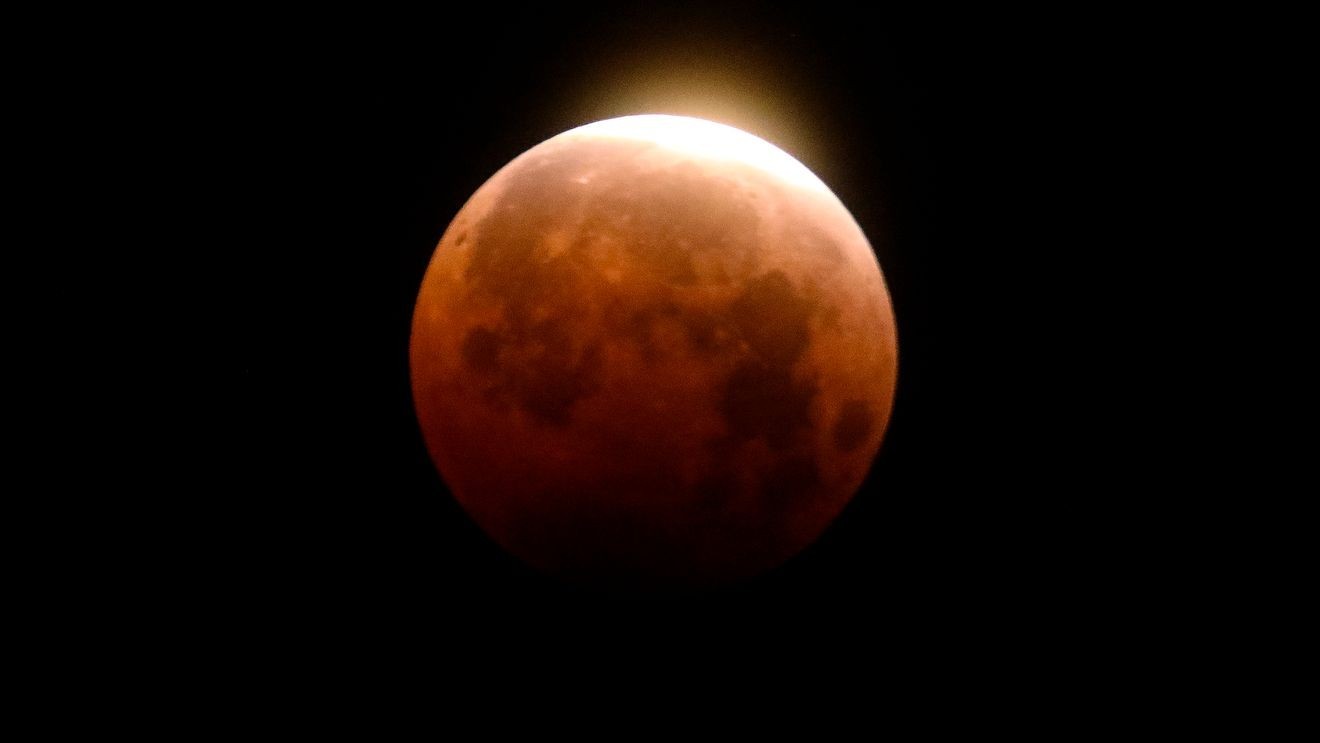
(WLOS) — Skywatchers across the United States will have the opportunity to see the only total lunar eclipse of 2026 in the early morning hours of Tuesday, March 3. This “Blood Moon” will also be the last total lunar eclipse visible from the U.S. until 2028.
A total lunar eclipse occurs during a full Moon when Earth moves directly between the Sun and the Moon, casting its shadow across the lunar surface.
When the Moon moves fully into Earth’s darker inner shadow, called the umbra, it turns a reddish-orange color. Sunlight passes through Earth’s atmosphere before reaching the Moon. Shorter blue wavelengths scatter away, while red and orange light continue through, creating the copper glow.
The eclipse begins subtly at 3:44 a.m. Eastern Time as the Moon enters Earth’s outer shadow. The partial eclipse starts at 4:50 a.m. Eastern, when it appears as though a bite is being taken out of the Moon.
Totality begins at 6:04 a.m. Eastern and lasts until 7:03 a.m. Eastern. The entire eclipse concludes at 9:23 a.m. Eastern.
A partial eclipse will be visible across the entire United States, while the best totality viewing will occur farther west, where the Moon will be higher in the sky during peak eclipse. In parts of the eastern U.S., the Moon will be lower on the western horizon as totality unfolds, and less likely to be seen.
Lunar eclipses are safe to watch with the naked eye, and no special glasses are required. Binoculars or a telescope can enhance the red color and surface detail. Visibility will depend on local cloud coverage.
First Appeared on
Source link






Leave feedback about this