

Over its 30-year history, Resident Evil has mutated into many different forms, from the more patient (but still very cheesy) survival horror of its first few entries, to the action excesses of Resident Evil 4 and its direct follow-ups. Then, after soft resetting back to its deliberate roots with Resident Evil 7, that game’s sequel, Village, ramped things up again until Chris Redfield was blasting werewolves with a silenced machine gun as he radioed in Call Of Duty kill streaks. In some ways, this turn wasn’t exactly a surprise, as even in earlier, more reserved outings, there was an escalation from slow-paced scraps with one or two zombies to action movie moments that capped off in a giant explosion. A pull towards bombast is built into these games’ DNA.
Resident Evil: Requiem, the ninth mainline installment (if you don’t count Zero or Code Veronica), embodies these familiar extremes in a novel way. Its two protagonists, Grace Ashcroft and Leon Kennedy, feel like they’re from different games, with Grace’s chapters embodying the slow pace and puzzle-solving of early entries in the series, while Leon’s sections accelerate the action romp instincts of Resident Evil 4 even further. It’s an approach that peaks in an excellent first half that wields tonal whiplash to its advantage, before succumbing to second act blues as an increasing focus on nostalgia-bait dampens its originality. Even more so than the previous game, Requiem has traces of almost every mainline title in the series, something that works both for and against this latest viral outbreak.
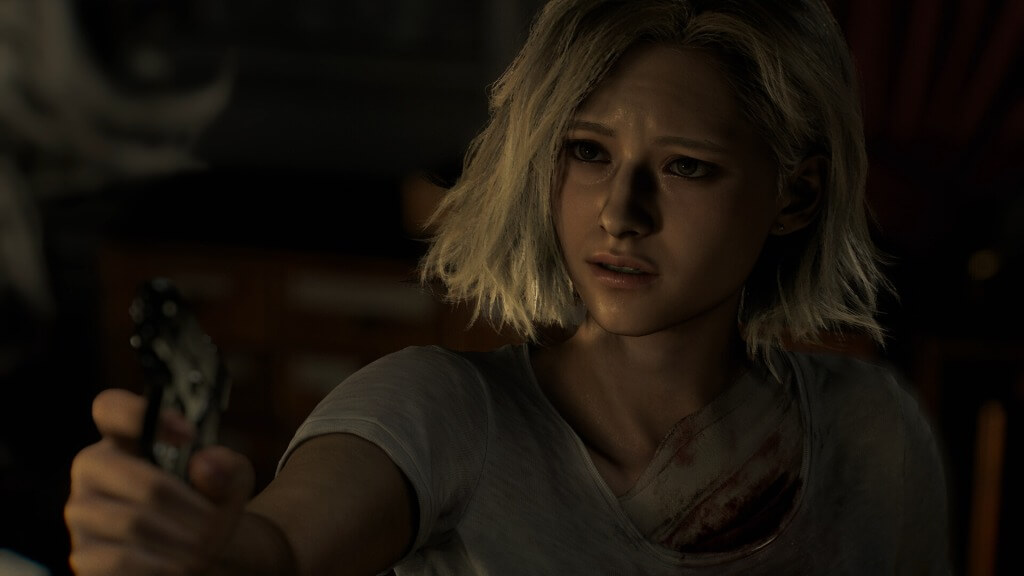
The game’s superior initial stretch begins from the perspective of Grace Ashcroft, a bookish FBI analyst tasked with investigating a murder at the Wrencroft Hotel. She was given the case because it turns out she has a personal history with this place. Eight years ago, her mother, the journalist Alyssa Ashcroft (who is featured in the now obscure online multiplayer-focused PS2 spinoff, Resident Evil Outbreak), was killed here as part of a seeming cover-up. As Grace grapples with these bad memories while searching this condemned building for clues, she’s suddenly abducted by a freaky ex-Umbrella scientist (who loves to monologue) and is brought to a hospital full of his twisted experiments.
After an introductory section that involves navigating inky hallways while being pursued by a giant creature, series veterans will find themselves face-to-face with a familiar sight: an entrance hall that recalls Spencer Mansion or Racoon City Police Department. It’s very much a statement of purpose, because this new locale, the Rhodes Hill Chronic Care Center, is structured similarly to those convoluted buildings, a cleverly assembled puzzle box that comes apart as you find various keys and clues. You’ll slowly explore its secrets, backtracking through a tightly constructed den of horrors that evokes the series’ best entries.
There’s certainly a heavy flavor of old-school survival horror here; sickos will be happy to hear that the optional Classic difficulty brings back ink ribbons, limited-use items that are required to save your progress. However, more than just emulating these earlier titles, Grace’s sequences also add plenty of fresh touches from Resident Evil 7, like its first-person perspective and its deemphasis on shooting so many dang zombies. The uncomfortably intimate camera angle and hyper-attuned sound design, where the wails of the undead ricochet off walls, make this starting section incredibly intense; that stress is then amplified by an unkillable creature that intermittently stalks you in the dark. In general, there’s a feeling of initial helplessness that goes beyond what these games are usually comfortable with. At first, ammo is truly scarce, forcing you to limit or avoid confrontations altogether; on top of the standard keys and combination puzzles that block your way, sometimes you’ll put off exploring an area until you have enough firepower to deal with a particular threat.
And then there’s the meanest detail: If you “kill” a zombie and then return later while backtracking (something you’ll be doing a lot), there’s a chance this corpse will convulse before rising as a faster, deadlier variant. Seasoned fans will recognize this as a clear callback to the Crimson Heads from the 2002 Resident Evil remake, and much like that pinnacle of the series, the inclusion of these reviving monsters changes everything. What would have been a quiet stroll through a cleared corridor turns into walking on eggshells as you tiptoe over a corpse you desperately hope won’t get up and charge with unnatural speed. Of course, you can keep zombies down for good by crafting a single-use injector that causes them to explode (in comedic fashion), but those also require limited resources, resulting in real decisions around how to use your inventory.
These hindrances make it clear that, instead of a superpowered action hero who has been fighting bioweapons for three decades, Grace is very much a newbie at being caught in a living nightmare. Especially compared to the rest of the series, she has a surprisingly fulfilling character arc as she stews in guilt over her mother’s traumatic murder, forms a bond with a fellow survivor, and confronts an underlying feeling of helplessness. Altogether, while not quite as fresh as Resident Evil 7’s bayou reset, this initial section stitches familiar parts into a wonderfully grotesque creation.
First Appeared on
Source link






Leave feedback about this