


The human chin is uniquely human, and the assumption has always been that it must have evolved for a specific purpose, perhaps to strengthen the jaw during chewing or speech. After all, chimpanzees and gorillas don’t have chins. Neither did Neanderthals nor Denisovans.
In fact, Homo sapiens is the only species known to possess this small bony projection at the front of the lower jaw. However, a new study reveals something surprising. It suggests that the chin may not have evolved for anything in particular. Instead, it’s most likely an evolutionary byproduct.
According to Noreen von Cramon-Taubadel, who is the first author of the study, “The chin evolved largely by accident and not through direct selection, but as an evolutionary byproduct resulting from direct selection on other parts of the skull.”
A body part without a purpose
In evolutionary biology, there has long been a tendency to assume that every distinct feature must serve a clear function. If a trait exists, especially one that sets a species apart, it’s tempting to conclude that natural selection shaped it somehow. This mindset has influenced many past explanations for the chin.
Some have proposed that it acts as a buttress to reinforce the jaw against chewing forces. Others speculated it might relate to speech or facial structure. However, the study authors from the University at Buffalo decided to test a different possibility: what if the chin is simply an evolutionary side effect?
“Just because we have a unique feature, like the chin, does not mean that it was shaped by natural selection to enhance an animal’s survivability, for example, a buttress for the lower jaw to help dissipate the forces of chewing,” Noreen added.
Their findings suggest that the chin is likely what evolutionary biologists call a “spandrel.” The term was popularized by Stephen Jay Gould to describe features that arise not because they were directly selected for, but because they are unavoidable byproducts of other structural changes.
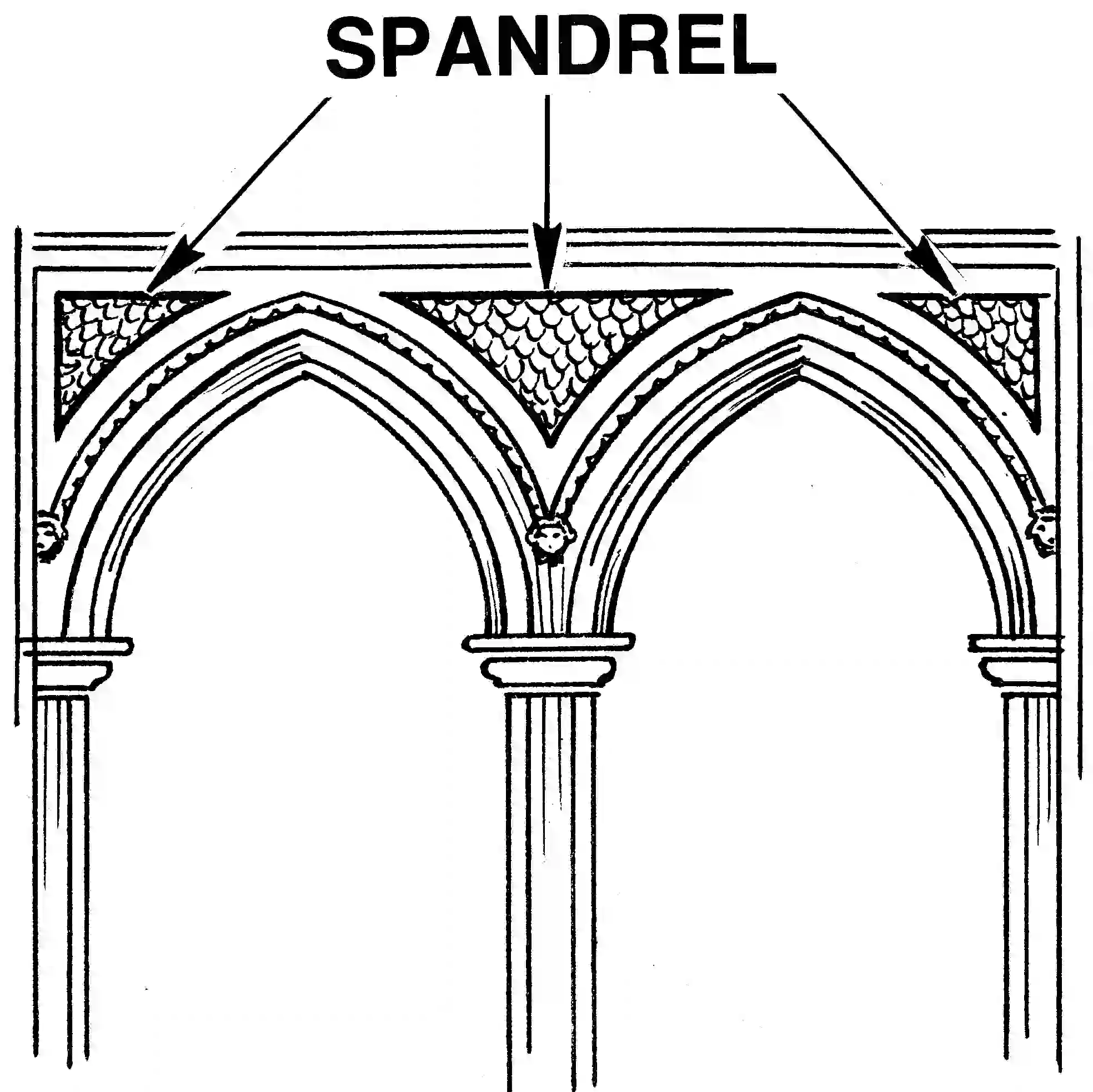
Gould borrowed the word from architecture, specifically from the triangular spaces formed when arches support a dome. Those spaces weren’t designed for a purpose; they simply appear because of how arches are built.
The researchers argue that the chin may be similar. It is not a direct adaptation, but a structural consequence of other evolutionary changes. This was the researchers’ null hypothesis.
Testing the null hypothesis
Instead of starting with the assumption that natural selection shaped the chin, the team tested the opposite idea — what scientists call the “null hypothesis” of neutrality. In simple terms, they explored whether the chin evolved without direct selection.
To explore this, the researchers compared cranial features of humans and apes, focusing closely on nine traits of the lower jaw (mandible). These traits included measurements and structural aspects associated with the chin region.
Their analysis revealed that only three of the nine mandibular traits showed evidence of strong direct natural selection. The remaining six traits were either under indirect selection or showed no clear sign of selection at all.
This pattern suggests that the chin region, as a whole, does not bear the signature of being carefully shaped by natural selection. Instead, the changes appear to reflect broader evolutionary shifts in the skull and jaw.
“The chin is not a singularity but rather the result of multiple changes in the relative position of different aspects of mandibular morphology,” the researchers added.
The team also considered the long-term evolutionary trend in early hominins that includes shrinking teeth, especially incisors and canines, and a reduction in the size of the lower face. As teeth became smaller over millions of years, the lower jaw also reduced in size.
These structural changes altered the geometry of the face. The chin may have emerged as a natural outcome of these shifts, not because it was advantageous, but because it was structurally inevitable.
“Our results suggest that human symphyseal morphology that enables the possession of a chin is an evolutionary side-product or ‘spandrel’ resulting from direct selection on other craniomandibular regions,” the researchers concluded.
More importantly, chins only appear with modern humans. This suggests that the evolutionary pressures driving smaller faces and teeth persisted throughout much of hominin evolution, eventually producing the chin as a side effect.
However, this doesn’t mean the evolution of the chin is senseless. Instead, it reminds us that evolution is not a master designer working toward perfection. Sometimes, it’s simply the story of structures adjusting to change — and something unexpected appearing along the way.
The study is published in the journal PLOS One.
First Appeared on
Source link







Leave feedback about this