

The origins of writing aren’t set in stone.
The ancient cave peoples weren’t as illiterate as portrayed in popular media. Archaeologists have discovered Paleolithic glyphs in a German cave that could potentially push back the history of written communication by over 30,000 years, per a rock-solid study in the journal Proceedings Of The National Academy of Sciences.
According to the researchers, the symbols were engraved on artifacts that dated back some 40,000 years to the Stone Age, when early humans arrived in Europe from Africa and encountered the Neanderthals.
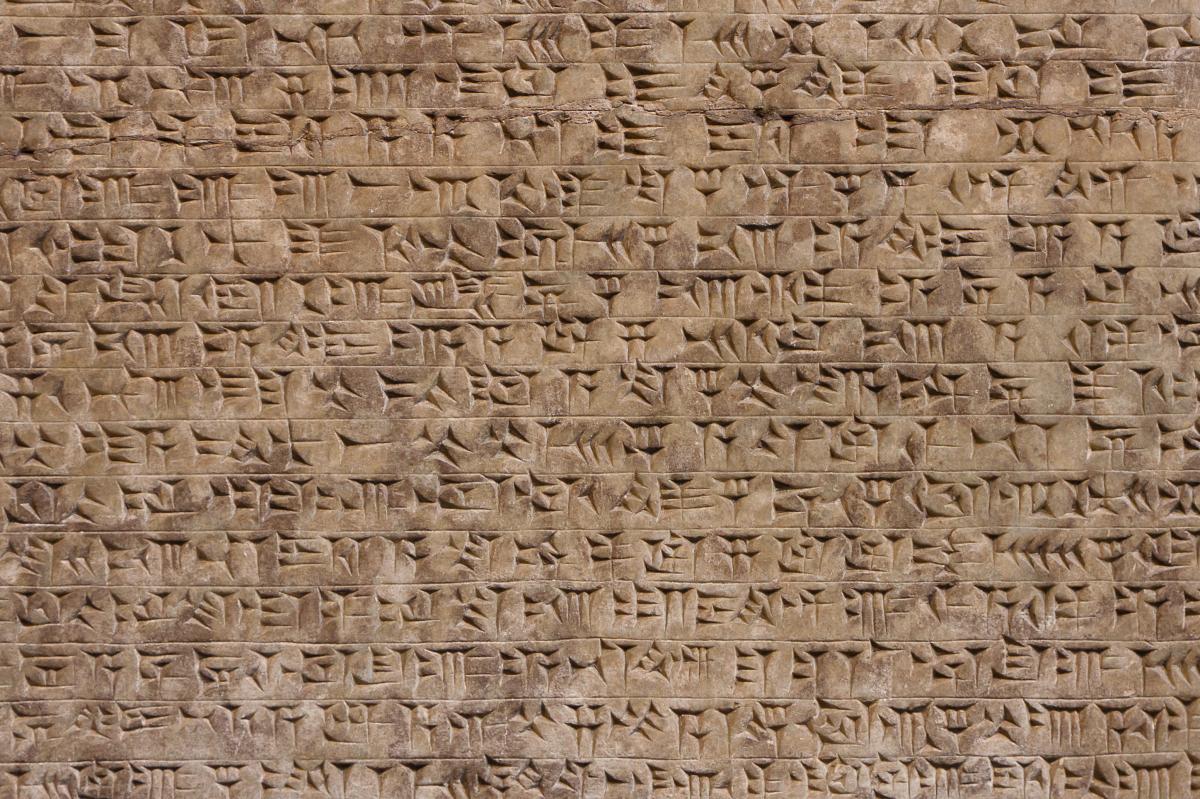
Despite their age, these ancient etchings boasted a complexity comparable to the early stages of the world’s oldest writing system, cuneiform, which originated around 5,000 years ago, the New Scientist reported.
“The artifacts date back to tens of thousands of years before the first writing systems,” exclaimed study co-author Ewa Dutkiewicz, an archaeologist at Berlin’s Museum of Prehistory and Early History, Popular Science reported.
Dutkiewicz and her team had came upon this writing revelation while investigating 260 relics discovered in cave repositories in the Swabian Jura, a mountainous region in Southwest Germany. This archaeological treasure trove included flutes, carvings of animals like mammoths, and figurines of animal-human hybrids.
They were etched with a total of 22 different recurring symbols, including a V-shaped notch and lines, crosses and dots.
Hoping to shed light on the symbols, the team inputted 3,000 of the inscriptions into a Stone Age sign database with the goal of seeing how they stacked up against later writing systems. They specifically compared their patterns to proto-cuneiform, the earliest form of pre-writing, which was engraved in clay in Mesopotamia circa 3500 to 3350 BC.
“It makes sense to look at sequences, because information is not only encoded in the number of different signs you have, but… in how you combine the signs,” said study collaborator, Christian Bentz a linguist at Saarland University in Saarbrücken. He noted that up until now, there had been very “little empirical work carried out on the basic, measurable characteristics of the signs.”
While these patterns differed drastically from modern writing, their configuration was “very similar” to their Mesopotamian counterpart, according to Bentz.
This suggested that the earliest H. sapiens in Europe, a group of hunter-gatherers, had devised a system to put their thoughts on paper, er stone — one of the hallmarks of writing — and that this system was as advanced as their descendants. In other words, their mode of symbolic thought transcription wasn’t restricted to making paintings on cave walls.
Deciphering these somewhat cryptic glyphs’ meaning was decidedly more difficult, like a prehistoric Da Vinci code.
However, there were several cues that these Stone Age symbols may have been some type of calendar. A representation of a lion-human hybrid etched in mammoth ivory was carved with dots and notches in rows of 13 or 12.
Dutkiewicz theorized these might have been “calendric observations,” which would’ve tracked given that these prehistoric hunter-gathers “might want to keep track of time.”
Interestingly, Crosses, one of the most prevalent symbols, never adorned human depictions but were common on animals and tools, while dots never appeared on tools.
“These were definitely marks being made in specific locations for specific reasons,” said palaeoanthropologist Genevieve von Petzinger. “Even if we don’t know what the marks meant, we know they had meaning to the people who made them.”
Fortunately, Dutkiewicz noted that there were many sign sequences that were yet to be analyzed, declaring, “We’ve only just scratched the surface.”
First Appeared on
Source link






Leave feedback about this