


The spacecraft was falling out of the lunar darkness toward a planet that had not yet switched on its lights. Inside, three men were about to become the fastest humans in history, though none of them could feel it.
There is no sensation of speed in vacuum. The command module’s windows showed only stars and the distant curve of Earth, growing. The crew had no instruments displaying their velocity in kilometres per hour. They had checklists to run, systems to monitor, a re-entry corridor to hit. The number would be calculated later, by engineers reviewing telemetry.
When the capsule hit the atmosphere, it was travelling at 36,397 feet per second. That is 39,937 kilometres per hour. No human has travelled faster since. The record was set on 26 May 1969, and it remains on the books 57 years later, not because it was extraordinary by the standards of the time, but because no one has attempted to break it.
The Fastest Humans Have Ever Travelled
The three crew members were Thomas Stafford, the mission commander; John Young, the command module pilot; and Eugene Cernan, the lunar module pilot. All three were United States Navy or Air Force officers. According to his biography, Stafford died in 2024 at the age of 93, having also flown on Gemini 6, Gemini 9, and the Apollo-Soyuz mission.
Apollo 10 was the fourth crewed mission in NASA’s lunar landing programme. As NASA explained, the mission served as the “dress rehearsal” for the first lunar landing. It launched from Kennedy Space Center on 18 May 1969, two months before Apollo 11. The mission’s purpose was to test all procedures and equipment required for a Moon landing, except the final descent to the surface.
Stafford and Cernan entered the lunar module, named Snoopy, on 22 May and descended to 14.4 kilometres above the lunar surface. They surveyed the Sea of Tranquility, the intended landing site for Apollo 11, and tested the landing radar. Young remained in the command module in lunar orbit.
After re-docking and transferring back to the command module, the crew jettisoned the lunar module and began the return to Earth. The spacecraft’s trajectory used the Moon’s gravity to accelerate it back toward Earth, reaching progressively higher speeds as it fell through the Earth’s gravitational field.
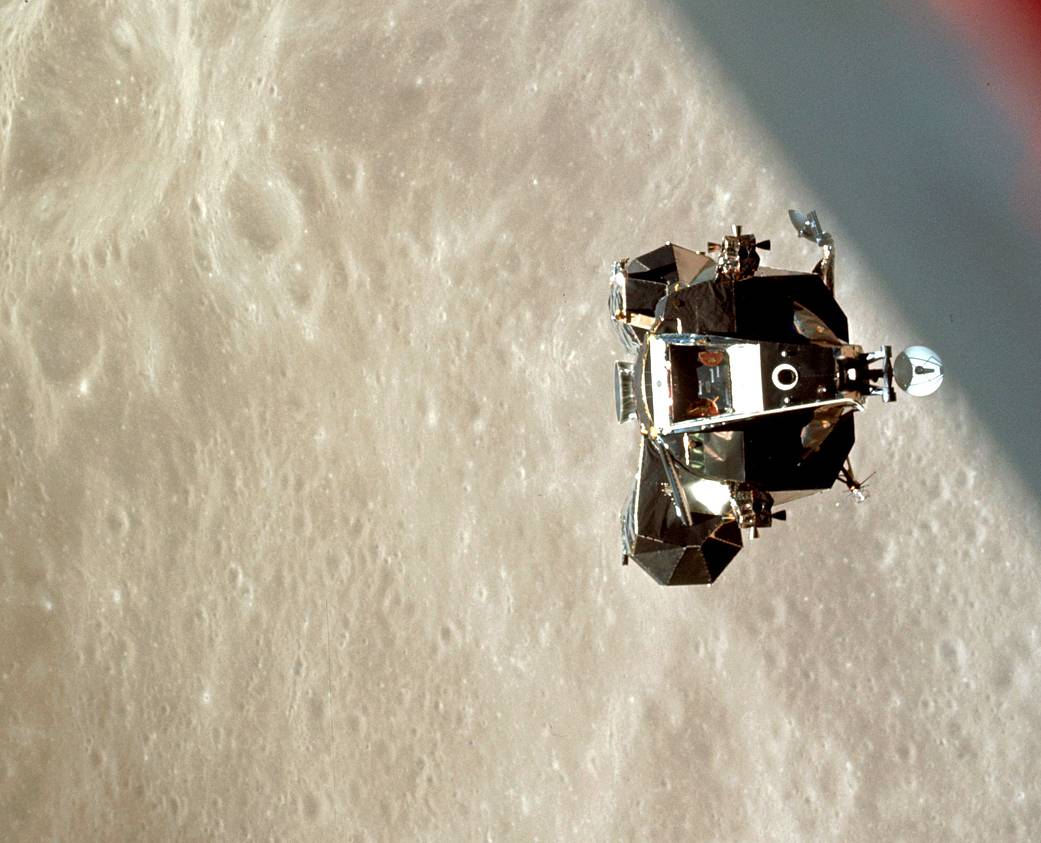
The peak speed occurred during atmospheric re-entry. Eugene Cernan later described the descent as being inside “a ball of white and violet flame”, according to NASA’s mission documentation. The spacecraft slowed using atmospheric drag and deployed three parachutes before splashdown in the Pacific Ocean on 26 May, where it was recovered by the USS Princeton.
Why No One Has Bothered to Break It
The speed is a direct function of the physics of lunar return trajectories. Spacecraft returning from the Moon enter Earth’s atmosphere at velocities between 39,000 and 40,000 kilometres per hour because they are falling from lunar distance under the combined gravitational pull of Earth and the Moon. Apollo capsules, including Apollo 10, all followed similar return paths.
As IFLScience , subsequent human spaceflight missions have remained in low Earth orbit, where orbital velocity is approximately 28,000 kilometres per hour. The International Space Station, for example, travels at about 27,600 kilometres per hour. No human mission has left low Earth orbit since Apollo 17 in 1972.
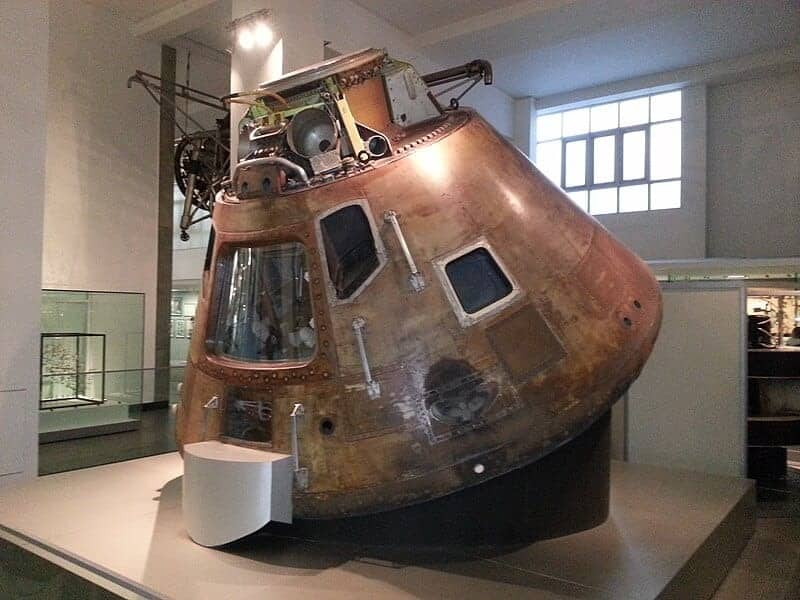
NASA’s Artemis programme plans to return humans to the Moon. The Orion spacecraft, designed for lunar missions, will experience similar re-entry speeds. During the uncrewed Artemis I mission in 2022, the Orion capsule re-entered at about 39,400 kilometres per hour, approaching but not exceeding the Apollo 10 record because it followed a different trajectory. Future crewed Artemis missions are expected to match or slightly exceed the Apollo speeds depending on the specific return path selected.
The Number, and How We Know It Is Real
Guinness World Records lists the achievement with the following specification: “The command module of Apollo 10, carrying Col. Thomas Patten Stafford, Cdr Eugene Andrew Cernan and Cdr John Watts Young, reached this maximum value at the 121.9-km altitude interface on its trans-Earth return flight on 26 May 1969, when travelling at 36,397 ft/sec.”
NASA’s historical records confirm the figure of 24,791 miles per hour, which converts to 39,897 kilometres per hour. The small variation between sources is due to different rounding and conversion methods. The IFLScience report gives 39,937.7 kilometres per hour based on 24,816.1 miles per hour.
The speed was measured by the spacecraft’s onboard instrumentation and tracked by ground-based radar. NASA’s image archive contains footage and telemetry from the mission, including the Earthrise sequence the crew observed from lunar orbit. The figure represents the velocity relative to Earth at the point of atmospheric entry interface, which is the standard reference for such records.
No subsequent human spaceflight has approached this speed because none has left Earth orbit. The Parker Solar Probe, an uncrewed NASA mission, has reached higher speeds relative to the Sun, but it carries no humans. In December 2024, the probe reached approximately 692,000 kilometres per hour relative to the Sun, the fastest any human-made object has travelled.
The Apollo 10 record will remain until a crewed mission returns from the Moon or travels beyond it. Artemis III, scheduled for no earlier than 2026, is intended to land astronauts near the lunar south pole. That mission and subsequent lunar flights will subject crews to re-entry speeds similar to those experienced by Stafford, Young, and Cernan more than five decades ago.
First Appeared on
Source link





Leave feedback about this