

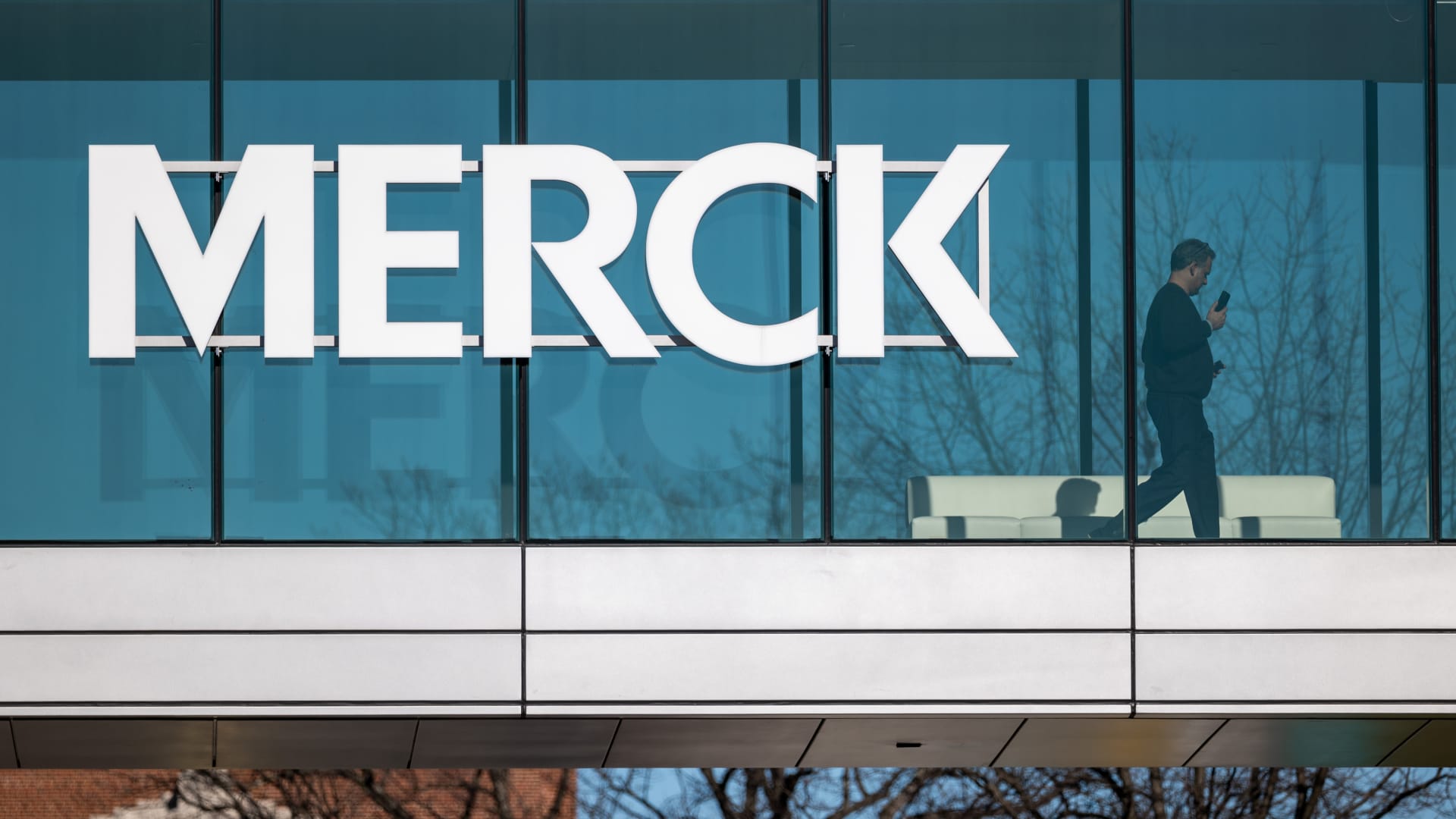
Exterior view of the entrance to Merck headquarters on Feb. 05, 2024 in Rahway, New Jersey.
Spencer Platt | Getty Images
Merck said on Monday it would split its business into two, creating a distinct division for its cancer franchise led by blockbuster drug Keytruda while grouping its non-oncology treatments separately.
The restructuring underscores the U.S. drugmaker’s push to diversify beyond Keytruda and other legacy medicines as key patents near expiration. Merck has tripled its pipeline since 2021 and purchased Cidara Therapeutics and Verona Pharma in roughly $10 billion deals last year to broaden its portfolio. Its shares were flat in early trading.
The reshuffling could be a precursor to major moves over the long term than what the muted stock reaction might suggest, said James Harlow, Senior Vice President at Novare Capital Management.
“The company now has more optionality to separate or spin off one of these businesses in the future,” he said.
The pharma major previously spun off its women’s health and biosimilars business in 2021 into a standalone company called Organon. The latest split, however, does not involve its animal health division.
Merck’s major growth driver, Keytruda, approved for several forms of cancer, is the best-selling prescription medicine in the world. The treatment generated more than $30 billion in 2025 and accounted for nearly half of the company’s total revenue.
Citi analysts said the split helps clearly distinguish Merck’s mature oncology portfolio from its newer, acquisition-driven assets, but warned that more work is still needed in commercial execution, business development and pipeline delivery to fully offset upcoming loss-of-exclusivity pressures.
The split follows Merck’s downbeat 2026 forecast issued earlier this month, where it warned of lower-than-expected sales and profit as several legacy drugs near loss of exclusivity and face generic pressure.
Merck also appointed Jannie Oosthuizen as executive vice president and president of the cancer business. Oosthuizen most recently served as senior vice president and president of Merck Human Health U.S., where he led strategy and commercialization for the company’s U.S. portfolio.
First Appeared on
Source link





Leave feedback about this