

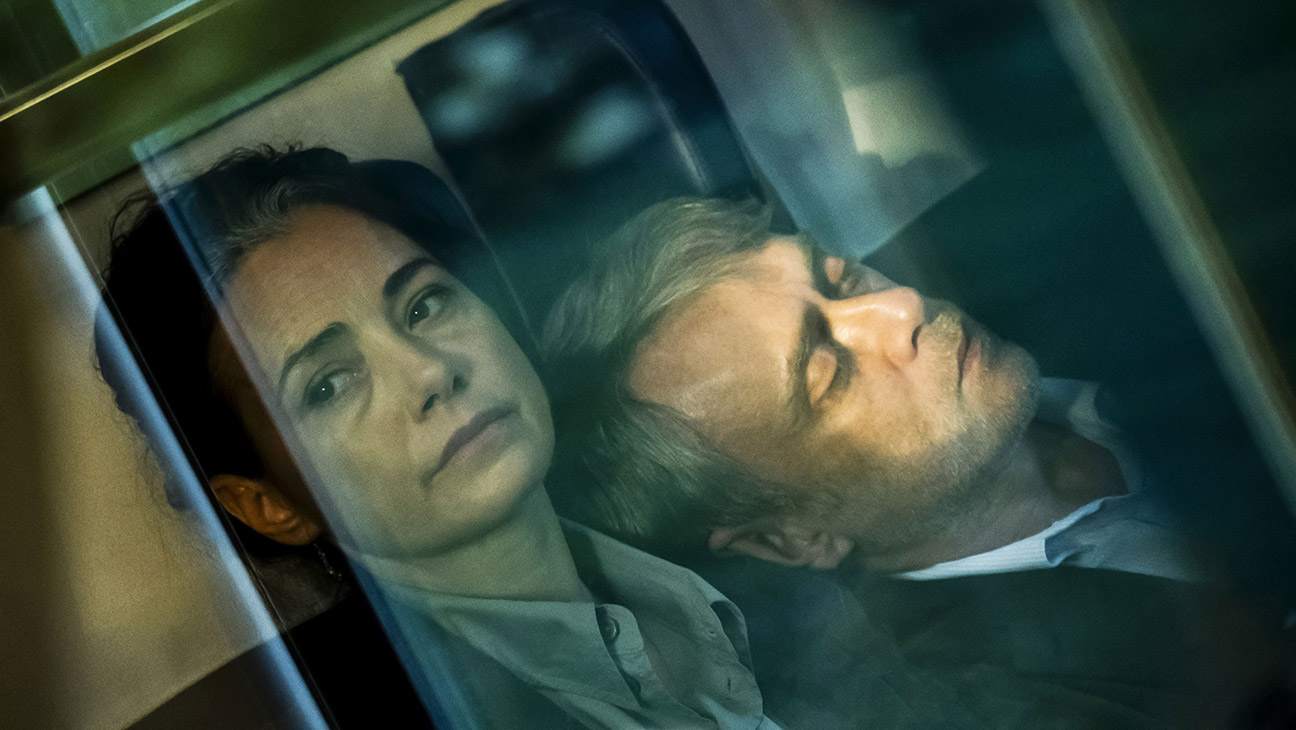
The awards ceremony for the 76th Berlinale transformed into an overtly political stage, as filmmaker after filmmaker used the spotlight to denounce what they called Israeli aggression in the Middle East and to call to “free Palestine.”
The ceremony, held in Berlin, saw the 2026 competition jury, headed by German director Wim Wenders, hand out the festival’s Golden and Silver Bears against a backdrop of sustained controversy that has dogged this year’s Berlinale from its opening day.
While the competition lineup was widely regarded as one of the strongest in recent years — with multiple titles earning critical raves and few outright misfires — there were no clear frontrunners heading into the final night. Instead, politics once again took center stage.
Despite efforts by festival leadership to keep the focus on cinema, the 2026 Berlinale has been defined as much by social media outrage and geopolitical debate as by the films themselves. Directors and talent repeatedly fielded questions about Gaza, U.S. President Donald Trump and the rise of far-right movements across Europe.
Wenders himself became the target of online backlash early in the festival after saying that filmmakers “have to stay out of politics,” a remark widely interpreted as a call for neutrality. Critics argued the comment was at odds with both the moment and Wenders’ own politically engaged body of work.
Opening the awards ceremony, Berlinale director Tricia Tuttle addressed the tensions directly. She described this year’s festival as having “felt raw and fractured,” with many attendees arriving in Berlin “with grief and anger and urgency about the world that takes place outside the cinema walls.”
“That grief, that anger and that urgency is real and belongs in our community. We hear you,” Tuttle said, acknowledging that the festival had been “publicly challenged” over the past 10 days. “It didn’t always feel good, but it is good because it means the Berlinale matters to people.”
She added that the festival must recognize it is “living in a polarized moment,” where “criticism and speaking up is part of democracy and so is disagreement,” pledging that the Berlinale would continue to welcome debate. “If this year has been emotionally charged, that is not a failure of the Berlinale and cinema. That is the Berlinale doing its job and cinema doing its job,” Tuttle said.
But as the prizes were handed out, the stage became a platform for pointed political statements. Lebanese director Marie-Rose Osta, accepting the Golden Bear for best short film for Someday a Child, denounced Israeli bombings in her home country and what she described as a “collapse of international law” in the region.
“In reality children in Gaza, in all of Palestine, and in my Lebanon do not have superpowers to protect them from Israeli bombs,” she said. “No child should need superpowers to survive a genocide empowered by veto powers and the collapse of international law…If this Golden Bear means anything, let it mean that Lebanese and Palestinian children are not negotiable,” she said, drawing sustained applause from parts of the audience.
Other winners and presenters echoed similar sentiments. Abdallah Alkhatib, winner of the best documentary prize for Chronicles From a Siege, brought a Palestinian flag on stage, and called out the German government for what he called as its “complicity” in Israeli “genocide” in Gaza. He ended his passionate speech with a call to “free Palestine from now to the end of the world!”
At one point, the show’s host, Luxembourg actress Désirée Nosbusch, become visually emotional as she tried to calm the audience, asking hecklers yelling out in support of the criticism of Israel and the German government to remain respectful. She reminded the audience, and viewers watching at home, that the artists’ personal views expressed on stage don’t necessarily reflect those of the Berlinale, which receives significant support from the German government.
Earlier in the evening, Syrian filmmaker Ameer Fakher Eldin, head of the Berlinale Short Film Jury, sought to reframe the debate, arguing that artists “must insist on complexity” and resist being reduced to polemical positions.
“A festival space should not function like a parliamentary floor,” he said. “Some artists speak through their statements, which is ok. Others speak through the long arc of their work, like you Mr. Wenders. Both artists can and must co-exist.”
Wenders, who has largely stayed quiet since the initial controversy, addressed the issues before announcing the competition winners, saying there was an “artificial discrepancy” between those criticizing the Berlinale and the organizers and festival jury members. “Most of us applaud you,” he said.
Berlin award winners below, updating live.
GOLDEN BEAR FOR BEST FILM
Yellow Letters, dir. Ilker Çatak
SILVER BEAR GRAND JURY PRIZE
Salvation, dir. Emin Alper
SILVER BEAR JURY PRIZE
Queen at Sea, dir. Lance Hammer
SILVER BEAR FOR BEST DIRECTOR
Grant Gee for Everyone Digs Bill Evans
SILVER BEAR FOR BEST PERFORMANCE
Sandra Hüller for Rose
SILVER BEAR FOR BEST SUPPORTING PERFORMANCE
Anna Calder-Marshall and Tom Courtenay, Queen at Sea
SILVER BEAR FOR BEST SCREENPLAY
Nina Roza, dir. Geneviève Dulude-de Celles
SILVER BEAR FOR OUTSTANDING ARTISTIC CONTRIBUTION
Yo (Love Is a Rebellious Bird), dir. Anna Fitch
PERSPECTIVES
GFF FIRST FEATURE AWARD
Chronicles From the Siege, dir. Abdallah Alkhatib
Special Mention
Forest High (Forêt Ivre), dir. Manon Coubia
BERLINALE DOCUMENTARY AWARD
If Pigeons Turned to Gold, dir. Pepa Lubojacki
SHORTS
Golden Bear Best Short Film
Someday a Child dir. Marie-Rose Osta
Silver Bear Jury Prize (Short Film)
A Woman’s Place Is Everywhere, dir. Fanny Texier
CUPRA Filmmaker Award
Jingkai Qu, dir. Kleptomania
First Appeared on
Source link




Leave feedback about this