

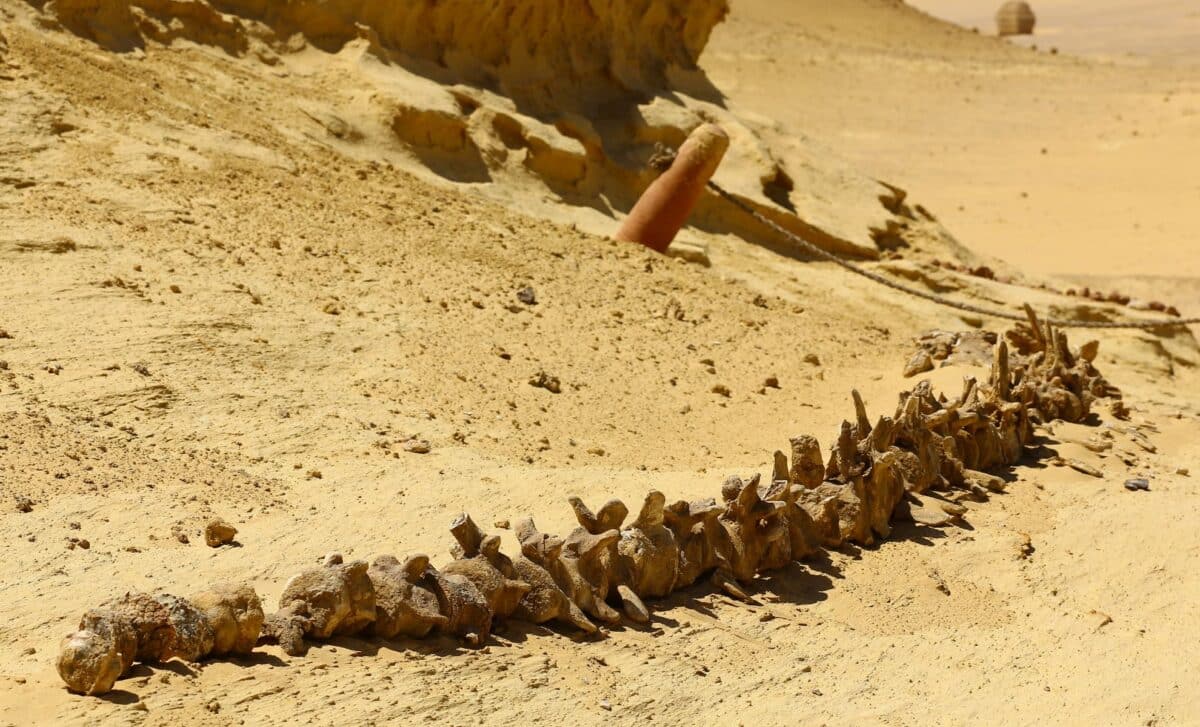
A newly discovered species of Spinosaurus is shaking up our understanding of this iconic dinosaur that roamed what is now Niger about 95 million years ago. With its striking scimitar-shaped head crest and a large sail on its back, this discovery challenges the popular theory that Spinosaurus was a swimmer. According to the latest research, this dinosaur likely spent more time wading through rivers than paddling through open water.
The fossils, found deep in an inland river system, tell a story of a predator that thrived far from the shorelines. Led by paleontologist Paul Sereno from the University of Chicago, the team that uncovered these remains argues that Spinosaurus mirabilis was adapted to hunt in shallow waters, not just as an aquatic predator, as some researchers had long assumed.
Spinosaurus mirabilis: Unearthing the Past of an Ancient Predator
The fossils of Spinosaurus mirabilis were discovered in 2019, thanks to the help of a local Tuareg guide in the Sahara Desert. These bones were unlike anything Paul Sereno and his team had seen before. The fossils, strikingly black, were a crucial clue, as the color signified a high concentration of phosphate, a rare find in the region. Sereno, who has spent over two decades working in the desert, noted that:
“This find was so sudden and amazing, it was really emotional for our team,” he remarked, ” I’ll forever cherish the moment in camp when we crowded around a laptop to look at the new species for the first time.”
The fossils, including jaw pieces and fragments of the skull, suggested that Spinosaurus mirabilis lived far from the coast in a river system, hundreds of miles away from any shoreline.
In 2022, the team returned to the site and uncovered a partial crest, which stood out immediately. CT scans and 3D reconstructions revealed fossilized blood vessels, suggesting the crest was covered in keratin, like bird beaks. This made the crest nearly half a meter tall, possibly the largest on any meat-eating dinosaur. Sereno admitted they initially found the crest “weird” and asymmetrical. Ultimately, it confirmed the discovery of a new species with unique features.
Why Did Dinosaurs Rock the Scimitar-Shaped Crest?
So, what was the purpose of this enormous, scimitar-shaped crest? Researchers believe it probably served a key social function. While it’s hard to know for sure, it’s likely that the crest helped Spinosaurus mirabilis communicate with others of its kind, especially when it came to mating or territorial disputes. With its asymmetrical shape, the crest stands out, and according to a study in Science, it could have been used for visual signaling, much like how animals today use vibrant colors.
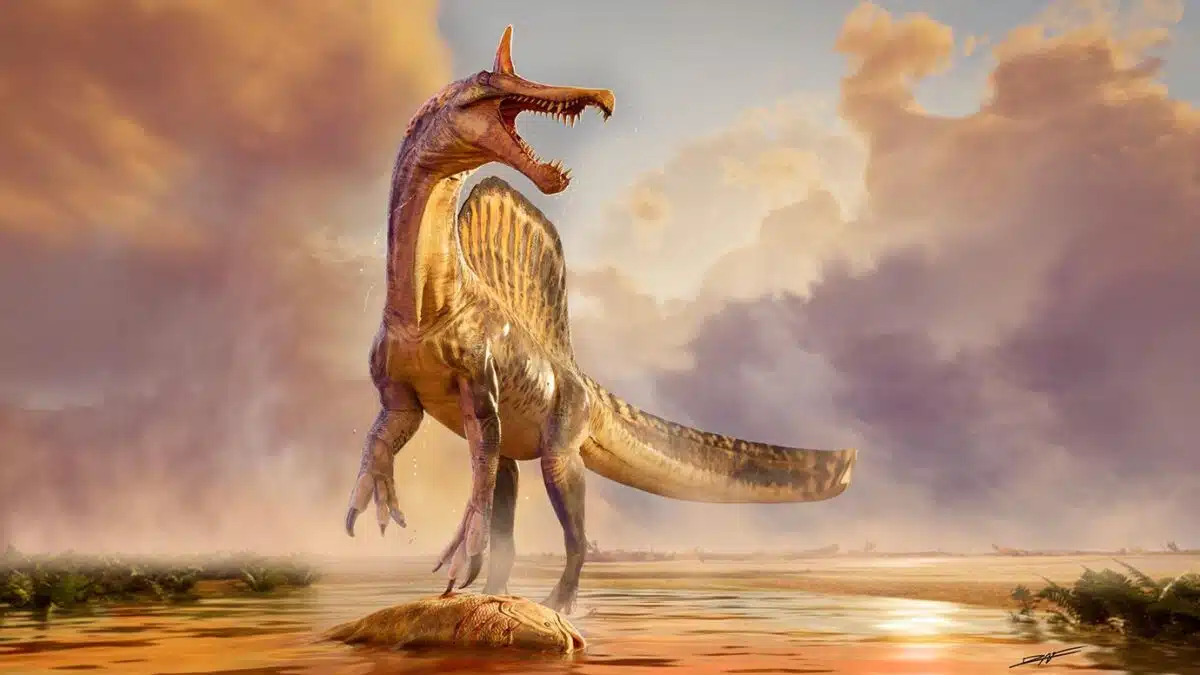
The researchers speculate that, like the elaborate feathers of peacocks or the combs of roosters, the crest could have been a way for the dinosaurs to flaunt their fitness to potential mates or warn off rivals.
Is Spinosaurus Really a Swimmer? Rethinking Its Aquatic Life
For years, paleontologists have debated whether Spinosaurus was primarily an aquatic predator, hunting fish by swimming underwater like a modern-day crocodile or seal. But the discovery of Spinosaurus mirabilis in an inland river system has led Sereno and his team to rethink that assumption. The fossil evidence suggests that Spinosaurus didn’t need to be a swimmer to thrive in its environment. According to Sereno:
“I envision this dinosaur as a kind of ‘hell heron’ that had no problem wading on its sturdy legs into two meters of water but probably spent most of its time stalking shallower traps for the many large fish of the day.”
The sail on its back would have made it difficult for the dinosaur to swim efficiently, as it would have added extra weight and drag. Sereno emphasized that while the dinosaur likely spent some time in water, it was probably wading through shallows to catch large fish, rather than hunting underwater like some had imagined.
First Appeared on
Source link






Leave feedback about this