

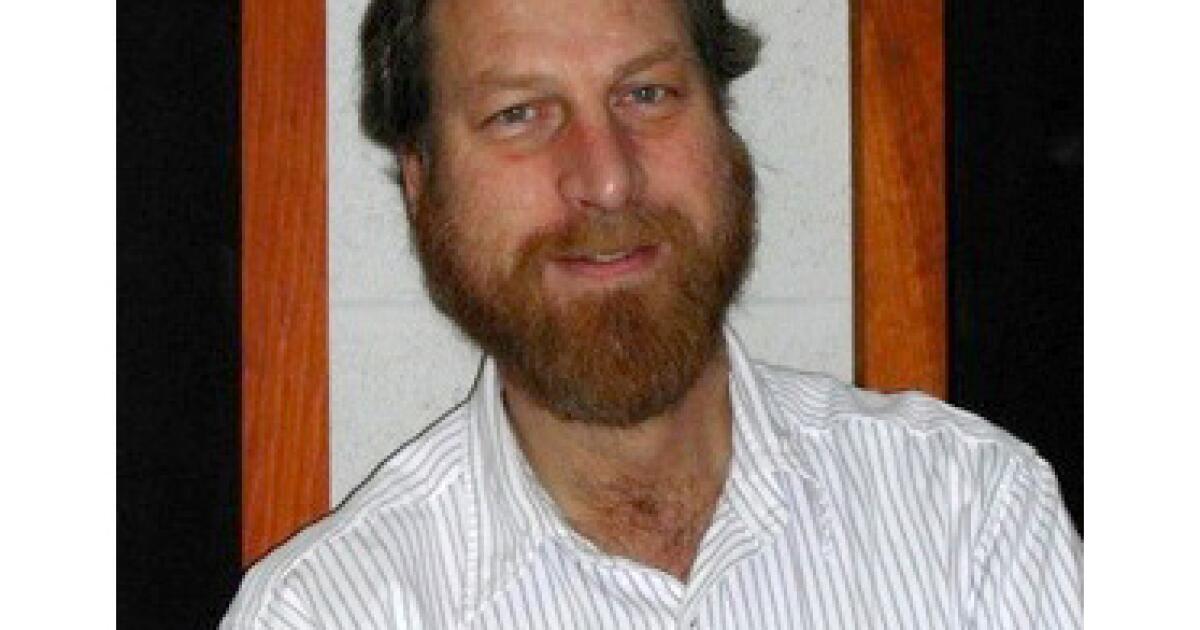
An accomplished Caltech astrophysicist with more than four decades of research contributions in galactic astronomy and the study of distant planets was fatally shot in a rural area of the Antelope Valley on Monday morning. A suspect in the shooting has been charged with murder.
Deputies responded to a 911 call for an assault with a deadly weapon in the unincorporated community of Llano at 6:10 a.m. and found a man suffering from a gunshot wound on the front porch of a home, according to the L.A. County Sheriff’s Department. Paramedics pronounced him dead at the scene.
The victim was later identified as Carl Grillmair, 67, according to the L.A. County medical examiner. His death was ruled a homicide caused by a gunshot wound to the torso.
“He was very famous in astronomy and a very renowned scientist,” said astronomer Sergio Fajardo-Acosta, who worked alongside Grillmair at Caltech for 26 years. “His legacy will live on forever.”
While investigating the shooting, deputies arrested a suspect in a carjacking that took place nearby, according to the Sheriff’s Department.
That suspect was later identified as Freddy Snyder, 29. He was charged Wednesday with the murder of Grillmair and carjacking. He was also charged with first-degree burglary related to a Dec. 28 incident, according to court records.
He is being held in lieu of $2 million. It is unclear what relation, if any, Snyder had with Grillmair.
A spokesperson for Caltech confirmed that Grillmair was employed as a research scientist at the university. He worked at the university’s Infrared Processing and Analysis Center, which partners with NASA, the U.S. National Science Foundation and researchers around the world to advance the exploration of the universe.
Grillmair enjoyed living in a remote area of the Antelope Valley because it allowed him to observe bright stars in the dark night sky, and he even built an at-home astronomical observatory outfitted with several telescopes, Fajardo-Acosta said. When he wasn’t studying outer space, he enjoyed flying airplanes over the desert and working on home improvement projects.
Fajardo-Acosta described him as an extremely serious person who also possessed a good sense of humor, spoke very eloquently and read all the time.
Grillmair’s work had focused on uncovering the structure of the Milky Way, identifying faint stellar streams and substructures that make up the galactic halo surrounding our spiral galaxy, and helping reshape our understanding of how galaxies evolve, according to his website.
One of his most notable accomplishments was a paper published in 2007 about the presence of water on a distant planet outside our solar system. Fajardo-Acosta described this as a “very ingenious discovery,” noting that Grillmair’s research was “extremely important because water is a telltale sign the conditions of the planet are auspicious for life.”
Grillmair also had the privilege of naming several galactic streams that he discovered, which are a relic of the collision of the Milky Way with another galaxy.
“He is immortalized because the discovery of those galactic streams is attributed to him,” Fajardo-Acosta said.
Grillmair had been awarded substantial observation time as a principal investigator on the Hubble Space Telescope and the Spitzer Space Telescope, and his research earned him numerous accolades, including a NASA Exceptional Scientific Achievement Medal.
At the time of his death, he was focused on studying comets and astroids that could pose a hazard to Earth.
First Appeared on
Source link






Leave feedback about this