

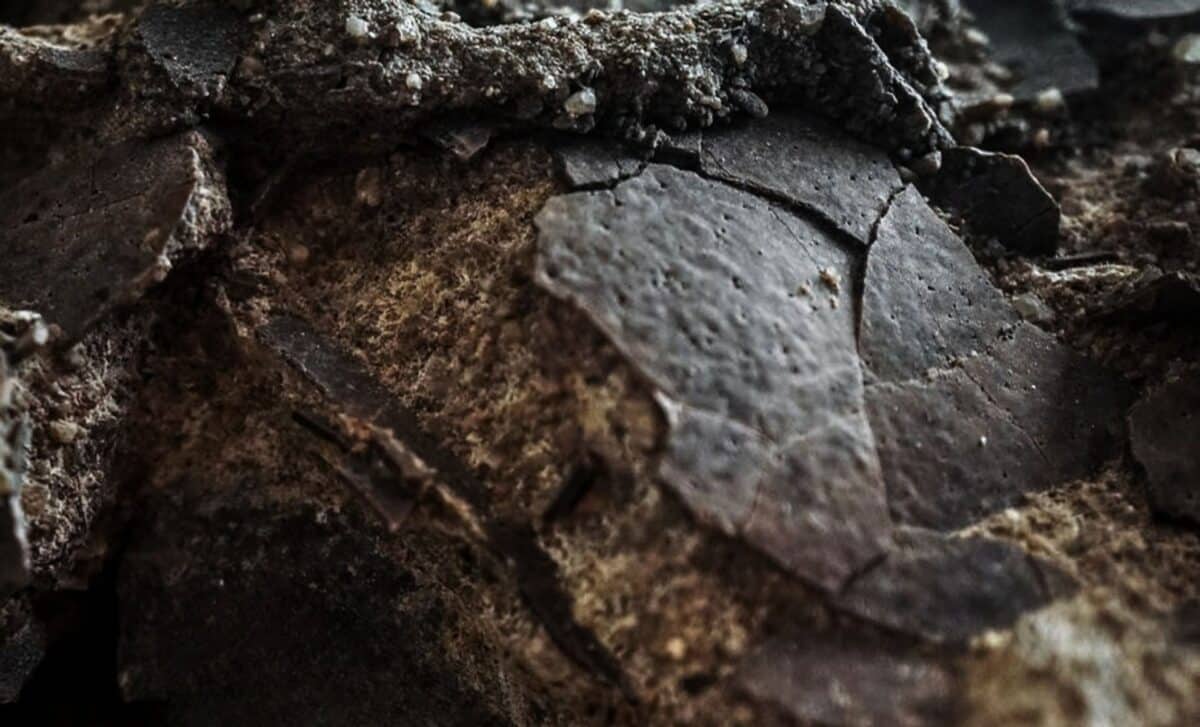
The cliff face at Santa Cruz beach holds its secrets in layers. For 150 million years, a cluster of sandstone-encased eggs lay buried within it, undisturbed through the opening of the North Atlantic and the entire span of human history. When researchers from the Torres Vedras Natural History Society finally exposed the block during routine survey work, they found something that challenged conventional assumptions about how Jurassic predators nested.
The eggs were not scattered by ancient currents or jumbled by time. They remained in the configuration where they had been deposited, arranged in a natural pattern that suggested an original nesting site. But the sediment enclosing them — a granular sandstone — struck investigators as unusual, hinting at conditions rarely associated with dinosaur egg preservation.
Nest with 10 Eggs Reveals Jurassic Reproductive Behavior
The discovery was made by researchers from Ci2Paleo of the Torres Vedras Natural History Society during paleontological survey work along the cliffs, as detailed in the official announcement of the Jurassic dinosaur egg nest discovery. In a statement issued Tuesday, the society confirmed that the eggs date to the Upper Jurassic period, approximately 150 million years before present.
Preliminary observations indicate the eggs were not accumulated by water flow, as they are arranged in an orderly manner, researchers added. The type of sediment, a granular sandstone, is rare and may indicate that the eggs were laid on a riverbank. International coverage of the find, including reporting from the Lusa News Agency, has been published by outlets such as Xinhua, which reported on the dinosaur nest with 150-million-year-old eggs.
Based on the general characteristics of the eggs’ shape and the porosity of the shells, researchers believe they were laid by a carnivorous dinosaur. Portugal stands out as one of the few places in the world where Upper Jurassic dinosaur nests and eggs are found, according to paleontologists cited in the society’s announcement.
Hatching Success and Potential Embryo Preservation
Bruno Camilo, director of the society and a researcher at Instituto Superior Tecnico, offered specific observations about the nest’s condition. It appeared that almost all of the dinosaur hatchlings appeared to have emerged successfully, as indicated by shell movement from the hatching side back into the eggs, with little lateral dispersion.
Camilo added that there might still be traces of embryos inside the block, as a cross-section could not be observed because it was covered by sediment. Unlike other dinosaur nest fossils that suggest the eggs were laid on the surface, these findings indicate that in this case, the eggs may have been partially buried.
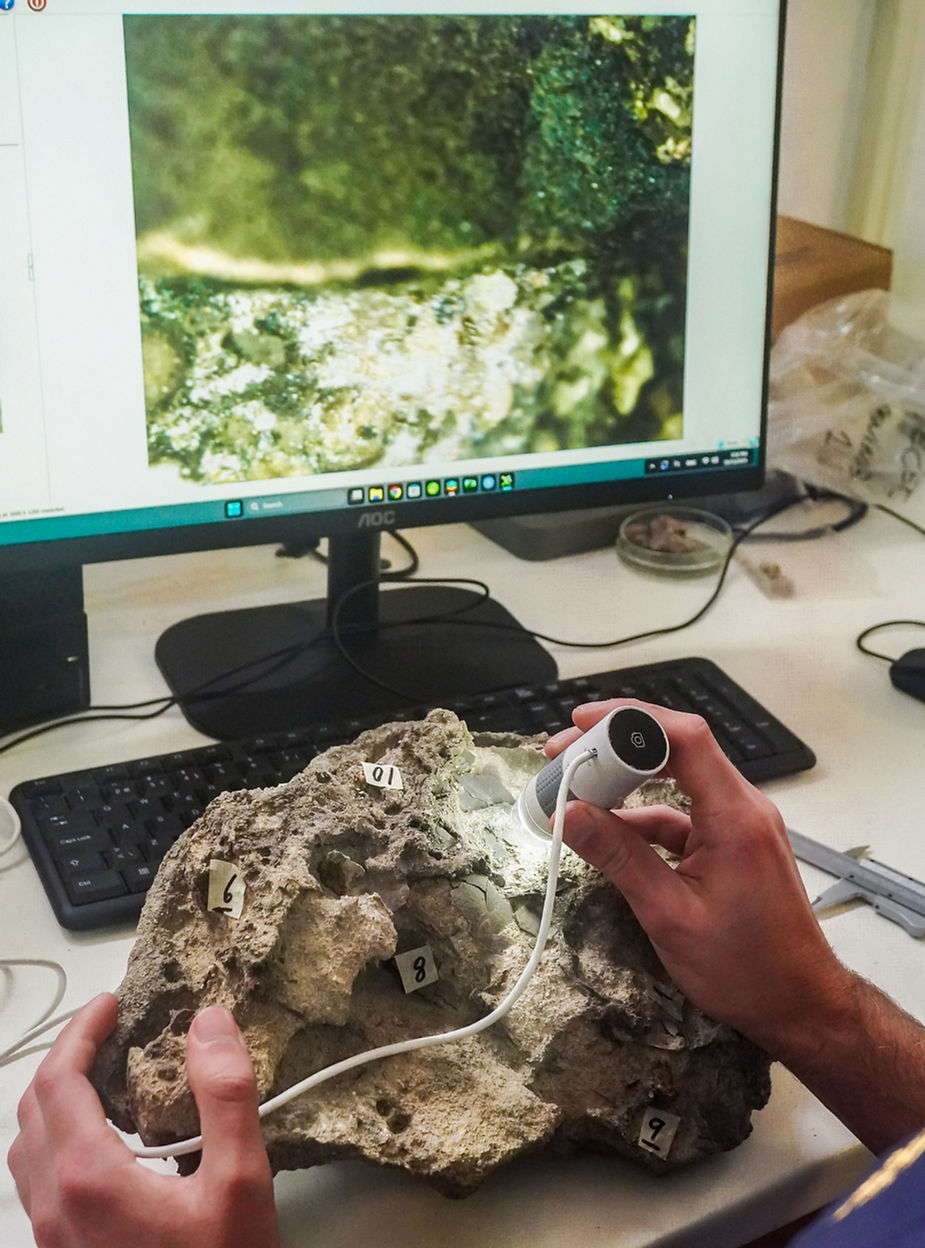
The fossil block containing the eggs will undergo computed tomography scans to create a three-dimensional model of their interior and determine whether any preserved embryo remains exist. Microscopic analysis of the shells is also planned.
Three-Dimensional Preservation in Rare Sandstone Matrix
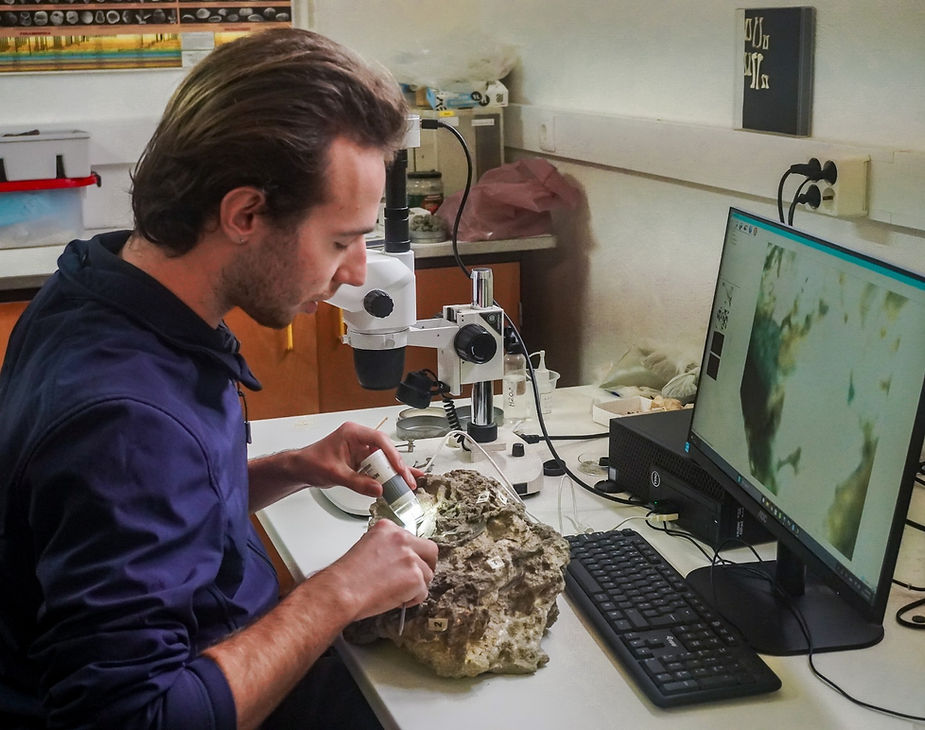
The eggs are preserved in three dimensions within the sediment, with identified fragments already under preliminary study using laboratory lighting and digital magnification. The Lusa News Agency quoted the society as saying that laboratory study will begin shortly, with CT scanning expected to resolve questions about embryo presence.
Researchers were surprised by the small size of the nest and the type of sediment in which it was found, the society’s announcement noted. The granular sandstone matrix differs from sediment types typically associated with dinosaur egg preservation and may indicate nesting occurred on a riverbank environment.
If scanning identifies structures consistent with bone or other embryonic tissue, researchers may pursue targeted exposure through mechanical preparation. The absence of visible cross-sections on the block exterior means investigators cannot currently assess whether embryos are present.
Portugal’s Coastal Cliffs Yield Rare Jurassic Specimen
The discovery adds to a growing body of Late Jurassic vertebrate material documented along Portugal’s western coastline, where cliff erosion continually exposes fossil-bearing strata. Regional geology preserves sediments from a period when the Iberian Peninsula occupied a different paleogeographic position than today.
Researchers face timing constraints common to coastal paleontology, as tidal action and seasonal storms progressively undercut cliff faces containing fossil material. Survey work along the Torres Vedras coastline operates as both discovery mechanism and documentation effort before natural erosion claims specimens.
First Appeared on
Source link






Leave feedback about this