

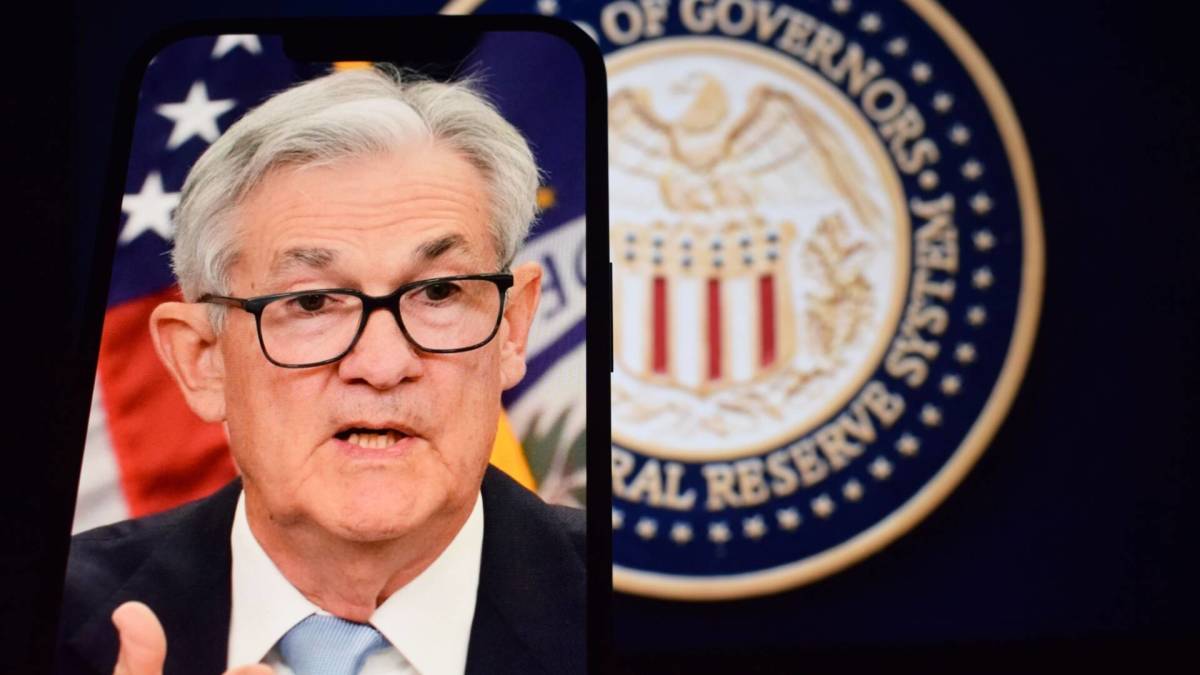
Investors and the White House may be betting on multiple interest-rate cuts this year, but the Federal Reserve just delivered a warning: The next move could be up, not down.
Minutes of the January Federal Open Market Committee released Feb. 18 show several Fed officials discussed the possibility of raising interest rates if sticky inflation remains above the Fed’s 2% target.
That’s right: a resumption of interest-rate hikes if the nation’s labor market continues to stabilize but inflation persists.
“Several participants indicated that they would have supported a two-sided description of the committee’s future interest-rate decisions, reflecting the possibility that upward adjustments to the target range for the federal funds rate could be appropriate if inflation remains at above-target levels,” the minutes said.
Liz Ann Sonders, chief investment strategist at Charles Schwab, told CNBC after the FOMC minutes were released that she “wouldn’t rule out” rising inflation.
“There is a risk inflation could tick up,’’ she said, adding that Schwab has moved its forecast of a second rate cut to later in 2026.
The FOMC voted 10-2 to hold interest rates steady at 3.50% to 3.75% in January on the benchmark Federal Funds Rate after three continuous cuts of 25 basis points in its last three meetings of 2025.
The Federal Funds Rate guides interest rates for investors and consumers on auto and student loans, home-equity loans and credit cards.
For consumers, a delayed rate cut could mean higher borrowing costs that remain in place longer than expected.
President Donald Trump and other White House officials have repeatedly demanded that the independent central bank slash rates to as low as 1% immediately.
Fed Governors Stephen Miran and Christopher Waller dissented on the January pause, saying they would have preferred a 25-basis-point cut due to softening in the labor market.
It was the FOMC’s first pause since July 2025.
Related: Kevin Warsh’s net worth: The Trump Fed nominee’s wealth & income
The Fed’s dual congressional mandate requires it to balance inflation and job growth via interest rates.
The two goals often conflict, operate on different timelines and are influenced by unpredictable global events.
More Federal Reserve:
After the December rate cut, Fed Chair Jerome Powell said that the lowering of rates brought monetary policy “within a broad range of neutral.”
First Appeared on
Source link



Leave feedback about this