

On Sunday, as forecasters warned that the biggest winter storm of the season was headed for California’s High Sierra, a mountain guide company sent 15 people out for a risky backcountry skiing adventure on the slopes above Donner Pass.
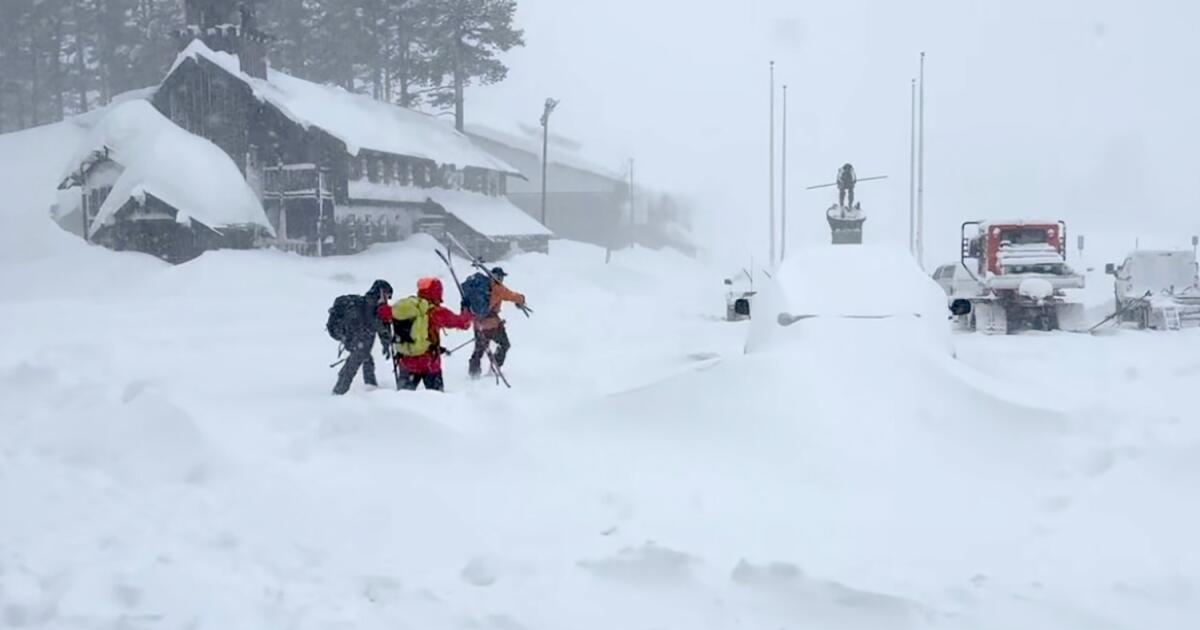
The storm arrived as predicted and by Tuesday morning had dumped several feet of fresh, unstable snow. That’s when the group attempted a perilous escape from the remote Frog Lake huts in a blinding blizzard beneath towering, avalanche-prone slopes.
A couple of miles from safety, someone in the group — which included four guides — saw a wall of snow barreling down from above and yelled, “Avalanche!” according to Rusty Greene, operations captain for the Nevada County Sheriff’s Office.
In the deadliest avalanche in modern California history, eight of the skiers were killed. One remains unaccounted for and is presumed dead.
After receiving the initial distress call at 11:30 a.m., dozens of first responders battled through the blizzard on snowcats and skis — there are no roads into the remote site — to reach the six survivors at around 5:30 Tuesday evening.
Two were hospitalized and are expected to recover.
The eight bodies were still on the mountain as of Wednesday morning because the continuing storm made removing them too risky, officials said.
Now that the emergency is over and the fates of most of the skiers is known, first responders, professional guides and countless commentators on social media are asking why a guide service — especially one that trains others in avalanche safety — would go ahead with the trip in the face of such daunting weather.
There were “lots of forecasts on this storm,” Nevada County Sheriff Shannan Moon said at a news conference Wednesday. “Those are the decisions that the guide company clearly made. We’re still in conversation with them on the decision factors.”
The company, Blackbird Mountain Guides, based in Truckee, has declined to answer questions about the disaster but sent employees to assist with the rescue effort. A statement on their website refers all inquiries to the Nevada County sheriff.
Three of the four guides on the trip are among the dead, Moon said.
One of the dead skiers was married to a member of the Tahoe Nordic rescue team, a volunteer group from Tahoe City that joined in the desperate search.
“As you can understand, this has not only been challenging for our community … it has also been challenging emotionally for our team,” said Placer County Sheriff Wayne Woo.
At Wednesday’s news conference, Woo begged would-be visitors to stay out of the Sierra Nevada until the storm passes later this week.
“Avoid mountain travel — it’s treacherous,” Woo said. “Please allow us to focus all of our resources on continuing to recover these bodies for the families and bring them home.”
Officials declined to identify any of the victims.
Nine women and six men were on the expedition. One other client was initially believed to be with the group, but rescuers later learned that the person “backed out of the trip at the last minute,” Moon said.

The six found alive — four men and two women — ranged from 30 to 55 years old, Moon said.
-
Share via
Other deadly California avalanches include a 1982 avalanche that killed seven at the Alpine Meadows resort in North Lake Tahoe. In 2008, three men were killed by an avalanche near Wrightwood, in the San Gabriel Mountains, while skiing out of bounds near the Mountain High resort.
Skiing in the backcountry is always more dangerous than at resorts, where professional ski patrollers work tirelessly — and at substantial risk to themselves — to clear dangerous accumulations of snow from towering peaks and cornices so the snow doesn’t come crashing down on paying customers gliding below.
But in the backcountry, you’re completely on your own.
The website for the Frog Lake huts, which are owned by the Truckee Donner Land Trust, warns that the journey from the trailhead to the cabins takes several hours and passes through dangerous avalanche terrain.
The severe winter storm that slammed into the area at the beginning of the week had been predicted long before the trip began. As early as Feb. 11, meteorologists were forecasting a lengthy blizzard dumping 5 feet of snow over several days beginning Sunday.
Continuing with the trip, despite such an ominous forecast, brought a torrent of social media criticism down on the guide company.
“Anyone with any basic knowledge or ability to look up weather should know what they’re getting into,” a local named Erica Eng wrote in the comments of the Nevada County Sheriff’s Office’s Facebook announcement of the massive search and rescue effort for the missing skiers.
Others chimed in accusing Blackbird of recklessness and profit-chasing and demanding that the company reimburse taxpayers for the expense of the rescue operations.
Dave Miller owns International Alpine Guides in June Lake, another professional guide service that runs trips to the Frog Lake huts. Until more is known, he declined to speculate on Blackbird’s decision to run the trip during the storm.
But he said the allure of backcountry skiing is undeniable and that clients pay for the access to pristine, uncrowded slopes and comfortable, European-style mountain huts.
The outings are pricey. Blackbird charges more than $1,000 for its three-day trips — more than the cost of a full-season pass that covers many of California’s best-known commercial ski areas. But the sense of adventure is worth it to a growing number of well-heeled clients.
“Fresh powder is a thing of the past at ski resorts,” which have become so crowded that all of the good snow is carved up by other skiers by 9 a.m. after a big storm, Miller said.
“I remember having fresh powder at Palisades Tahoe back in the ’80s in the middle of the day, but that doesn’t exist anymore,” he said.
And then there are the Frog Lake huts, which are modern and cozy, with heat, electricity, beds, bathrooms and a full kitchen.
“It’s like the hut system in Europe,” Miller said. “California doesn’t have any other places quite like that. It’s incredibly comfortable — way better than camping out in the snow.”
Unless things go horribly wrong.
On top of the already dire forecasts, the Sierra Avalanche Center, based in Truckee, issued an ominous warning at 6:29 a.m. on Tuesday.
“Travel in, near, or below avalanche terrain is not recommended today,” the center posted. “A widespread natural avalanche cycle is expected over the next 24 hours. Large avalanches may run through treed areas. If attempting travel today in non-avalanche terrain, be certain that there are no steeper slopes connected to the terrain you are traveling, either above or to the side.”
That warning was still in effect as rescuers raced to the scene to try to help the skiers.
The storm was so bad that Interstate 80 had to be closed through Donner Pass. Even local Sierra ski areas, such as Palisades Tahoe, closed on Tuesday because their large staffs of professional ski patrollers could not keep up with the rapidly accumulating snow and keep guests safe from avalanches.
Even before Tuesday, this had been a dangerous avalanche season in the High Sierra.
In early January, 42-year-old snowmobiler Chris Scott Thomason was buried underneath the snow in another avalanche around Castle Peak.
In late December, a 30-year-old ski patroller at Mammoth Mountain named Cole Murphy was killed in an avalanche deliberately started by colleagues trying to clear heavy snow from expert terrain.
“The backcountry is beautiful,” Moon said on Wednesday — especially the area around the Frog Lake huts. “I, myself, like to recreate in that area.”
But she begged people to pay attention to weather forecasts. “Mother Nature” is not impressed by how experienced you are, how prepared you are, she said. “Heed the warnings.”
First Appeared on
Source link






Leave feedback about this