

A 215-million-year-old crocodylomorph discovered in the United Kingdom has been identified as a new species, Galahadosuchus jonesi. The fossil, unearthed in 1969 but only recently recognized as distinct. The find sheds light on a little-known chapter of early crocodile evolution during the Late Triassic, a period that predates the Triassic-Jurassic mass extinction.
It also highlights how museum collections can hold overlooked scientific value for decades. Described in The Anatomical Record, the species adds to a growing list of animals that once inhabited a complex limestone landscape spanning what is now southern Wales and southwest England.
A Crocodile Fossil That Waited More Than 50 Years
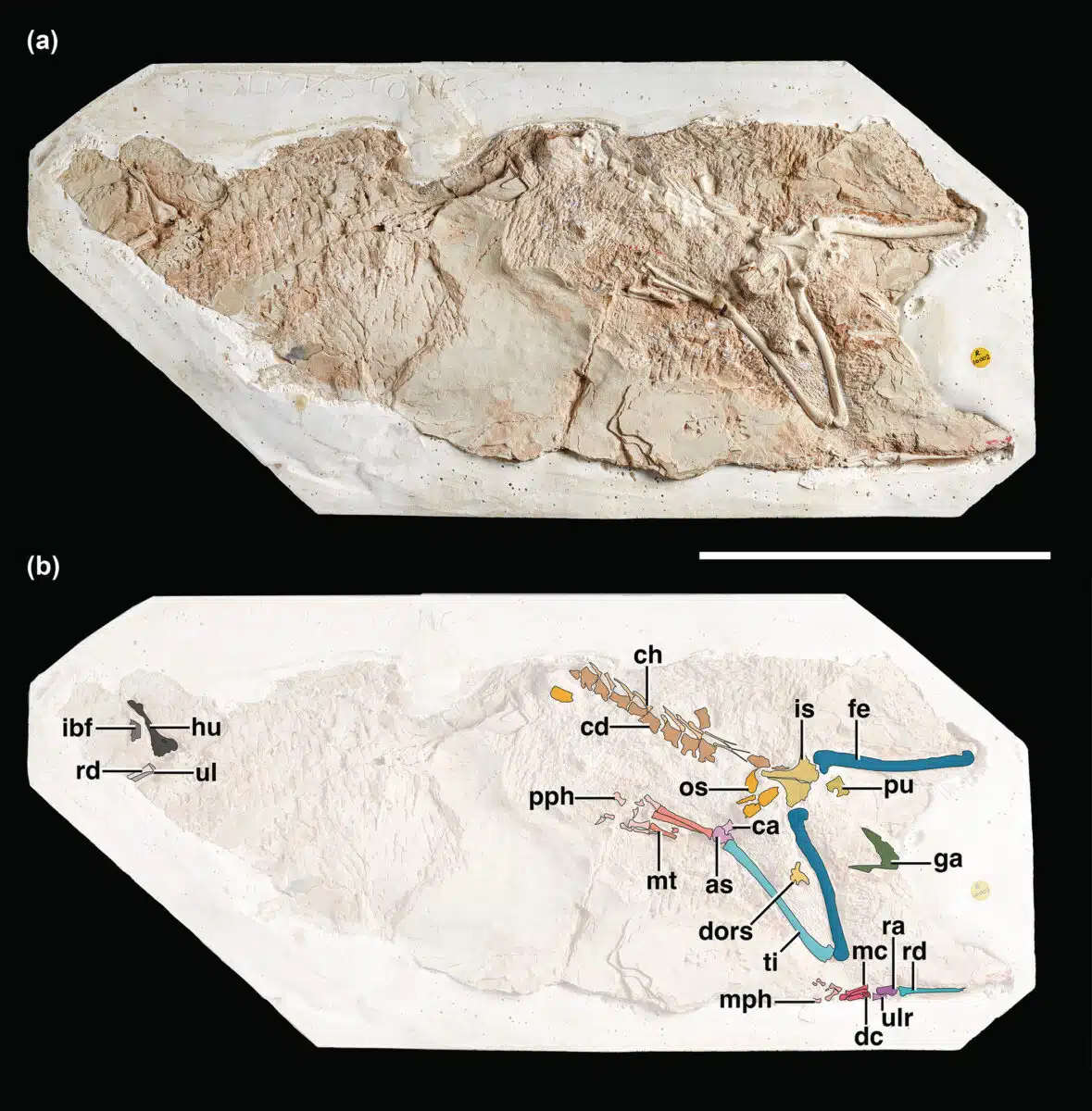
The remains of Galahadosuchus jonesi were recovered in southwestern England in 1969 and stored in collections for decades before being reexamined. As explained by the research team, the specimen was originally grouped with fossils of Terrestrisuchus, another early crocodylomorph. It was during a detailed anatomical review that differences became apparent.
“My Ph.D. project is looking at the evolutionary relationships of these early crocodiles,” lead author Ewan Bodenham explained. “So we conducted a detailed anatomical description of this specimen, making comparisons to other early crocodiles to determine if it was another specimen of Terrestrisuchus or if it was something new.”
They ultimately identified 13 key anatomical differences. Several of these distinctions involved the wrists, where the new species displayed bones that were shorter and stockier than those of previously known specimens.
An Ancient Land Predator in a Karst World
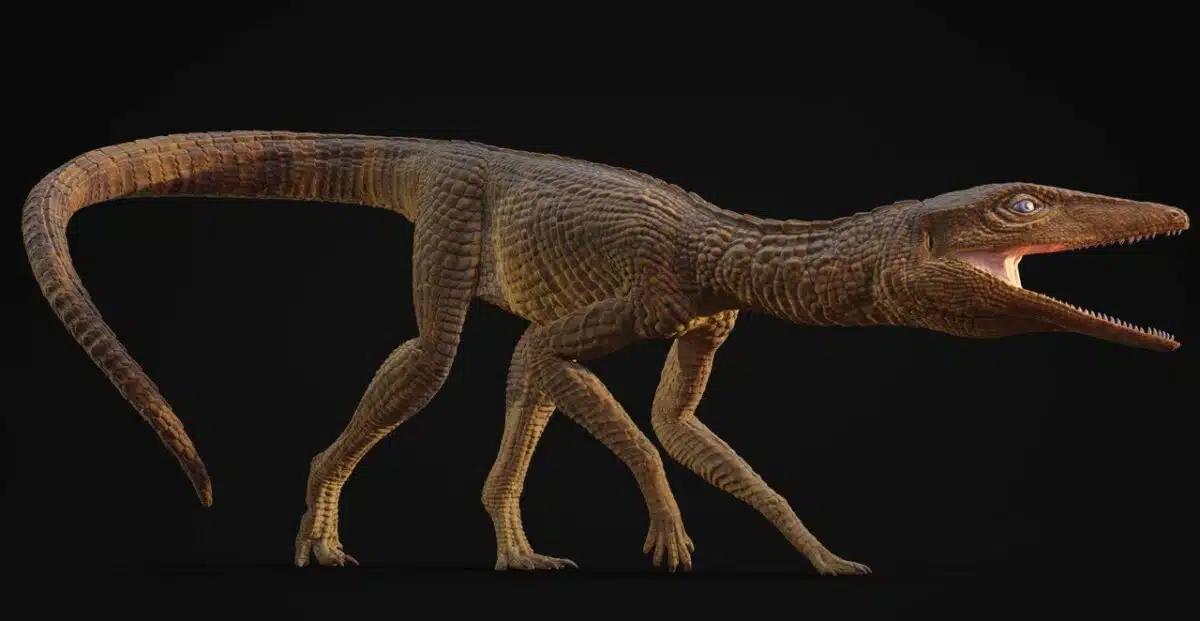
Unlike modern crocodiles and alligators, Galahadosuchus jonesi lived entirely on land. The animal had long, slender limbs and an upright stance, giving it what researchers described as a “reptilian greyhound” appearance.
During the Late Triassic, the region around today’s Bristol Channel was dominated by a limestone karst system filled with sinkholes and caves. According to the study, published in The Anatomical Record, animals that died on the surface were washed into these fissures and gradually buried by sediment. Over time, the deposits accumulated bones from species that lived between roughly 230 and 200 million years ago.
This environment supported a wide range of fauna. Fossils from the same deposits include some of the earliest known dinosaurs, such as Thecodontosaurus and Pendraig, as well as smaller reptiles like Cryptovaranoides, considered one of the earliest lizards, Threordatoth, and the gliding reptile Kuehneosaurus. Within this ecosystem, Galahadosuchus likely hunted small reptiles, amphibians, and early mammals among upland vegetation bordered by hot, arid plains.
A Scientific Tribute Rooted in the Classroom
The ancient crocodile’s name carries a personal story. The first part, Galahadosuchus, references Galahad of Arthurian legend, chosen to reflect the animal’s upright posture. The second part, jonesi, honors David Rhys Jones, a physics teacher from Cardigan, Wales. As stated by Bodenham:
“We named it after my secondary school physics teacher,” he said, describing him as someone who not only explained concepts clearly but showed genuine enthusiasm for science. He added that “He also didn’t let me settle. He was very good at challenging people and helping students be the best they can be. Above all, he’s a very funny, genuine, nice guy.”
First Appeared on
Source link






Leave feedback about this