

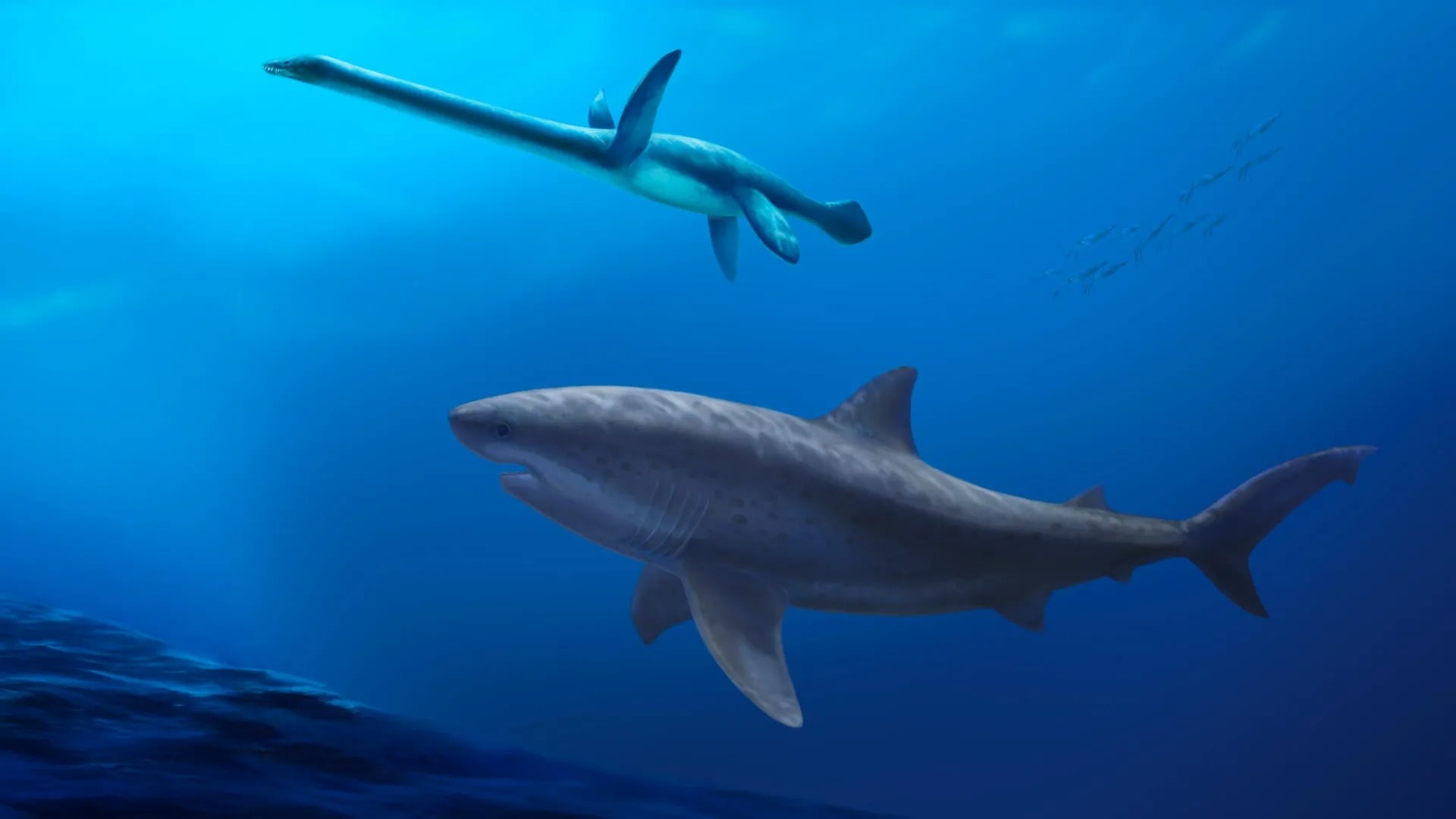
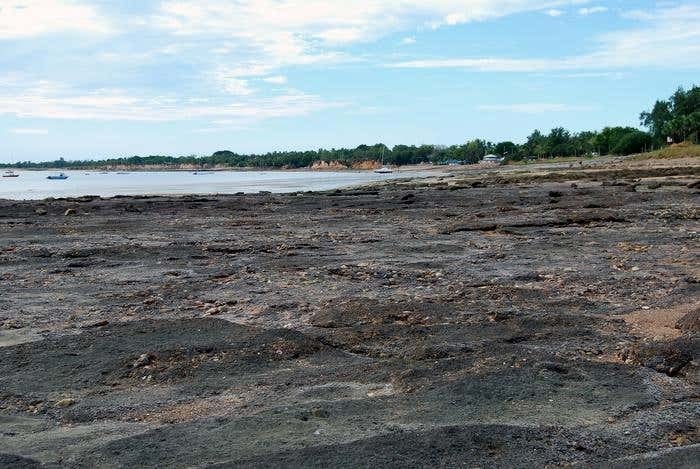
In the early 1990s, five unusually large shark vertebrae were unearthed along the rugged coastline near Darwin, Australia. At the time, they were thought to be the remains of a great white shark, the largest living predatory fish. The bones were placed in a local museum collection and soon forgotten. As it turned out, the fossils were not from a great white at all. Instead, they belonged to a previously unknown species of an extinct giant shark that ruled the oceans millions of years ago.
The chain of events leading to this exciting discovery began in late 2024, when a team led by Stanford University’s Dr. Mohamad Bazzi, decided to examine the fossils. The scientists hoped the large specimens would help them determine when and how sharks first grew to truly giant sizes.
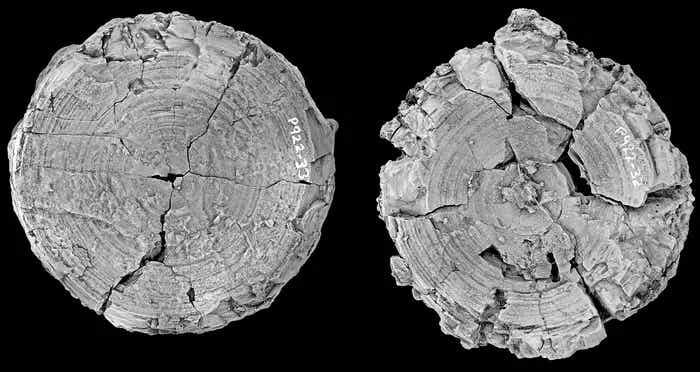
But when the researchers examined the fossils closely, they found that the five vertebrae each measured over 12 cm. This was far too large to be those of a great white shark. Their vertebrae are usually around 8 cm. Wondering if the fossils belonged to a different type of shark, they decided to investigate further.
Sure enough, the internal structure and shape of bones was more like those of the Cardabiodontidae, an extinct group of lamniform sharks. These close relatives of great whites lived during the early Cretaceous period and were much larger than modern sharks. However, while similar, the bones did not completely match those of any known species of this extinct group. This led the team to conclude that they had found a new species.
Based on the rock layer in which the bones were found, the shark is believed to have lived about 115 million years ago. The scientists estimate that it reached lengths of up to 26 feet (8 m) and weighed over 6,600 pounds (3,000 kg)! It was probably one of the biggest predators of its time.
The shark’s enormous size came as a surprise. Previous studies had indicated that sharks reached such massive proportions only about 100 million years ago. This discovery pushed the date back by 15 million years. It changes what scientists knew about the evolution of giant sharks.
The researchers published their findings in the journal Communications Biology in October 2025. They note that finding well-preserved shark bones is rare. Shark skeletons are made of cartilage. This soft, flexible tissue usually decays before it can fossilize. In this case, minerals slowly replaced the cartilage and turned the vertebrae to stone. This remarkable preservation offers a rare glimpse into the giant predators that once ruled the oceans.
Resources: Sciencedaily.com, museum.wa.gov.au, Smithsonianmag.com
First Appeared on
Source link






Leave feedback about this