

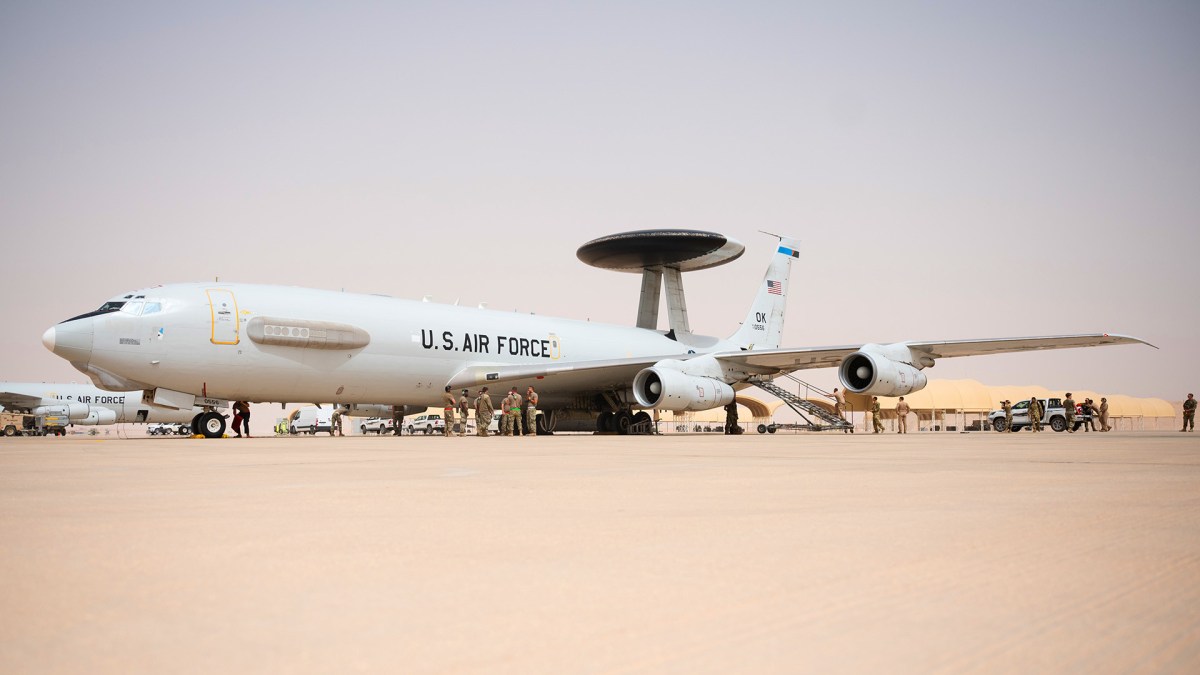
In the past two days, the U.S. Air Force has sent six of its 16 E-3 Sentry Airborne Warning and Control System (AWACS) radar planes to bases in Europe. Two of those jets are now headed to the Middle East, and the others will likely follow, as a massive buildup of U.S. airpower continues ahead of potential strikes on Iran. The deployment of nearly 40 percent of all Air Force E-3s underscores how critical the aircraft remain, but also the challenges of meeting intense operational demands with a rapidly aging and shrunken-down fleet. It also further calls into question a puzzling Pentagon move to axe the purchase of replacement E-7 Wedgetail jets, which Congress has now reversed.
Readers can first get caught up on the full scope of the U.S. buildup around the Middle East in our recent reporting here.
As of yesterday, a pair of E-3s had arrived at RAF Mildenhall in the United Kingdom after traveling from their home station at Elmendorf Air Force Base in Alaska. Four more AWACS jets from Tinker Air Force Base in Oklahoma had also touched down at Ramstein Air Base in Germany. Online flight tracking data shows that the E-3s at Mildenhall have now departed and are headed toward the Middle East. There is widespread expectation that those aircraft, as well as the ones at Ramstein, will eventually make their way to Prince Sultan Air Base in Saudi Arabia.
As noted, the U.S. Air Force currently has just 16 E-3s remaining in its inventory, roughly half the size of what it was just a few years ago. Six aircraft represent 37.5 percent of the total fleet. However, not all Sentry radar planes are available for operational tasking at any one time. For example, the average mission-capable rate for the E-3 fleet during the 2024 Fiscal Year was 55.68 percent, according to a story last year from Air & Space Forces Magazine. At the time of writing, this appears to be the most recent readiness data the Air Force has released for the E-3s. As such, the six forward-deployed AWACS jets represent an even larger percentage of the aircraft that can actually be sent out on real-world missions. This includes providing radar coverage for alert scrambles of fighter jets defending the homeland. This happens in some circumstances in the lower 48 states, but it is standard practice in Alaska, where there are usually a couple of E-3s typically stationed, with one on alert to launch in support of the fighters, which happens regularly. This is something we will come back to later on.
As TWZ has already noted, the deployment of E-3s to the Middle East is one of the clearest indicators that the final pieces for a major air campaign against Iran are falling into place. We made a similar observation about the appearance of AWACS aircraft flying close to the Venezuelan coast last December in the lead-up to the operation to capture that country’s dictatorial leader, Nicolas Maduro.
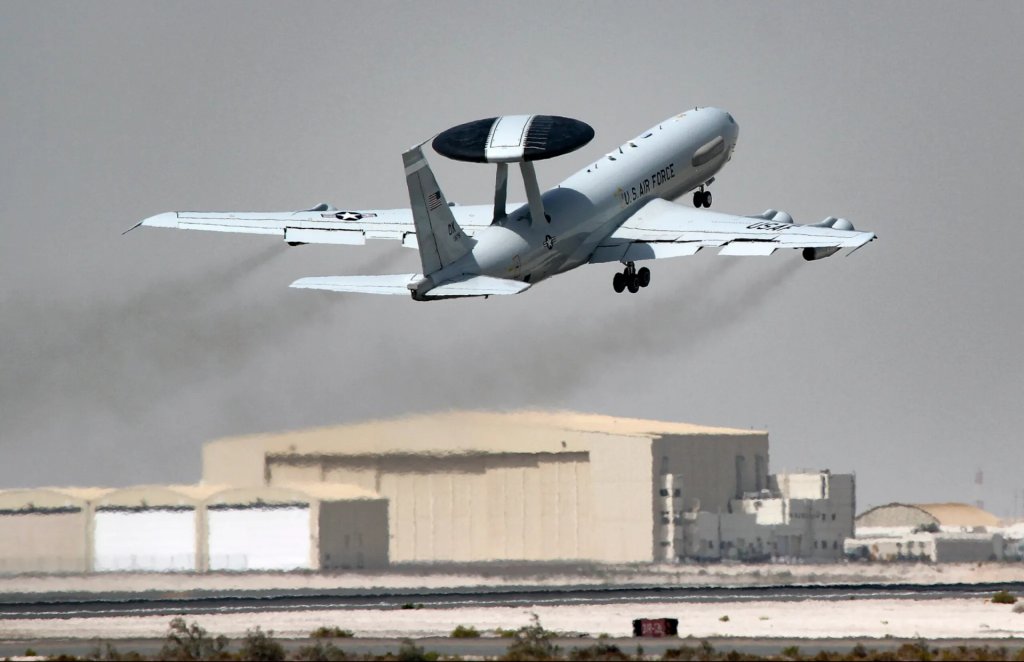
The E-3 is best known as a flying radar station, with its array contained inside a spinning dome mounted on top of the rear of the fuselage. From its perch, the Sentry can track hostile and friendly air and naval movements across a broad area of the battlespace. Its look-down radar capability offers particular advantages for spotting and tracking lower flying threats, including drones and cruise missiles. Kamikaze drones, as well as cruise and ballistic missiles, would be a central feature in any Iranian retaliatory attacks on American assets on land and at sea in the Middle East.
However, each Sentry, which typically flies with 13 to 19 mission specialists onboard in addition to a four-person flight crew, is much more than just its radar. It has other passive sensors and an advanced communications suite. Its combined capabilities make it a key battle management node during operations, and not just in the aerial domain.
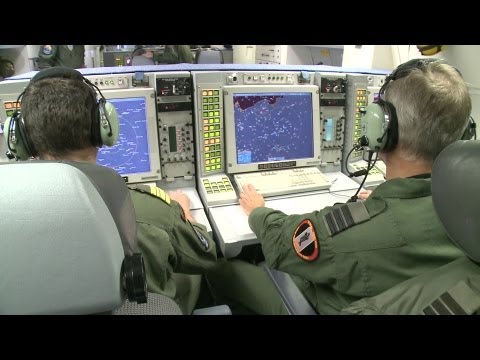
E-3 Sentry Airborne Warning & Control System. Take-Off, Landing, Interior Shots
“The radar and computer subsystems on the E-3 Sentry can gather and present broad and detailed battlefield information. This includes position and tracking information on enemy aircraft and ships, and location and status of friendly aircraft and naval vessels. The information can be sent to major command and control centers in rear areas or aboard ships,” according to the Air Force. “In support of air-to-ground operations, the Sentry can provide direct information needed for interdiction, reconnaissance, airlift and close-air support for friendly ground forces. It can also provide information for commanders of air operations to gain and maintain control of the air battle.”
Altgoether, E-3 crews run the air battle, and also serve as a key battle management node during operations outside of the aerial domain. These command and control functions would be key in any future offensive operations against Iran, as well as for defending against any retaliation.
At the same time, the Air Force has been open for years now about the increasing challenges involved in operating and sustaining the E-3 fleet. The last new production Sentry aircraft were delivered in 1992, and were also some of the last derivatives of the Boeing 707 airliner to ever be produced. Air Force E-3s have received substantial upgrades since then, but the underlying aircraft are still aging and are increasingly difficult to support. Between 2023 and 2024, the Sentry fleet notably shrank from 31 aircraft down to its present size, in part to try to help improve overall readiness. The fact that U.S. E-3s are powered by long-out-of-production low-bypass Pratt & Whitney TF33 turbofans has been cited as a particular issue.
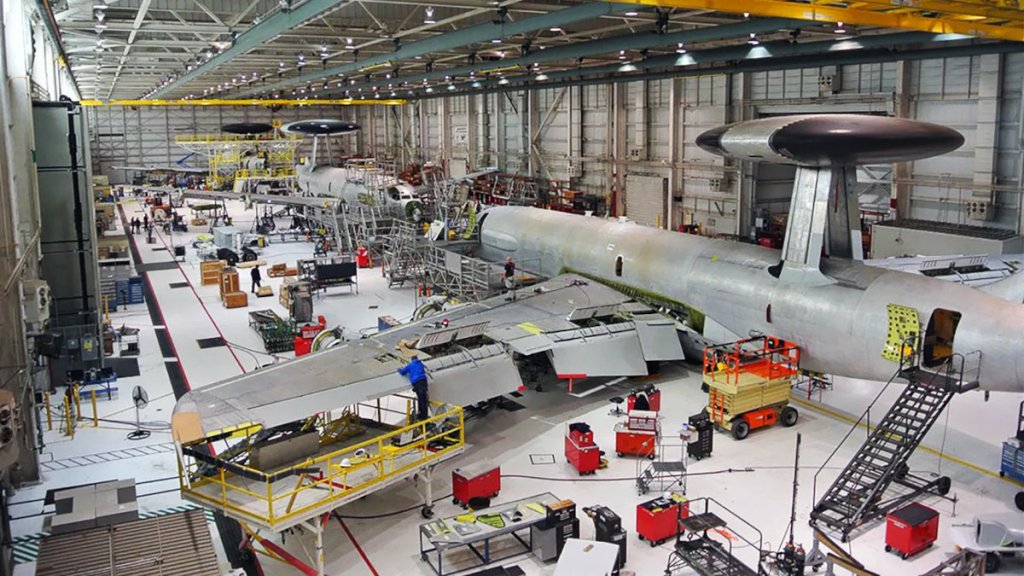
“The first thing I would offer is there’s already – whether there’s 31 airplanes or 16 airplanes – there’s a gap today,” now-retired Gen. Mark Kelly, then head of Air Combat Command, told TWZ and other outlets at the Air & Space Forces Association’s main annual conference in 2022. “There’s a reason why there’s exactly zero airlines on planet earth that fly the 707 with TF-33 engines.”
“The last airline was Saha Airlines in Iran,” Kelly added at that time. “We basically have 31 airplanes in hospice care, the most expensive care there is. And we need to get into the maternity business and out of hospices.”
As already noted, the remaining E-3 fleet has continued to struggle with readiness issues amid consistently high demand. These issues have been compounded by resistance over the years to acquiring a direct replacement. When the Air Force finally did decide to supplant at least a portion of the Sentry fleet with newer and more capable E-7 Wedgetail airborne early warning and control aircraft, that effort turned into a protracted saga.
The Air Force officially started down the road of acquiring E-7s in 2022, but the program became mired in delays and cost overruns. Last year, the Pentagon revealed its intention to axe the Wedgetail purchases in favor of an interim solution involving buying more of the U.S. Navy’s E-2 Hawkeye airborne early warning and control planes. That, in turn, would serve as a bridge to a longer-term Air Force goal of pushing most, if not all, airborne target tracking sensor layer tasks into space. Questions about the survivability of the E-7 were also cited as having contributed to the decision.
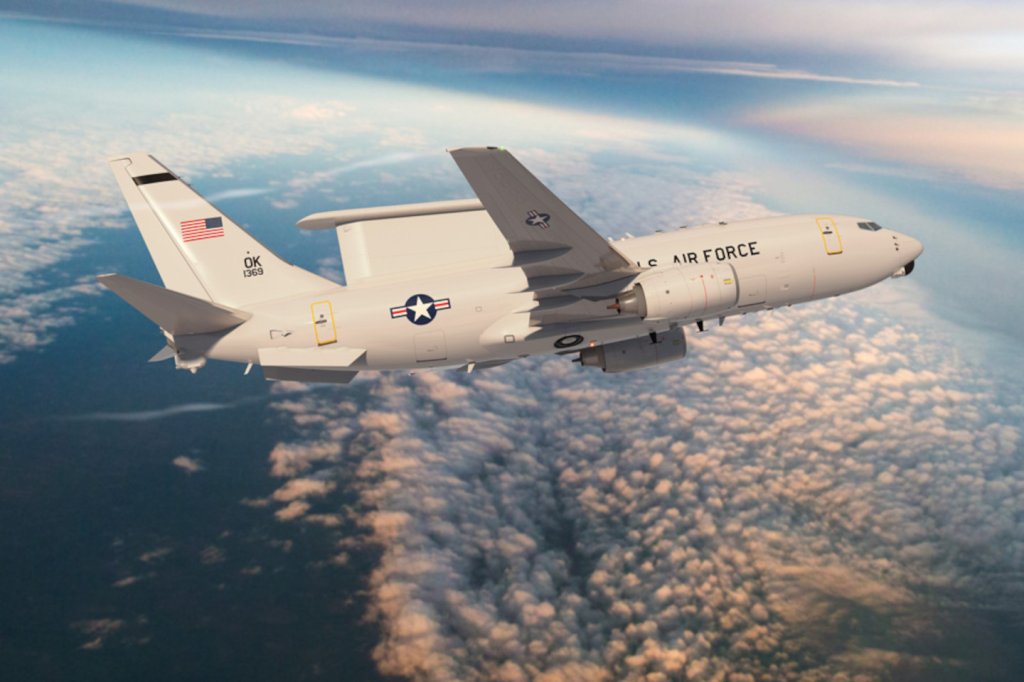
Questions were immediately raised about the new plan, especially about the viability of the E-2, a lower and slower flying aircraft designed around carrier-based operations, to meet Air Force needs, as TWZ has explored in the past. The service has also said that it does not expect new space-based capabilities to be operational before, at best, the early 2030s. Traditional airborne early warning and control aircraft are expected to continue playing important roles even after that milestone is reached.
“I have been concerned. We have E-3 capability up north, of course, but we were all counting on the E-7 Wedgetail coming our way. We’re kind of limping along up north right now, which is unfortunate. And the budget proposes terminating the program,” Sen. Lisa Murkowski, a Republican from Alaska, had said during a June 2025 Senate Appropriations Committee hearing, where the E-7 cancellation plans first emerged publicly. “Again, the E-3 fleet [is] barely operational now, and I understand the intent to shift towards the space-based – you call it the ‘air moving target indicators’ – but my concern is that you’ve got a situation where you’re not going to be able to use more duct tape to hold things together until you put this system in place. And, so, how we maintain that level of operational readiness and coverage, I’m not sure how you make it.”
Congress has since taken action to save the E-7, but the program may now be even more delayed as a result of the impasse over the past year. Legislators have also taken steps to block any further E-3 retirements, at least through the end of Fiscal Year 2026.
Still, the truncated E-3 fleet clearly remains under immense strain. Sen. Murkowski’s comments last Summer also remain particularly relevant in light of the fact that two of the six E-3s recently sent across the Atlantic came from Elmendorf in Alaska. Recent tracking data suggests that there may only be one Sentry at Elmendorf now to meet operational needs in and around the High North, a part of the world that has only grown in strategic significance in recent years.
There is also a question now about the availability of E-3 coverage should a crisis break out somewhere in the Indo-Pacific. If a major contingency were to emerge in the region tomorrow, the Air Force would be faced with a situation compounded not just by low availability rates and high demand elsewhere globally, but also the so-called ‘tyranny of distance.’ The sheer expanse of the Pacific, much of which is water, presents additional requirements when it comes to total coverage area and sortie generation rates to maintain a steady flow of aircraft on station around designated operating areas. Just getting to those areas and back could take many hours. Any future conflict in the region could occur over a massive total area, as well, which would be problematic for such a tiny fleet. All this is exacerbated by the age of the airframes and copious amount of maintenance to keep them flying in the best of conditions, let alone when deployed to the Pacific.
As a point of comparison, China’s People’s Liberation Army (PLA), which would be fighting from its home turf during a major conflict in the Pacific, has made significant investments in a diverse and still growing array of airborne early warning and control aircraft. The Chinese see a force-multiplying need for these aircraft, and for large numbers of them to be able to cover a lot of territory at once, as you can read more about in this past TWZ feature.
Moving capabilities into space is an admirable goal, and has many advantages in theory, but the capabilities are not available now. Further, while some of the sensing can be distributed to other platforms and leveraged via advanced networking, there still is a place for an integrated and powerful airborne early warning and control solution, at least till the ‘all-seeing’ space layer is actually in place. Saving money now by leaving such a glaring gap, especially in the current security environment globally, appears bizarrely short-sighted.
It does remain to be seen whether or not the United States ultimately launches a new major air campaign against Iran. U.S. and Iranian officials have now met twice to try to reach some type of diplomatic agreement, with the focus largely on the latter country’s nuclear ambitions. At the same time, the ongoing build-up in U.S. airpower around the Middle East, and not just limited to the E-3s, aligns with recent reports that assets are being positioned at least for possiblity of a sustained, weeks-long operation.
“The boss [President Trump] is getting fed up,” an unnamed Trump adviser said, according to a report today from Axios. “Some people around him warn him against going to war with Iran, but I think there is 90% chance we see kinetic action in the next few weeks.”
“One thing about the negotiation I will say this morning is, in some ways it went well. They agreed to meet afterwards,” Vice President J.D. Vance said during an interview on Fox News yesterday following the second round of negotiations. “But in other ways it was very clear that the President has set some red lines that the Iranians are not yet willing to actually acknowledge and work through.”
For its part, Iran has continued to threaten major retaliation in response to any new U.S. strikes.
Regardless, as mentioned, the deployment of the six E-3s is one of the strongest signs that the last pieces needed for a new major operation against Iran are increasingly in position. All of this puts a particular spotlight on the critical capabilities that the AWACS aircraft provide, but also the new strain that has been put on such a highly in-demand, but shrinking fleet, as well as the puzzling decision to slow-roll or entirely eliminate their replacement.
Contact the author: [email protected]
First Appeared on
Source link





Leave feedback about this