

If FCC Chair Brendan Carr’s goal was to cast a massive national spotlight on a Democratic candidate to represent Texas in the U.S. Senate, then everything’s going according to plan.
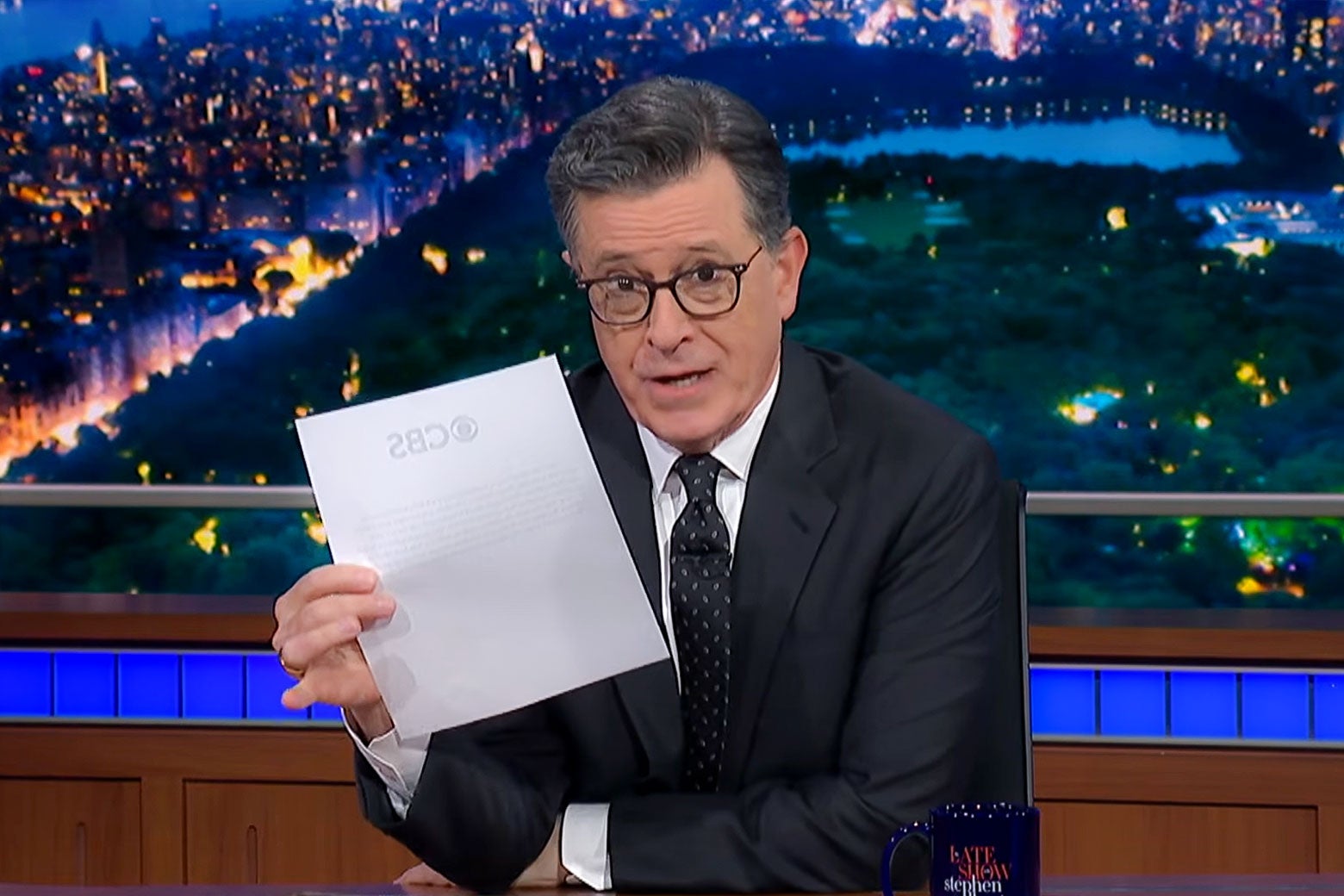
On Monday night, Stephen Colbert told viewers of the CBS Late Show that he wouldn’t be able to air his scheduled interview with Texas state Rep. James Talarico, who is vying to challenge four-term Republican John Cornyn in the fall, because of Carr’s threat to begin applying the Federal Communications Commission’s equal time regulations to late-night talk shows. Carr, Colbert explained, hadn’t actually said he would, just that he might. More specifically, Carr mused in a public notice published on Jan. 21 that the long-standing practice of exempting both evening and daytime talk shows from equal-time rules—codified in a 2006 FCC ruling in favor of Jay Leno’s Tonight Show—did not necessarily apply in every case, especially when those programs were deemed to be “motivated by partisan purposes.” Democratic commissioner Anna M. Gomez pointed out that the law had not actually changed, but after the FCC opened a probe into Talarico’s appearance on The View earlier this month, broadcast networks got the message. CBS’s lawyers, Colbert informed his audience, had not only forbidden him from airing his own interview; he wasn’t even allowed to show Talarico’s picture on the air.
In a statement released Tuesday, CBS said it had merely provided Colbert with “legal guidance that the broadcast could trigger the FCC equal-time rule,” not actually forbidden him from having Talarico on the air. But Colbert, whose show was canceled last summer as the network’s parent company sought the Trump administration’s approval for the now-completed merger between Paramount and David Ellison’s Skydance Media, is, to borrow his own pun, out of FCCs to give. On Tuesday night’s broadcast, Colbert read CBS’s statement, whose existence he said he learned of when it was released to the press, out loud, debunking it one line at a time, and reminding his parent company’s new owner how little reason he has to play nice with them. As he put in a mock promo for the network’s Matlock, “Watch it or don’t watch it. I leave in May.”
It’s clear that Colbert is not as indifferent as that sounds, and he took care on both nights to underline his gratitude to at least some of the people who have run CBS since he took over the Late Show in 2015. But it’s also clear that he’s profoundly opposed to the Trump administration’s policies, and even more profoundly offended by the religious right’s decision to cast its lot with MAGA. His interview with Talarico, which was conducted on the Late Show set and posted to the show’s YouTube channel, wasn’t a particularly explosive one; the audience clapped politely at the beginning and end, but there was no ecstatic applause, no whoops of agreement. But it was a rare instance, at least for mainstream television, of two progressive Christians sharing their understanding of Jesus’ teachings, and why that understanding leads them to oppose everything that Donald Trump stands for. It’s rare, in any medium, to hear a public figure say as plainly as Talarico did that “Christian nationalism is the worship of power in the name of Christ.”
As I write, the video of Talarico’s interview has been viewed over 6 million times—more than twice the size of the Late Show’s nightly broadcast audience, and four times more than watched any part of his interview last year with Taylor Swift. So if Carr’s goal was to silence Talarico or chasten Colbert, it was an abject failure. According to Talarico, his campaign took in $2.5 million in contributions in the 24 hours after his interview was posted, and Colbert’s interview is still racking up viewers on his YouTube page, where criticism of the Trump administration seems to outperform other content by a factor of 10. But it’s doubtful putting the brakes on Talarico, or Colbert, or even CBS is Carr’s ultimate goal. Like many of Trump’s officials, Carr knows that the threat of action, legally justified or not, is often all it takes to compel submission. Back in 2024, when he was a lowly FCC commissioner, Carr led the public charge that NBC had triggered equal-time rules by giving Kamala Harris a 90-second guest spot on Saturday Night Live. No formal actions were taken, but NBC ran a 60-second Trump ad free of charge during an NFL game and a NASCAR race, and two weeks later, Trump announced that Carr was his pick to lead the FCC.
Perhaps it’s just a coincidence that, the day after CBS’s new management opted to comply in advance, Jonathan Alter reported that Trump’s Department of Justice would act to block Netflix’s acquisition of Warner Bros. as a violation of antitrust laws, more or less clearing the way for the hostile Paramount bid that Warner Bros. has rejected several times over. But it at least raises the possibility that Paramount is doing now what it seemed to do last year, throwing Colbert under the bus in order to appease an administration that believes the only acceptable amount of public criticism is none. The stakes aren’t control of broadcast TV’s dwindling audience, but the entire media landscape, old and new, a landscape in which two men talking on a stage are but the tiniest of dots. Still, Carr might have done Colbert and Talarico a favor by forcing a change of venue. The crowd for their online interview wasn’t vocally enthusiastic, but that’s in part because Colbert wasn’t playing to them. There were no ratings to be got, and so no need to grab for them, to always be driving toward the next witty aside or prescreened anecdote. It was a real conversation, not the TV version of one, and it proved that, while the Ed Sullivan Theater may be dark in June, Colbert can still light up a screen any time he wants to.
First Appeared on
Source link






Leave feedback about this