

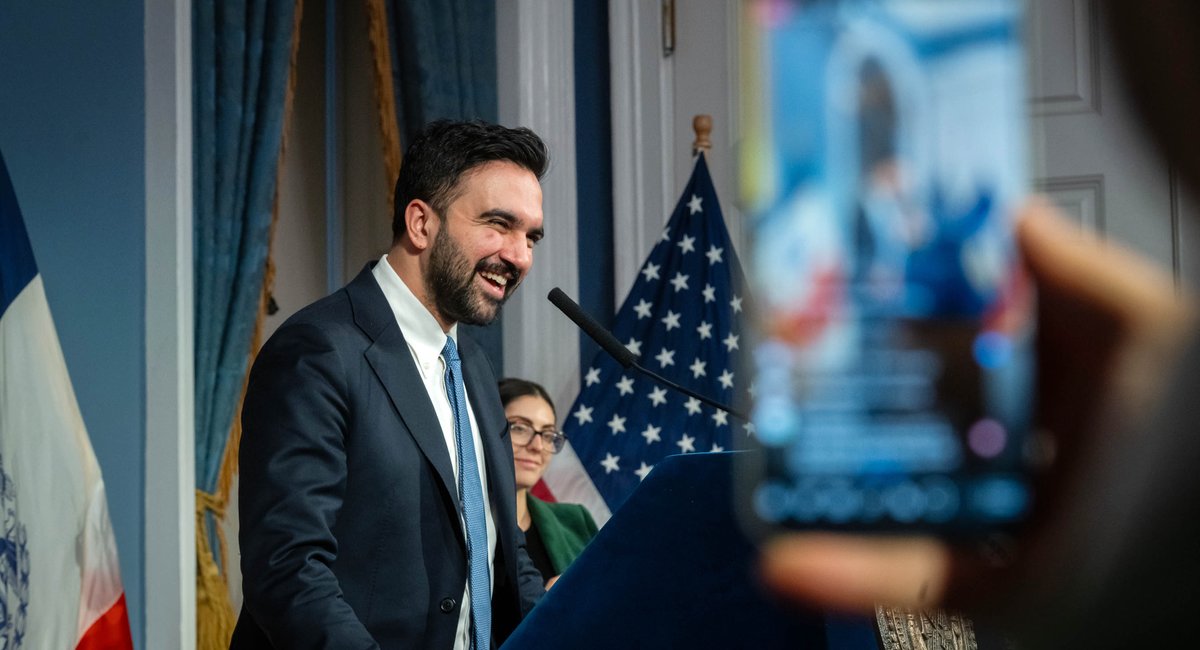
New York City Mayor Zohran Mamdani is officially reshaping the city’s Rent Guidelines Board by appointing five new members and reappointing one, positioning the panel to decide whether his signature campaign pledge to “freeze the rent” becomes reality for tenants in about 1 million rent-stabilized apartments.
Mamdani will name Chantella Mitchell, a program director at the nonprofit New York Community Trust and a former city housing official, as board chair, City Hall spokesperson Matt Rauschenbach told Gothamist. Mitchell did not respond to requests for additional comment.
The mayor will also appoint economist Lauren Melodia, labor union leader Brandon Mancilla and data scientist and researcher Sina Sinai as three of the board’s public representatives.
Supportive housing developer Maksim Wynn, another former city housing official, is Mamdani’s pick for an open seat as one of the board’s two landlord representatives. The mayor will also reappoint tenant attorney Adán Soltren as one of the board’s two renter representatives, according to City Hall.
Mamdani said he was “proud” of the appointees in a written statement to Gothamist late Monday.
“I’m confident that, under the leadership of Chantella Mitchell as chair, the board will take a clear-eyed look at the complex housing landscape and the realities facing our city’s 2 million rent-stabilized tenants, and help us move closer to a fairer, more affordable New York,” Mamdani said.
The nine-member panel votes each year on the amount that owners of rent-stabilized apartments can legally raise monthly rents. On three occasions, all under former Mayor Bill de Blasio, the board voted for a year-long freeze.
Mamdani has pledged to preside over four consecutive freezes during his first term to make the city more affordable for tenants living in rent-stabilized apartments, but the mayor does not actually have the power to accomplish that unilaterally. Instead, the pledge hinges on his appointees’ decisions.
The board is made up of two tenant advocates, two landlord representatives and five “public members” who are intended to take a neutral view of financial data and the economic outlook for landlords and tenants. The public members typically constitute the five-vote majority in the annual decisions.
Mamdani’s pledge to halt rent increases helped galvanize his nascent campaign and turn a little-known state assemblymember into a mayoral frontrunner — while igniting sharp criticism from his political opponents and local landlords who have called for higher hikes.
Former Mayor Eric Adams tried and failed to stymie Mamdani’s effort to stock the board with his own picks just before leaving office. But two people whom Adams attempted to appoint to the panel opted to withdraw, paving the way for Mamdani to name the majority of its members.
A rent freeze would mark a departure from board practices under Adams. During his four-year term, the board voted to increase rents by a total of 12% on one-year leases.
A package of tenant protection laws enacted in 2019 limits the ways that landlords of rent-stabilized apartments can increase monthly rents, putting greater emphasis on the decisions of the Rent Guidelines Board.
Landlords, real estate groups and many economists say regular rent increases are necessary to offset owners’ rising costs — especially in a subset of financially distressed buildings where all apartments are rent-stabilized and expenses outpace revenue from rent. But tenant advocates and progressive groups counter that city housing data shows most owners of rent-stabilized apartments are faring well financially, in contrast to renters earning a median income of $60,000.
Mamdani has touted strategies to lower owners’ costs and blunt calls for rent increases, though many would require state approval.
As a candidate, Mamdani said he wanted to pursue property tax reform — long a New York political football that requires state approval — to lower expenses for owners of rent-stabilized apartments. That goal could be contradicted by a new threat to raise taxes by 9.5% on all properties to balance the city’s budget if state lawmakers do not pass a tax hike on wealthy New Yorkers.
He has also urged state lawmakers to rein in rising insurance costs that make up a growing proportion of landlords’ expenses.
Mamdani has not wavered from his pledge to freeze rents since taking office.
“I continue to be confident that the Rent Guidelines Board will assess the landscape for tenants in rent-stabilized units across the city and find that they are in dire need of relief,” he said on his first day in office.
He later told Gothamist his picks were coming “soon.”
The five new appointees will assume their roles a day after housing economist Alex Armlovich formally resigned from the panel. In an interview on Monday, Armlovich said he wanted to focus on housing production policy in his job with the organization Coefficient Giving.
Armlovich, who has publicly said he would not support a rent freeze unless economic data justified it, said he did not face pressure from the Mamdani administration or his employer to resign. His decision was first reported by news outlet The City.
In a resignation letter to the board, Armlovich said housing production is a more important driver of affordability than rent caps determined by the Rent Guidelines Board.
“Rent regulation is a short-term patch that provides valuable certainty and consumer protection for tenants, but only insofar as a tenant’s life circumstances never change and they never need or want to move for the rest of their lives,” Armlovich said in a resignation letter to the board.
He also touted a proposal from fellow board member Arpit Gupta to institute a “slumlord freeze,” which would allow responsible owners to increase rents on pace with operating costs while punishing landlords who rack up egregious housing code violations.
“It directly ties a landlord’s revenue to their performance as a housing provider, and it addresses the legitimate concern that blanket guidelines reward negligent owners and responsible ones alike,” Armlovich wrote. “I think giving landlords both the means and the incentive to reinvest cost-based RGB guideline increases into tenant quality of life is the single best reform the RGB could adopt, and I hope the new board will give it a serious look.”
Two other members, Reed Jordan and Alex Schwartz, will also be replaced on the board. Schwartz criticized Mamdani’s rent freeze proposal in an op-ed last year.
Doug Apple, board chair under Adams, told Gothamist he would also leave.
Apple, an affordable housing consultant, said he expected the next group of board members to assess financial data before making their decision, without “automatically” deferring to Mamdani’s goal of a rent freeze.
“I think they should weigh, as every board does, the needs of the tenants and the needs of the landlords,” Apple said. “The mayor has made his position clear, but this is an independent board.”
First Appeared on
Source link




Leave feedback about this