

Deep within the caves of New Mexico, researchers have uncovered a mysterious phenomenon that could change how scientists search for life beyond Earth. In 2018, a team of scientists, led by Hazel Barton from the University of Alabama and Lars Behrendt from Uppsala University, explored the Carlsbad Caverns, where they found bright green microbial colonies thriving in complete darkness. These microbes, unlike any previously studied, were found to photosynthesize using near-infrared light. This discovery, reported by the BBC, has significant implications not just for biology but also for astrobiology and the search for extraterrestrial life.
The Discovery of Green Microbes in Complete Darkness
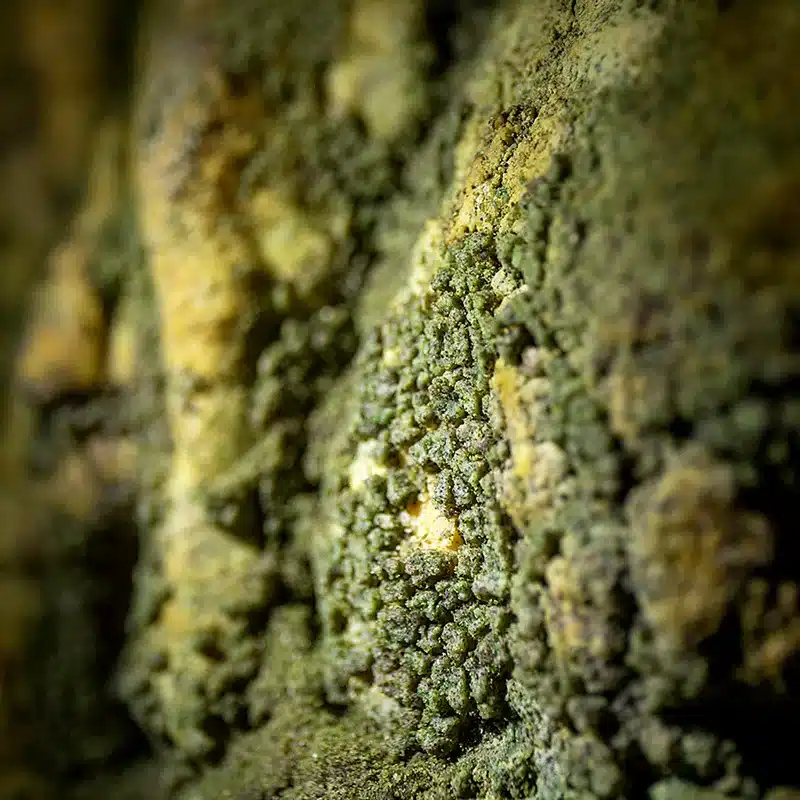
“The wall was bright green. It was the most iridescent green you’d ever seen, and yet the microbes were living in complete darkness,” says Hazel Barton. This description highlights the unusual nature of the discovery in Carlsbad Caverns. The bright green color on the cave walls stood out against the deep darkness, but upon closer inspection, it became clear that these microbes were thriving in a completely lightless environment. This stark contrast raises the question: How could life persist without any visible light?
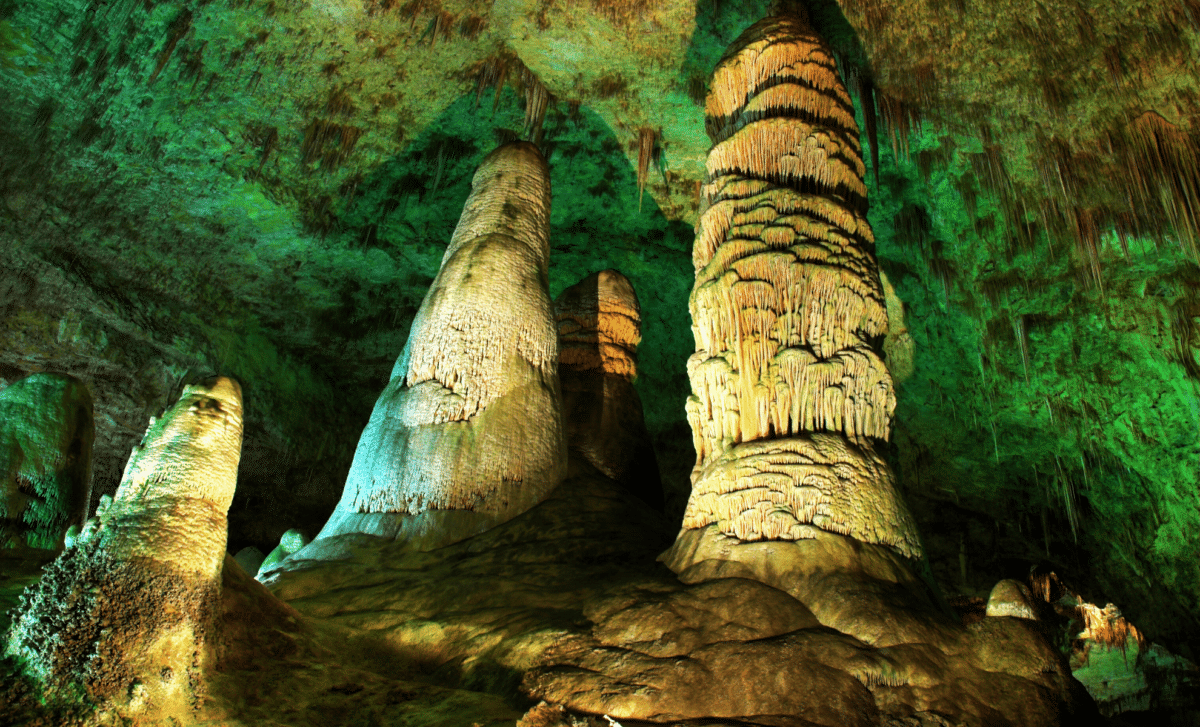
According to the BBC, the cave, known for its tourist-friendly sections with visible limestone formations, hides a much darker, isolated region where Barton and Behrendt ventured.
“The Carlsbad cavern is very easily accessible. It’s a very large limestone cave that tourists can visit that has steps and ladders and everyone can go down,” says Behrendt. However, as they descended deeper into the cave, the environment changed dramatically.
“We started going deeper and deeper into the cave,” says Barton. “Eventually, we were at a point where we couldn’t see without using flashlights. We had to use a headlight to be able to see our hand in front of our face, and yet you could still see green pigment on the wall.”
Despite the absence of sunlight, the microbes were living and flourishing in this extreme environment. The team found that the cyanobacteria in these dark alcoves used chlorophyll d and f to absorb near-infrared light, a type of light invisible to the human eye. This light, while undetectable to us, was reflected and diffused by the cave’s limestone surfaces, enabling the microbes to harness energy in an environment previously thought to be completely uninhabitable.
Unveiling the Implications for Life Beyond Earth
What makes this discovery so important is its broader implications for the search for life beyond Earth. “We showed that not only do they live down there, but that they photosynthesize in a completely sheltered environment where they’ve probably been untouched for 49 million years,” Behrendt remarks. The microbes, having survived in isolation for millions of years, are demonstrating a form of life that could exist on other planets, especially those orbiting red dwarf stars that emit mostly near-infrared light.
This discovery challenges traditional assumptions about what conditions are necessary for life. Barton and Behrendt’s research could help refine the methods used by scientists to search for extraterrestrial life. “What our work is trying to do is figure out what is the longest wavelength of light and lowest level of light at which you can photosynthesize,” explains Barton. This knowledge could help narrow down the search for exoplanets capable of sustaining life. By understanding the range of light that sustains life in extreme conditions, scientists could more accurately identify promising stars and planets for exploration.
In fact, these findings have already led to a proposal for a NASA project to test the viability of life in extreme conditions. “Then what you can do is take the 100 billion potential stars that we can point the James Webb Space Telescope at, and reduce it down to say 50 stars [which may host life],” Barton adds. The use of near-infrared light as a potential indicator of life is a new lens through which to view the universe.
The Key to Detecting Life in Space: Oxygen
One of the most intriguing aspects of the Carlsbad Caverns discovery is the role oxygen plays in determining whether a planet can support life. “There are very, very few ways that oxygen can be made in an atmosphere without life,” Barton states. On Earth, oxygen is a byproduct of photosynthesis, and finding oxygen in the atmosphere of an exoplanet could be a strong indicator that life exists there. Barton and Behrendt’s research could provide vital data on how to detect such markers in distant worlds, bringing us closer to answering the age-old question: Are we alone in the universe?
As scientists continue to refine their methods and tools for exploring space, this research offers a powerful reminder of the adaptability of life and the potential for discoveries that could transform our understanding of the universe.
First Appeared on
Source link






Leave feedback about this