

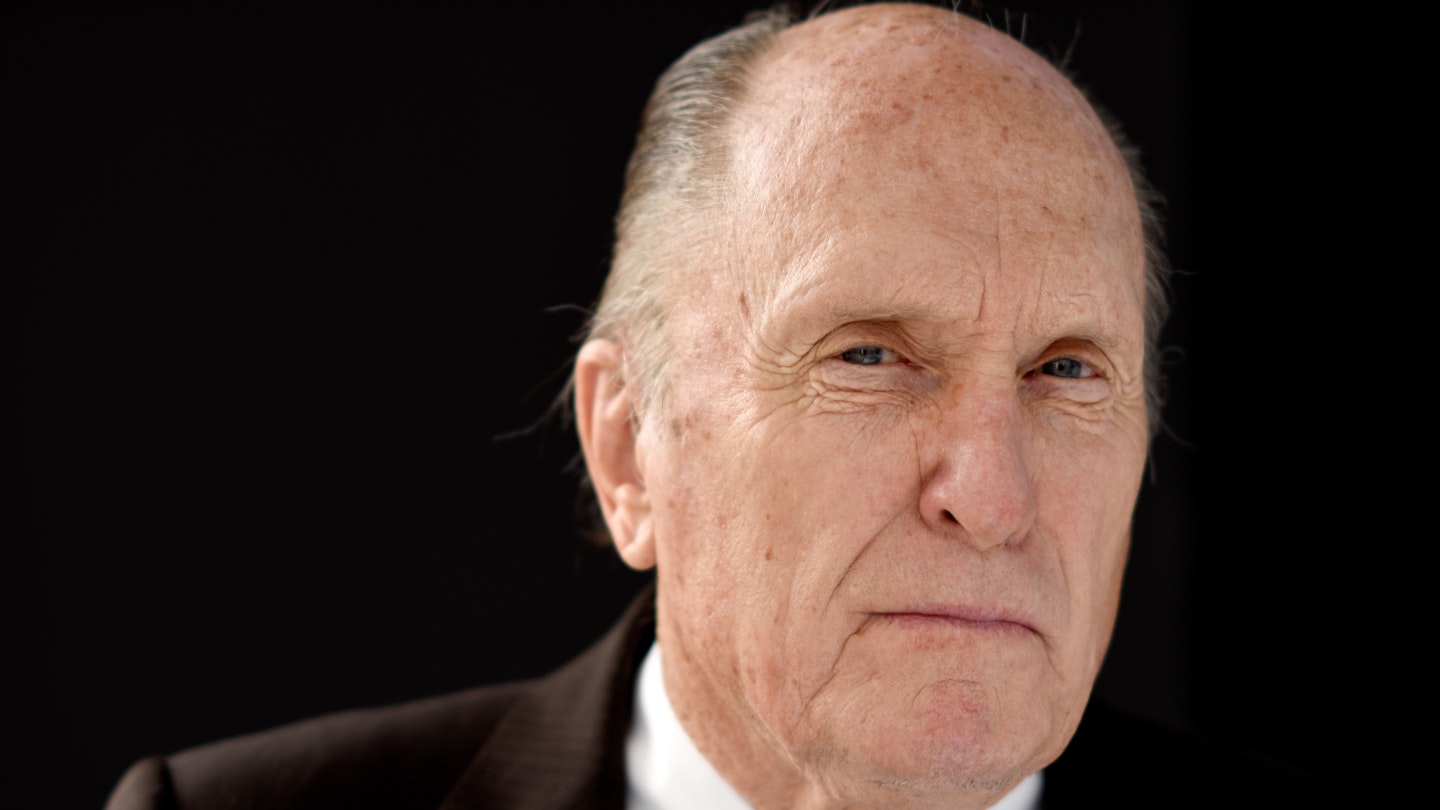
Robert Duvall, the legendary star of such films as The Godfather, Apocalypse Now, and The Judge, has sadly died at the age of 95. The Oscar winner and seven-time Academy Award nominated actor, whose career spanned a staggering seven decades and almost 150 credited roles, passed away at home yesterday, as confirmed by Luciana Duvall on her husband’s social media.
“Yesterday we said goodbye to my beloved husband, cherished friend, and one of the greatest actors of our time. Bob passed away peacefully at home, surrounded by love and comfort,” wrote Luciana Duvall on her husband’s Facebook page. “To the world, he was an Academy Award-winning actor, a director, a storyteller. To me, he was simply everything. His passion for his craft was matched only by his deep love for characters, a great meal, and holding court. For each of his many roles, Bob gave everything to his characters and to the truth of the human spirit they represented. In doing so, he leaves something lasting and unforgettable to us all. Thank you for the years of support you showed Bob and for giving us this time and privacy to celebrate the memories he leaves behind.”
Luciana couldn’t have said it better — to the world, Robert Selden Duvall truly was one of the greatest actors of our time. Born in San Diego, California on 5 January, 1931 to a mother with a passion for the arts and a Navy Admiral father, there was only ever one Academy Duvall was destined to be associated with… and it wasn’t going to be the Navy. Having graduated from Elsah, Illinois’ Principia College with a BA in drama in 1953, a young Duvall served in the US Army for a year between ’53 and ’54, before shacking up with Dustin Hoffman, Gene Hackman, and James Caan at the Neighborhood Playhouse School of the Theatre in New York City the following winter. During a two-year spell at the Playhouse, Duvall variously roomed with Hoffman and Hackman, learning under the Meisner Method while treading the boards in productions of everything from A Streetcar Named Desire to A View From The Bridge to Agatha Christie’s Witness For The Prosecution. From the very early days however, it was clear that steely-eyed Duvall’s talent couldn’t be confined to the stage alone.
With a fistful of TV and off-Broadway appearances under his belt by the dawn of the 1960s, Duvall’s breakthrough as a screen actor came in Robert Mulligan’s critically acclaimed 1962 adaptation of Harper Lee’s To Kill A Mockingbird. Despite a dearth of lines and screen time, Duvall stepped into the role of neighbourhood boogeyman Arthur ‘Boo’ Radley and indelibly made it his own, channelling a lifetime of isolation, hurt, and bone-deep longing in the level of his eyes, drawing out the gentle giant within Boo in his physicality as he steps out from the shadows to protect Scout and Jem from the despicable Bob Ewell.
Having made an instant impact with his first major film appearance, Duvall continued to hone his craft with a slew of supporting roles elsewhere throughout the Sixties, catching the eye as Capt. Paul Cabot Winston in Captain Newman, M.D., starring alongside fellow Playhouse alum Caan as Chiz in Robert Altman’s sci-fi movie Countdown, and sparking what would prove to be a fruitful and lasting collaborative partnership with one Francis Ford Coppola with a memorable turn in road movie The Rain People. He even managed to score himself a shootout with John Wayne during the dramatic climax of Henry Hathaway’s original True Grit before the decade was through.
If the 1960s made the world aware of Robert Duvall’s name then, it was in the 1970s that it became increasingly apparent one of the finest character actors in cinema history had entered the field. Over one of the most impressive single decades for an actor in living memory, Duvall asserted himself as one of New Hollywood’s leading lights on-screen with formidable performances in *deep breath* M*A*S*H, THX 1138, The Godfather and The Godfather Part II, The Conversation, The Eagle Has Landed, The Seven-Percent Solution, Network, Apocalypse Now, and The Great Santini. This staggering run scored Duvall three Oscar nominations, three BAFTA nominations (and a Supporting Actor win for Apocalypse Now), and a Golden Globe win (again, Apocalypse Now), gave us that immortal “I love the smell of napalm in the morning” line from his unflinching, shades-sporting Lt. Colonel Kilgore, and doesn’t even include the in-demand actor’s triumphant Broadway return as Walter Cole in David Mamet’s American Buffalo.
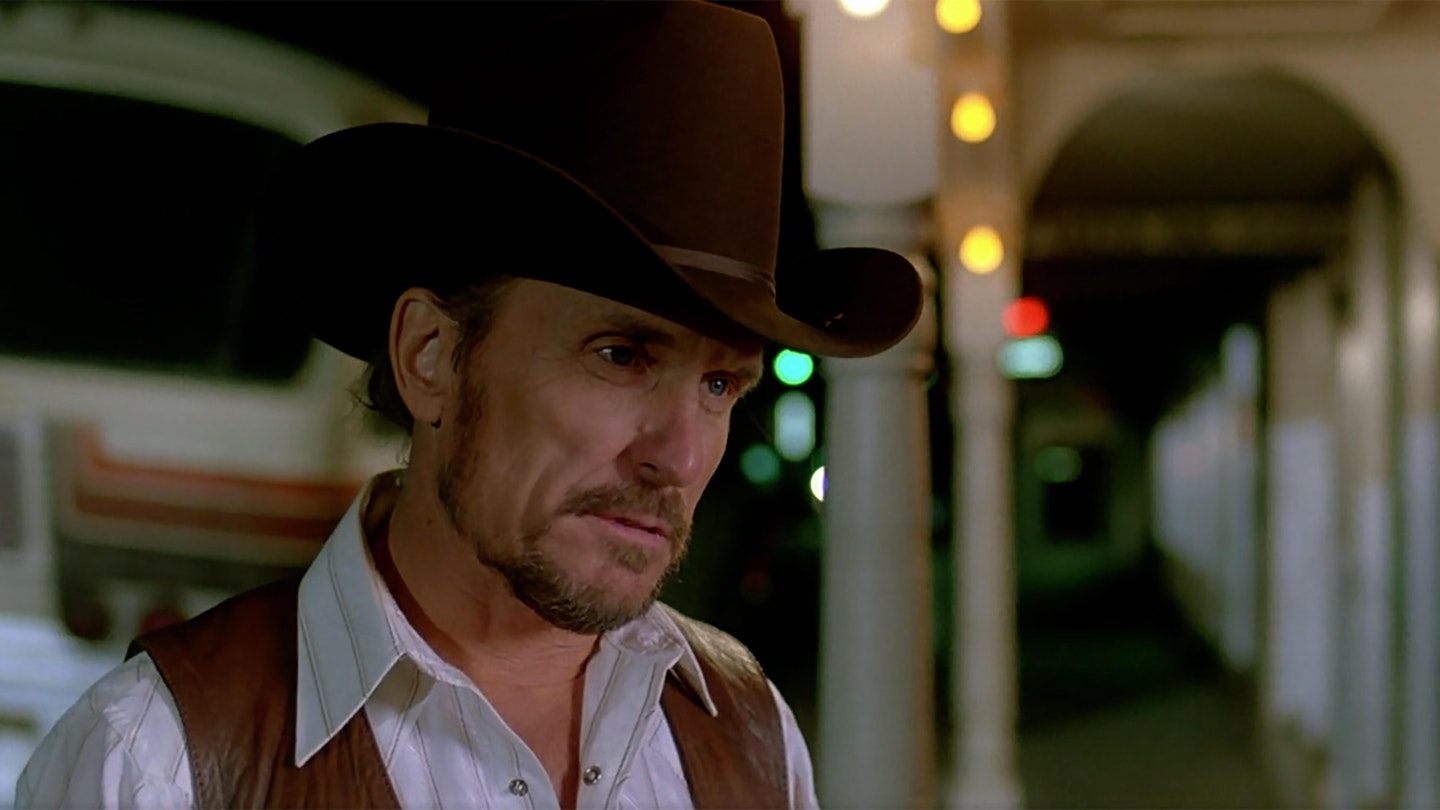
Heading into the 1980s, Robert Duvall’s career showed no signs of slowing up. Switching it up with Robert De Niro co-starring neo-noirs (True Confessions), all-star sports dramas (The Natural), Dennis Hopper LA crime movies (Colors), and a project that the man himself would come to reflect on later in life as his personal favourite, epic American western miniseries Lonesome Dove, Duvall continued to prove time and again his extraordinary ability to unpick the intricacies of the human psyche and experience with no boundaries drawn by genre or form. It was in this, the third decade of Duvall’s career, that the actor’s by then long overdue Oscar for Best Actor finally came, and a richly deserved one at that.
In Bruce Beresford’s rural Texas set 1984 drama Tender Mercies, Duvall got his career-long wish to play a country singer as he took on the role of washed-up, alcoholic country-and-western singer Mac Sledge. In preparation for the part, Duvall — who does all his own singing in the film — drove 680 miles around Texas, performing in small country bands and talking to Texans all over to nail their accents and idiosyncratic mannerisms. In many ways, Tender Mercies is a brooding, bruised-hearted movie that captures an Americana long since gone and forgotten; but more than that, to watch it now is to see a form of knotty, character-driven drama — an acting approach and quality of performance — similarly as rare and hard to come by. The greatest compliment you can pay Duvall’s work in the movie is that by its end you don’t see Duvall at all, only the iceberg of a man that is Mac Sledge.
Two further Best Actor Oscar nominations came Duvall’s way in the 1990s as the actor entered his 60s — first for his role as charismatic yet troubled Pentecostal preacher Euliss “Sonny” Dewey in 1997’s self-written and directed effort The Apostle, and then for playing lawyer Jerome Facher in Steven Zaillian’s 1998 legal drama A Civil Action. Prior to the turn of the millennium, Robert Duvall had spent its last decade racking up even more memorable hits for the resumé, including Days Of Thunder, Newsies, Falling Down, The Paper, Something To Talk About, and Deep Impact to name but a few.
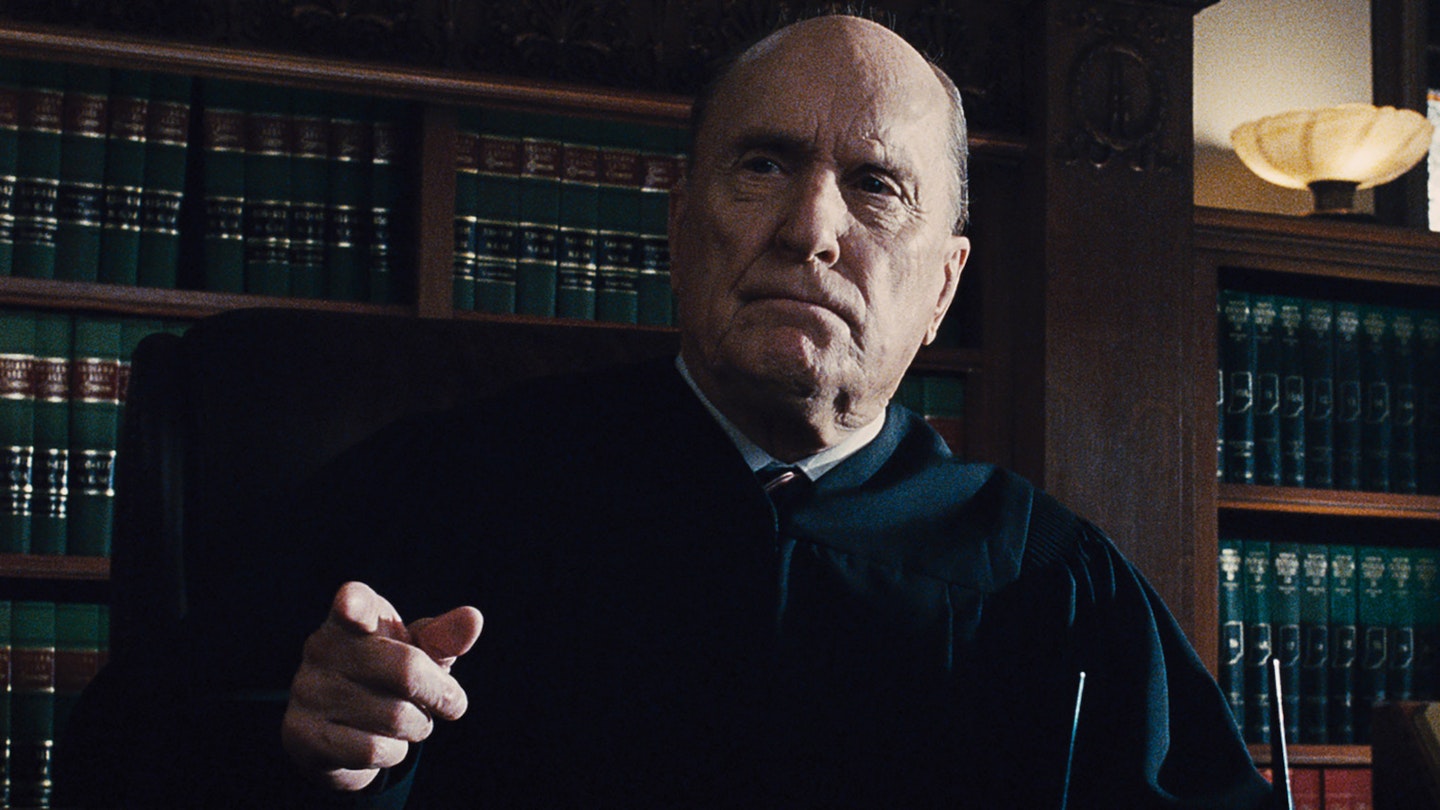
Now five decades into his illustrious career, Robert Duvall continued to work solidly from the turn of the 21st century right up until his passing some 26 years later. In the last quarter-century of his career, Duvall directed two more movies — sort-of absurd yet absolutely must-see tango-meets-crime-thriller joint Assassination Tango in 2002, and contemporary western Wild Horses in 2015. In the same year Wild Horses released, a then-84-year-old Duvall found himself Oscar nominated for a seventh and final time for his remarkable performance opposite Robert Downey Jr. in meditative legal drama The Judge. Late late-career highlights from Duvall include Steve McQueen’s 2018 thriller Widows, low-key Adam Sandler led basketball feature Hustle, and Scott Cooper’s Netflix Gothic slow-burner The Pale Blue Eye. It feels noteworthy to add that Robert Duvall never actually retired, even well into his nineties. He was, in the truest sense, an indefatigable champion of his craft and the art to which he dedicated his life.
As you’d imagine, there have been no shortage of tributes being paid to Robert Duvall in the hours since his death was announced. His Hustlers co-star Adam Sandler took to Instagram to pay his respects to a bona fide legend, writing: “Funny as hell. Strong as hell. One of the greatest actors we ever had. Such a great man to talk to and laugh with. Loved him so much. We all did. So many movies to choose from that were legendary. Watch them when you can. Sending his wife Luciana and all his family and friends our condolences.” Michael Keaton, who starred opposite Duvall in both The Paper and A Shot At Glory, wrote on Instagram: “Another friend goes down. Acted with and became friends. Shared a great afternoon on my front porch talking about horses. He was greatness personified as an actor.”
Elsewhere, Duvall’s fellow Hustlers star Viola Davis shared a heartfelt tribute on Instagram, remembering “a giant… an icon…”, while Scott Cooper, who directed Duvall in both Crazy Heart and his final film, The Pale Blue Eye, reflected on his experience with the icon to Variety, sharing: “He produced and acted in my first film, ‘Crazy Heart,’ and from that moment forward, read nearly every screenplay I wrote, offering his quiet wisdom and unwavering belief in me,” Cooper said. “He was my fiercest supporter—not with grand gestures, but with honesty, rigor, and love for the work itself. His legacy as one of the true giants of acting is secure, but what I will carry with me most is his generosity, his humility, and the example he set of a life devoted entirely to truth. I would not be the filmmaker—or the man—I am without him.”
For over 70 years, as the worlds of film, television, and theatre shifted, evolved, and metamorphosed with the times, Robert Duvall remained, solid and true, one of the finest character actors the world has ever seen. He will be remembered not only for his vast body of work, but for the reputation he upheld throughout his life and career as one of the true good ones in Hollywood. Our thoughts are with his wife, family, and friends at this incredibly difficult time, and he will be deeply missed.
First Appeared on
Source link




Leave feedback about this