

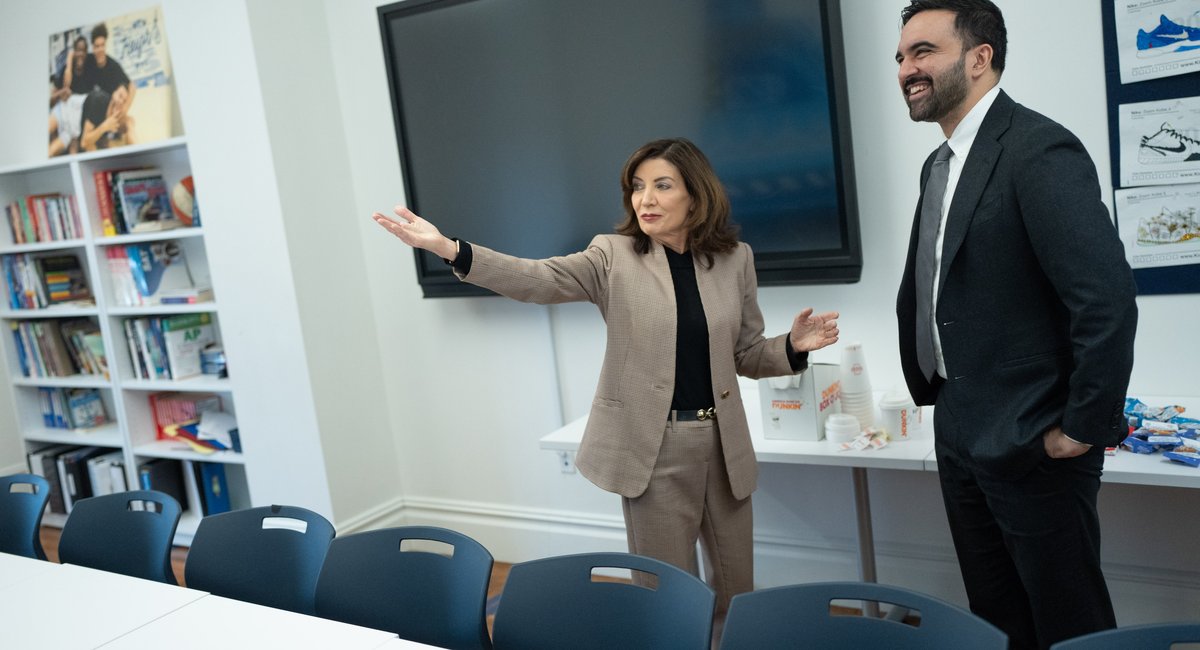
Gov. Kathy Hochul and Mayor Zohran Mamdani on Monday announced a $1.5 billion state investment over two years to help stabilize New York City’s finances, one day before the mayor unveils his preliminary budget proposal.
The surge in new funding includes more than half a billion dollars in recurring funding targeted at costs that city officials say shifted from the state to New York City in recent years, including $300 million for youth programming, $150 million in restored sales tax revenue and $60 million for public health.
The remaining $500 million will go toward “shared priorities” to be determined by the city and state.
The new funding announced Monday in a joint statement from Mamdani and Hochul comes a day before the mayor delivers his first preliminary budget, which is required to be balanced under law. While the funding will help narrow the city’s projected budget gaps, watchdogs say the mayor still faces significant fiscal challenges.
Earlier this year, Mamdani warned that what he described as mismanagement under former Mayor Eric Adams left his administration facing a $12 billion budget shortfall over the next two years, fueling his calls for state lawmakers to impose a millionaire’s tax and increase the state’s corporate tax rate. Hochul remains opposed to increasing income taxes.
During testimony in Albany last week, Mamdani said the city’s budget gap had fallen to $7 billion, driven in part by higher-than-expected revenues, including Wall Street bonuses.
The announcement builds on an earlier agreement between Hochul and Mamdani to provide state funding for the first two years of the mayor’s expanded child care program, including making 3K universal citywide and launching the first phase of a program for the city’s 2-year-olds.
Andrew Rein, president of the Citizens Budget Commission, said the announcement that the state would send more funds to the city was good news that would help narrow the remaining budget gap. Still, Rein cautioned that he wants to see more detail about how the city is balancing its books.
“We’ve heard about the revenues, but we don’t know how all the spending is coming in,” Rein said. “I can’t get to the math without seeing the numbers.”
Rein said he is looking for transparency about the size of the city’s budget challenges, what cost-cutting measures the administration is implementing and how it plans to fund campaign promises central to Mamdani’s affordability agenda, including universal child care, free buses and a rent freeze for stabilized tenants.
He also pointed to an executive order Mamdani signed last month requiring all city agencies to designate a “Chief Savings Officer” responsible for identifying wasteful spending.
Potential savings could also come from a new health insurance program that some estimate could save the city billions of dollars, as well as reduced spending on schools with declining enrollment.
“ There’s plenty of big opportunities, but also that scalpel within each agency, shrinking spending, being more efficient,” Rein said.
The Center for an Urban Future issued a report this month with five ways the Mamdani administration could raise new revenue to pay for its agenda.
One suggestion was to increase the amount of metered street parking, which the city could do on its own without approval from the state. The group estimated that it could raise nearly $1.3 billion annually.
The Center also estimated that just 80,000 of the 3 million available street parking spaces across the city are currently metered.
“ The city gives away too much of its curb space for free or for next to nothing,” said Jonathan Bowles, executive director of the Center for an Urban Future. “Even just a small increase in the metering of existing free parking spaces would add significant revenue to the city.”
This story has been updated with comment from Jonathan Bowles, executive director of the Center for an Urban Future.
First Appeared on
Source link

Leave feedback about this