

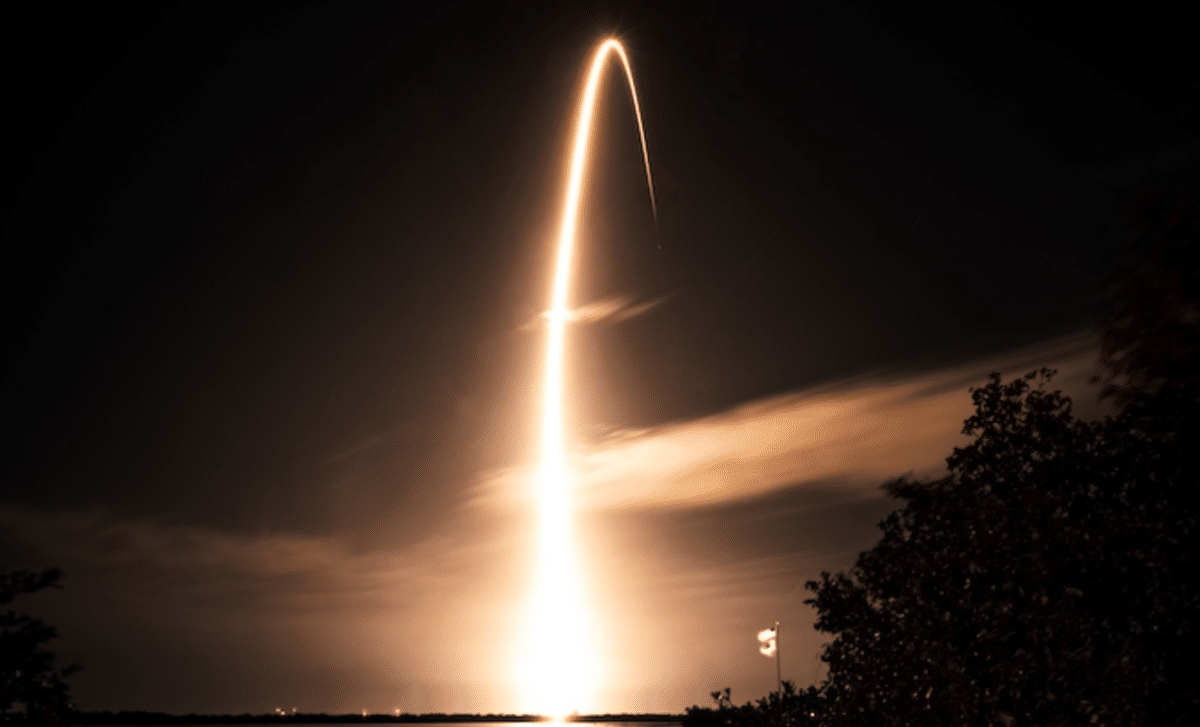
On the morning of February 16, 2026, SpaceX executed a successful predawn Falcon 9 rocket launch from Cape Canaveral Space Force Station. The mission, known as Starlink 6-103, marked another milestone for SpaceX’s rapidly expanding satellite constellation, which now boasts over 9,600 satellites in low Earth orbit. The launch was part of the company’s continued push to offer high-speed internet to underserved areas around the world. Despite challenging weather conditions, the mission launched successfully, showcasing SpaceX’s expertise in overcoming obstacles to ensure that space exploration remains on schedule.
Overcoming Challenging Weather Conditions
One of the most remarkable aspects of the Starlink 6-103 launch was the weather. Leading up to the liftoff, the 45th Weather Squadron had predicted only a 20% chance of acceptable weather. The forecasts included high winds, showers, and thunderstorms, which were expected to move over the Florida coast just as the launch window opened. Despite these challenges, the Falcon 9 rocket successfully lifted off at 2:59:40 a.m. EST. This feat underscores the incredible precision and adaptability of SpaceX, which continues to push forward in its goal of providing worldwide satellite internet coverage. While weather conditions were unpredictable, the launch’s success proves the company’s ability to make rapid, data-driven decisions to ensure the rocket’s path remained safe, even in adverse conditions.
According to Spaceflight Now’s coverage of the event, SpaceX had to make sure all weather criteria were met to ensure a safe and successful launch. The potential risks, such as lightning from thunderstorms or strong winds, could have grounded the mission, but SpaceX’s engineers were able to push forward and meet the challenge head-on. This launch also demonstrates how important weather forecasting is for space missions, especially as private companies like SpaceX continue to take on a larger role in commercial spaceflight.
Starlink’s Growing Impact on Global Connectivity
The Starlink 6-103 mission is part of SpaceX’s broader ambition to connect the world through broadband internet. With this launch, SpaceX added 29 satellites to its Starlink constellation, further expanding its global coverage. As of early 2026, the company has successfully launched over 9,600 Starlink satellites into low Earth orbit, making it one of the largest satellite constellations in history. The goal is to provide fast, reliable internet to underserved regions, including rural and remote areas that traditional ground-based infrastructure has struggled to reach.
The Starlink network already serves millions of users around the globe, and SpaceX has pledged to continue expanding the network to provide even greater bandwidth and lower latency. These innovations could revolutionize global internet access, offering unprecedented levels of connectivity to places where internet access has historically been limited or non-existent. The 6-103 mission is another step in this ambitious journey, proving that large-scale satellite constellations can deliver on their promise of global internet access, and showing just how transformative this technology is for the future of communication.
The Success of Falcon 9: A Milestone in Space Reusability
Perhaps one of the most exciting aspects of SpaceX’s ongoing missions is the success of the Falcon 9 rocket’s reusability. The Falcon 9 first stage booster used in the Starlink 6-103 mission, identified as B1090, completed its 10th flight, a significant achievement in SpaceX’s reusability program. Just 8.5 minutes after liftoff, the booster successfully landed on the drone ship “A Shortfall of Gravitas” in the Atlantic Ocean, marking another major milestone in SpaceX’s efforts to make space travel more sustainable and cost-effective.
This achievement is part of a broader trend in space exploration, as SpaceX has continued to recover and reuse its rocket stages for various missions. This approach has proven to be a game-changer for spaceflight, dramatically reducing the cost of sending payloads into space. SpaceX’s reusable rockets allow for rapid turnaround times between launches, making space travel more efficient and cost-effective than ever before. As the company continues to refine its technology, the future of space exploration will likely be shaped by these innovations in reusability.
First Appeared on
Source link






Leave feedback about this