

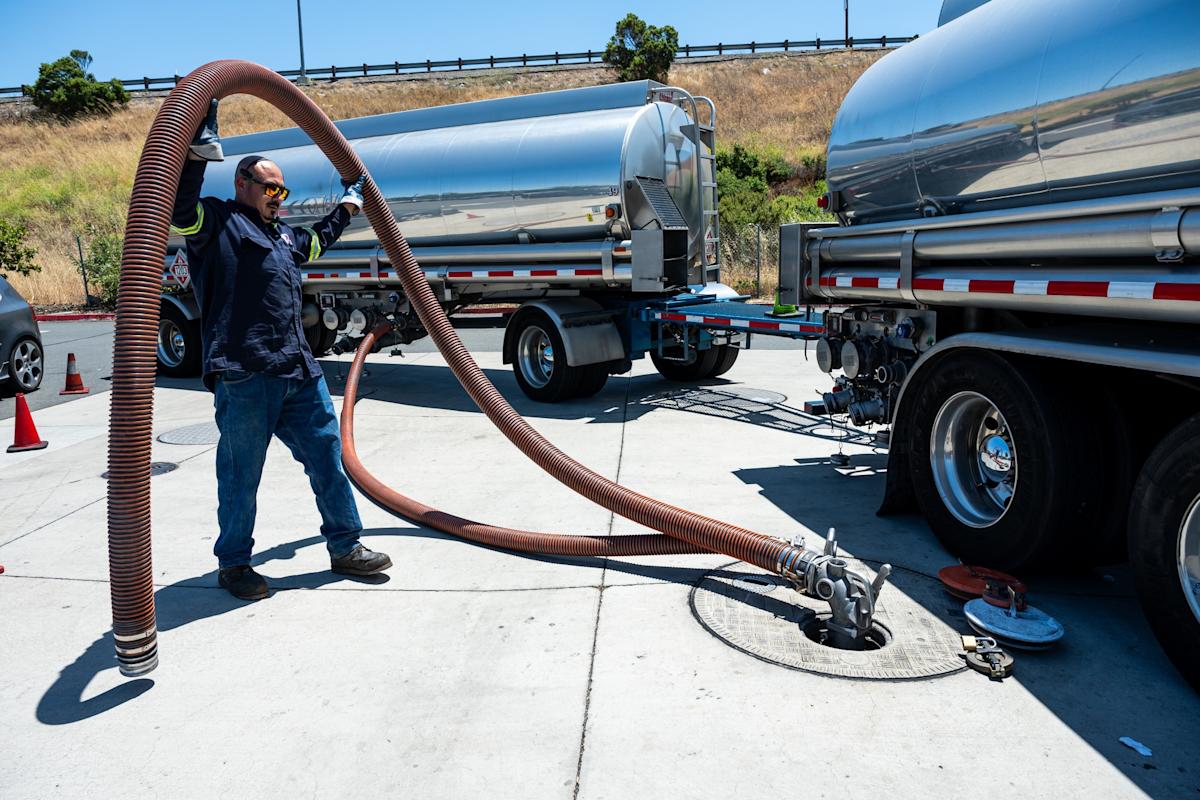
(Bloomberg) — US supplies of gasoline are being shipped out of the country to travel thousands of miles via the Bahamas before finally ending up in California, a state battling shrinking fuelmaking capacity and high pump prices.
Shipments on the circuitous route are increasing. California imported more gasoline in November than ever before, with more than 40% coming from the Bahamas.
Most Read from Bloomberg
The lengthy journey adds another layer of cost to California’s already expensive gasoline market. Yet the phenomenon isn’t likely to disappear soon, thanks to a combination of disappearing oil refineries, a lack of interstate pipelines and a loophole in a 106-year-old maritime law.

California has among the strictest environmental regulations in the US, making it costly for energy companies to operate in, though a wave of upcoming refinery closures is prompting officials and regulators to soften their stance. On average, the closures could raise the cost of gasoline for consumers by between 5 and 15 cents a gallon, said Patrick De Haan, GasBuddy’s head of petroleum analysis.
After Phillips 66 shuttered its Los Angeles refinery in October, gasoline imports climbed in 2025 to the highest level since at least 2016, Vortexa data show. With Valero Energy Corp. set to close a Northern California refinery this spring, and no fuel pipelines connecting the US Gulf’s oil-producing powerhouse to the West Coast, the nation’s most populous state will likely depend on imports to bridge the gap.
Under the Jones Act, any goods shipped between US ports must travel on US-built, owned and operated vessels. Those tankers are in short supply and expensive to charter. There are about 55 Jones Act-compliant oil tankers worldwide, compared with more than 7,000 oil tankers globally.
“Even if there are such vessels, they would charge more than a foreign-flagged vessel would,” said Martin Davies, director of Tulane University’s Maritime Law Center.
When California’s specialized gasoline trades at a premium, particularly during refinery outages, Gulf Coast refiners can capture higher margins by sending barrels west, De Haan said. Routing through the Bahamas allows them to avoid higher-cost US-flagged shipping and preserve that spread.
In those moments, “there’s going to be plenty of incentive for PADD 3 (Gulf Coast) and Asian refiners to supply Californians,” De Haan said.
First Appeared on
Source link





Leave feedback about this