

For years, scientists have been piecing together the puzzle of Earth’s first animals. How did simple organisms evolve into the diverse life we see today? A new study from MIT, published in Proceedings of the National Academy of Sciences, offers a fresh perspective. It reveals chemical evidence that suggests some of the earliest animals on Earth, dating back over 541 million years, were sea creatures that could have been key to the evolution of life as we know it.
The Chemical Clues: A Deep Dive into Ancient Rock Samples
In their study, published in Proceedings of the National Academy of Sciences, the MIT researchers focused on rocks from the Precambrian period, more than 541 million years old, to look for chemical signatures that could indicate the presence of early life forms. These “chemical fossils” were remnants of biological molecules that had once been part of living organisms but were later buried and altered by geological processes over hundreds of millions of years. One of the key findings in this research was the detection of steranes, stable molecules derived from sterols like cholesterol, which are crucial components of eukaryotic cell membranes.
Roger Summons, a leading researcher on the study, explained the significance of these molecules, stating, “We don’t know exactly what these organisms would have looked like back then, but they absolutely would have lived in the ocean, they would have been soft-bodied, and we presume they didn’t have a silica skeleton.” This was a critical insight, as it gave scientists a deeper understanding of what the earliest animals might have been like—likely soft-bodied creatures that existed in marine environments, far different from the more complex life forms we are familiar with today.
The Role of Sterols in Identifying Early Life Forms
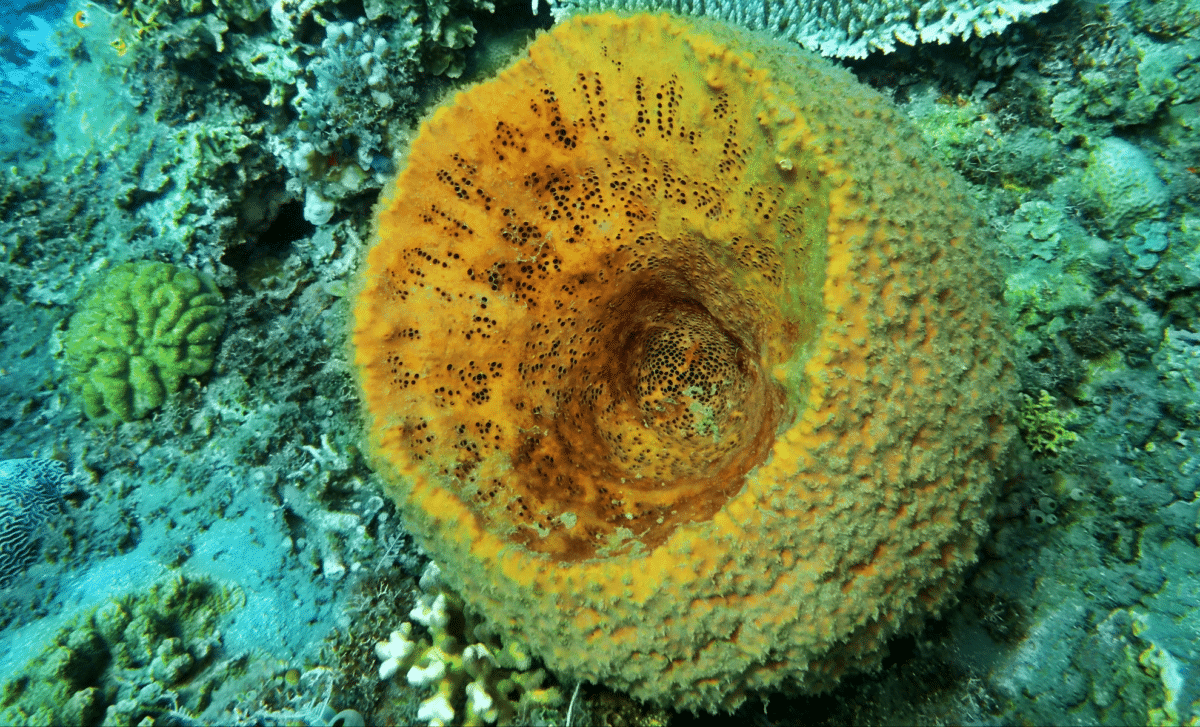
Sterols, which are compounds found in the cell membranes of eukaryotes (organisms with complex cells), are critical to the researchers’ findings. These molecules are considered a hallmark of eukaryotic life because every eukaryote has some form of sterol or membrane lipid. As Summons pointed out, “You’re not a eukaryote if you don’t have sterols or comparable membrane lipids.” By analyzing the structure of steranes found in ancient rocks, the team could trace their origins back to demosponges, a group of sea sponges that still exist today.
However, the team was faced with a challenge. One of the sterols they discovered had a rare molecular structure, with 30 carbon atoms. Lubna Shawar, a key member of the research team, remarked, “It’s very unusual to find a sterol with 30 carbons.” This discovery was crucial because it pointed directly to the presence of ancient sea sponges, as this specific sterol is produced by the enzyme associated with demosponges. By identifying such rare molecules, the team was able to solidify the hypothesis that sponges were among the first animals on Earth, living well before the Cambrian explosion, which marked a period of rapid diversification of animal life.
Verifying the Source: Laboratory Tests and Modern Sponge Analysis
To confirm their findings, the researchers turned to modern-day sponges, specifically demosponges, to see if these creatures still produce the same molecular compounds. They conducted laboratory experiments where they synthesized different sterols and subjected them to conditions that mimic the burial process, transforming them into steranes similar to those found in ancient rocks. The results were telling.
Shawar explained the importance of this verification, saying,
“These special steranes were there all along. It took asking the right questions to seek them out and to really understand their meaning and from where they come.”
This combination of laboratory testing, rock chemistry, and living sponge analysis provided a robust and convincing argument that the steranes in the ancient rocks had originated from living organisms, specifically early sea sponges.
Summons also emphasized the importance of this multifaceted approach, saying,
“It’s a combination of what’s in the rock, what’s in the sponge, and what you can make in a chemistry laboratory. You’ve got three supportive, mutually agreeing lines of evidence, pointing to these sponges being among the earliest animals on Earth.”
This comprehensive methodology ensured the authenticity of the findings, providing solid evidence that early life forms on Earth were likely soft-bodied marine creatures similar to modern-day sponges.
First Appeared on
Source link





Leave feedback about this