

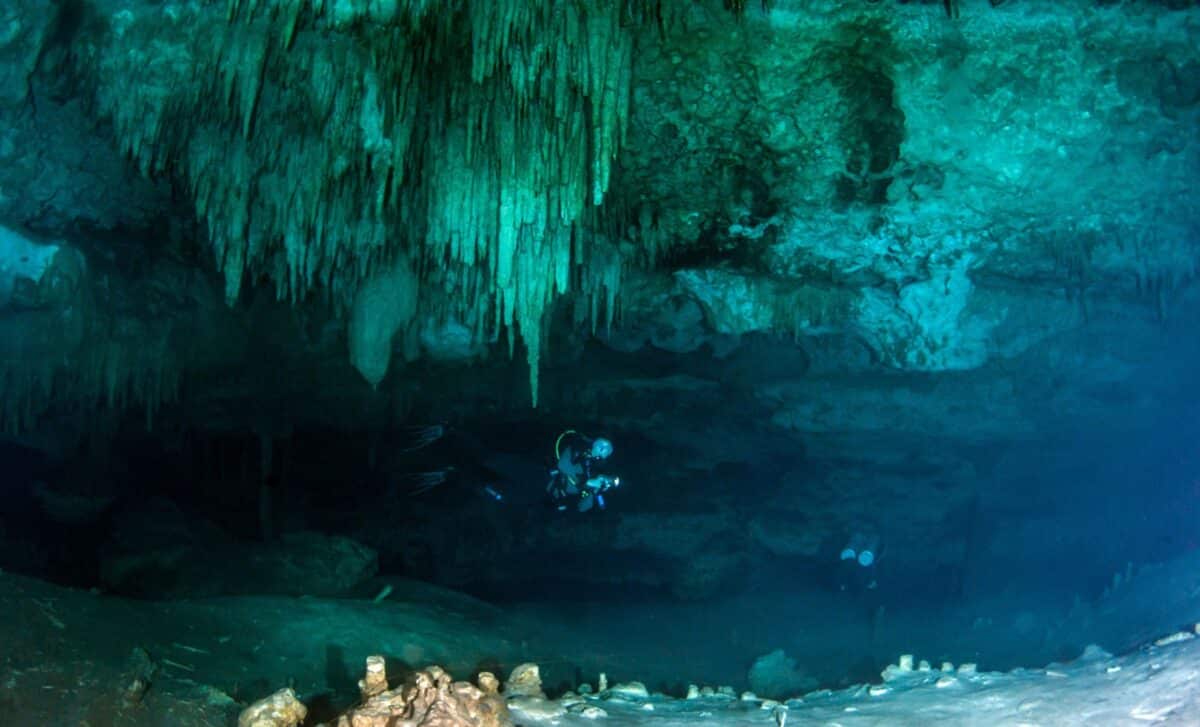
A hidden lake beneath Turkey’s southern coastline has revealed its underwater formations in unprecedented detail. Inside Gilindire Cave in Mersin, a specialized diving team documented stalactites, stalagmites and mineral structures preserved since the end of the Ice Age.
The images were recorded during a 90-minute dive led by underwater cinematographer Tahsin Ceylan, who descended into the cave’s submerged chamber with a professional team. The expedition brought renewed attention to a site often described as one of the region’s most striking natural landmarks.
Located in the Aydıncık district, the cave preserves hydrological and atmospheric traces from the Ice Age period.
A 560-step Descent into a Hidden Lake
The expedition began with a descent of 560 steps leading to the cave’s underground lake. According to Hürriyet Daily News, the dive was conducted with special permission and included members of the Coast Guard Mediterranean Region Command’s Diving Team, retired navy colonel Fatih Erhan, and instructors Mahmut İğde and Boğaç Dağhan Günöz.
After completing preparations at the water’s edge, the team dived to a depth of 30 meters. The operation lasted 90 minutes, during which high-resolution footage captured the cave’s underwater mineral landscape.
Tahsin Ceylan stated that the team witnessed both the natural and cultural heritage of the site, describing the cave as “a masterpiece, a legacy of nature as an artist.” He added that:
“Introducing it to the world and promoting it for diving tourism would be a great privilege for our country. We recorded the cinematic scenery of the cave underwater as well.”
Formations Preserved since the Quaternary Transition
Gilindire Cave was formed during the transition to the post-glacial period at the beginning of the Quaternary. Its final section remains submerged, with water reaching a depth of roughly 47 meters.
During the dive, the team filmed prominent stalactites, stalagmites, columns, travertines and cave pearls. Specialists believe the underwater formations have survived intact because they were shielded from atmospheric changes after submersion.
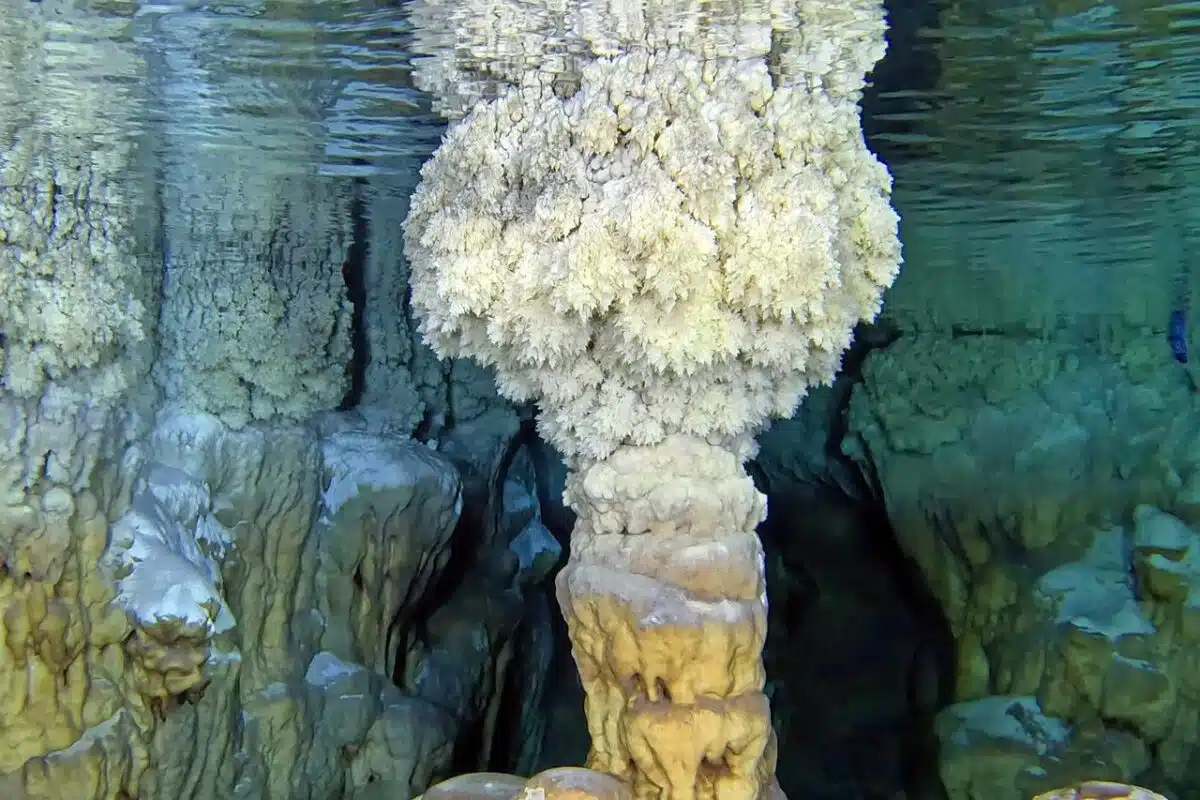
The cave extends 555 meters horizontally and lies 45 meters above sea level. Massive dripstone structures divide the main gallery into halls and chambers, creating a complex internal layout that has remained largely undisturbed.
A Random Discovery Turned Heritage Site
The cave was discovered in 1999 when a shepherd followed a porcupine into an opening while grazing his animals, according to Anadolu Agency. Inside, he encountered an extensive system filled with distinct mineral formations, including structures resembling showerheads.
Today, visitors can reach the cave by turning toward the seaside from the Mersin-Antalya highway, about four kilometers from the center of Aydıncık. While the upper sections are accessible on foot, the submerged chamber remains the domain of trained divers.
Instructor Mahmut İğde described the site as “a legendary underwater beauty,” pointing to the striking formations and what he called “an entire underwater world.”
First Appeared on
Source link






Leave feedback about this